00:30 | Cordillera Negra (Ancash region), Jul. 5.
A team of archaeologists from the National University Santiago Antunez de Mayolo (Unasam) discovered a set of architectural remains, utensils, and contextual evidence in the Cordillera Negra mountain range in Peru's Ancash region.
These findings provide valuable insight into the sociocultural dynamics of the Huaylas society—which developed in that area of Peru during the Late Intermediate Period—and the Incas who arrived later.
In an interview with Andina News Agency, Ilder Cruz Mostacero, archaeologist and professor at Unasam and archaeological research project director, said the main objective is to understand the daily life and social organization of this ancient Peruvian civilization, whose main economic activity was camelid herding.
He noted that, through a multidisciplinary approach, the research project seeks to shed light on key aspects of the social structure, cultural practices, and interactions within households.
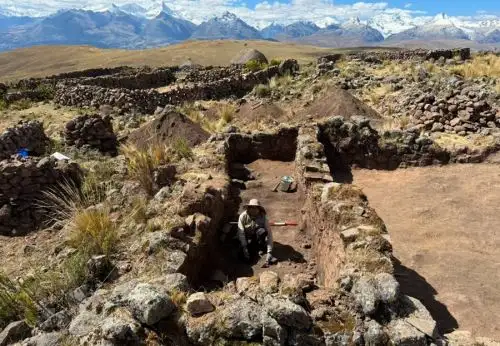
The archaeological site under study is located within the Huamarin farming community, in Huaraz district and province, just over an hour from Ancash region's capital.
It is an area where no archaeological excavations had previously been carried out. As a result, it has not been affected by looting.
Main findings so far
The researcher said the team of archaeologists identified remains of funerary architecture, the presence of huancas oriented toward the snow-capped peaks of the Cordillera Blanca, and evidence of urban planning.
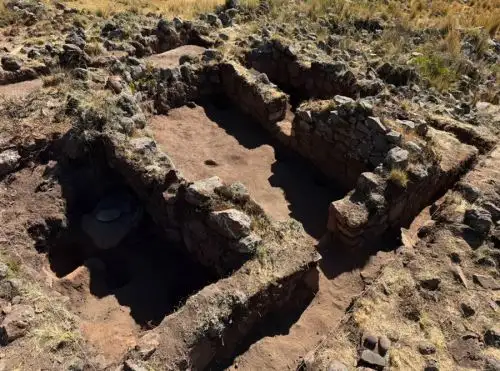
"We began the archaeological excavations in June and have completed intervention at three units, with 12 still remaining. These first excavated units are providing us with important information," Cruz Mostacero said.
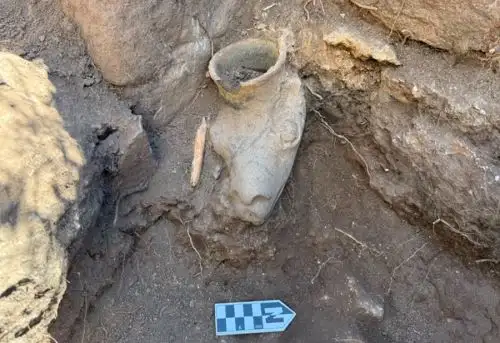
He explained that the findings reveal a fairly complex architectural pattern in the Huaylas culture, which dates to around A.D. 1200, during the Late Intermediate Period.
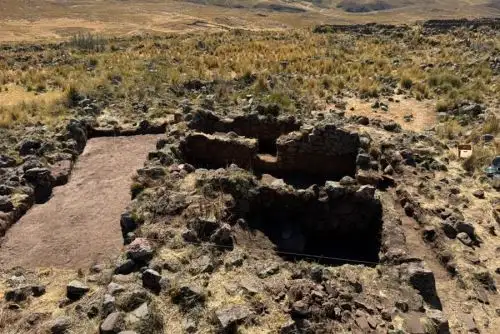
"We found metal production workshops with furnaces and grinding stones where raw materials were processed. We also found spaces dedicated to the processing of camelid wool and a large number of spindle whorls, which are tools used to turn wool into thread," the expert indicated.
"This is in addition to the importance of herding, which generated economies not only for subsistence and the production of their own clothing, but also for transforming products and exchanging them with societies both in the lower part of the Callejon de Huaylas and westward with groups such as the Casma, probably," he explained.
A large amount of Huaylas pottery was found, including vessels and other domestic and utilitarian objects, as well as lithic material.
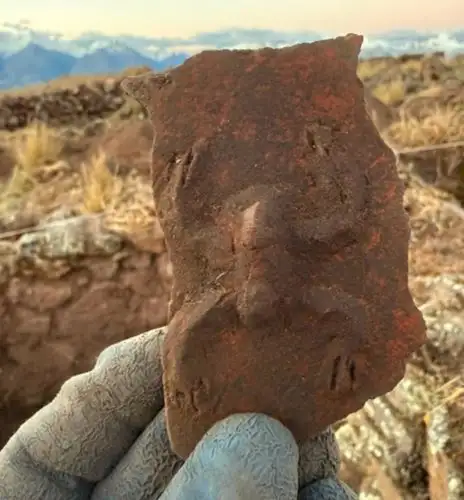
In architectural terms, monoliths were discovered—elements with a long cultural tradition dating back to the Chavin period, continuing through the Recuay culture and into the Huaylas society.
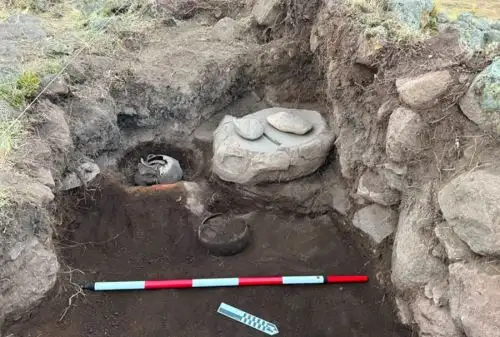
The expert added that the architectural spaces uncovered show that they were deliberately sealed off before being reoccupied.
"We found grinding stones carefully placed, some of them upside down, in certain architectural spaces, which suggests they were not abandoned suddenly, but rather gradually," he noted.
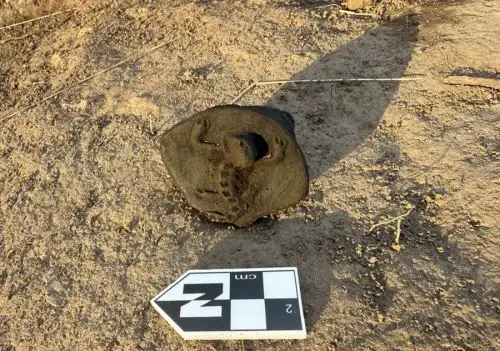
Iconography related to fertility and the cult of water was identified as well.
"We found channels beneath the dwellings, drainage systems, as well as pathways connecting the various architectural spaces, revealing a little-known level of urban planning among the Huaylas," Cruz Mostacero said.
"It was previously thought that they were merely highland herders, but the findings point to greater complexity, with complementary activities such as textile production, water management, the construction of productive spaces, aqueducts, and other systems for the efficient management of water resources," he added.
Inca presence in the area
The archaeologist emphasized that the most important aspect of these initial findings is the discovery of tangible material evidence of Inca presence in the area, which was annexed to the Tahuantinsuyo.
"We have found fragments of Inca pottery coexisting with the Huaylas culture, which helps us understand how important the Inca presence was in this part of Callejon de Huaylas—not only economically, but also strategically and as an advance outpost," he expressed.
The researcher noted that the Incas may not have built a large city in Callejon de Huaylas, but instead reoccupied Huaylas architectural spaces, and that what seems to have interested them most was the economic dimension of herding.
"We have found a large number of livestock corrals and a high degree of settlement complexity, which shows that Cordillera Negra was an area of great economic potential," he remarked.
Period of occupation
As for the site's period of occupation, he said it dates back to A.D. 1200, with the Huaylas society.
It was later occupied by the Incas and may have remained inhabited until it was abandoned in the early Colonial period, when reducciones—the forced resettlement of Indigenous populations into lower valley areas—were established to allow tighter control by the colonial administration.
Timeline for the archaeological work
Cruz Mostacero said the archaeological research project has authorization from the Ministry of Culture to conduct excavations through October this year, after which the desk-based research phase will begin.
"We hope to complete the work within that timeframe, as we are gathering an impressive amount of information," he noted.
In the coming weeks, excavations are scheduled in five units near those already worked on, which present different urban-planning complexities due to their ceremonial, funerary, and other functions.
Support from the Huamarin farming community
The archaeologist expressed his gratitude to the Huamarin farming community both for the valuable support it has been providing to the archaeological research project and for its protection and care of the archaeological site.
"In the contexts we are uncovering, there is no evidence of modern disturbance caused by looting or unauthorized human intervention," Cruz Mostacero underscored.
Research team
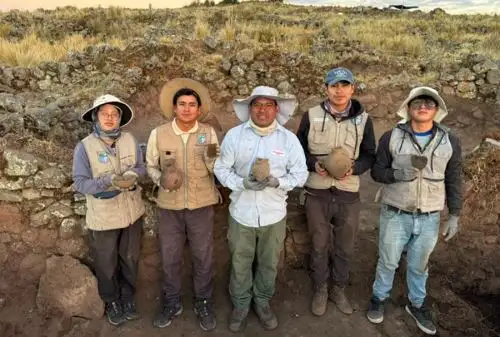
Ilder Cruz Mostacero leads the research team, made up of around 20 people, including bachelor's degree holders, recent graduates, and archaeology students from the National University Santiago Antunez de Mayolo (Unasam).
They are joined by field assistants, who support the archaeological excavation work and the logistics of field operations.
(END) LZD/MAO/MVB
Publicado: 5/7/2026