By: Miguel de la VegaPeru's mining industry remains a key driver of growth, as the global economic environment brings favorable tailwinds to strategically leverage the sector in order to generate more formal employment, increase tax revenues, and foster a more decentralized economic dynamic.
The global energy transition from polluting sources to sustainable energy—under which automakers are gradually shifting their lineups toward electric vehicles—combined with worldwide geopolitical tensions, drove copper prices sharply higher in 2025.
Likewise, the global outlook for metals such as gold, copper, and silver in 2026 also appears favorable.
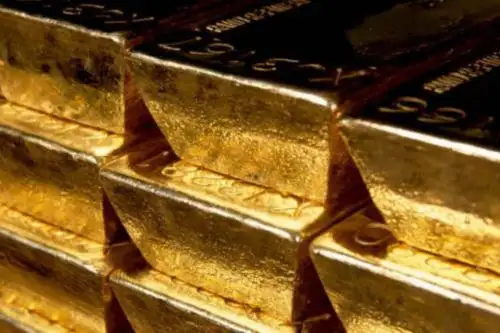
Mineral prices continue to rise in international markets.
Gold closed 2025 at US$4,320 per ounce, posting an annual increase of 64.35%. So far this year, as of January 16, it reached US$4,588, accumulating a gain of 6.20%, according to a report published by the Official Gazette El Peruano.
In the case of copper —Peru's main export product— prices closed last year at US$5.62 per pound, representing an annual increase of 41.21%. So far in 2026, as of last Friday, copper was trading at US$5.78 per pound, marking a gain of 2.92%.
Meanwhile, silver prices reached US$72.50 per ounce at the close of 2025, posting a remarkable 149.98% annual increase. This year, silver was trading at US$88.53 as of last Friday, accumulating a gain of 22.11% so far in 2026.
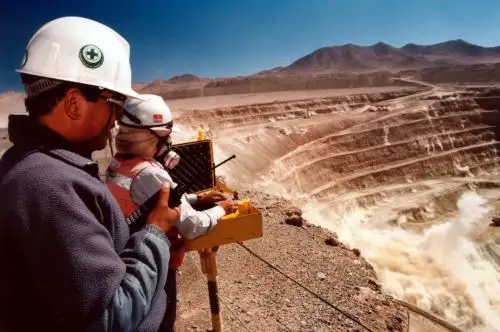
Technological progress
Human development and technological advancement are closely linked to mining, as its products are essential across sectors such as healthcare, education, communications, and transportation.
The recent Future Minerals Forum, held in Riyadh, brought together 18,000 participants from 165 countries under the theme "The Dawn of a Global Cause: Minerals for a New Era of Development."
The forum emphasized that "global demand for minerals is accelerating," a trend reflected in rising prices over recent years and the upward trends metals are showing in 2026.
For its part, the World Gold Council —the leading authority in the trade of this precious metal— underscored that gold prices set records 53 times in 2025, as global investors poured an unprecedented amount of capital into physically backed gold ETFs (exchange-traded funds).
"Annual inflows surged to US$89 billion—the largest on record—while gold prices posted their strongest performance since 1979," the report added.
Higher investment
In Peru,
the mining sector continues to show stronger dynamism. According to the Ministry of Energy and Mines (Minem), mining investment totaled US$4.482 billion between January and October 2025, a 17.7% increase compared with the same period in 2024.
A closer look at the figures shows that exploration investment rose by 36.2%, while infrastructure spending increased by 30.5%. Mining companies are preparing to meet stronger global demand for metals.
Peru is entering an election year that will determine the country's course over the next five years, with one of the key concerns being the creation of quality jobs and the increase of tax revenues to deliver high-quality public works.
Global economic conditions and trends are favorable for mining activity in Peru, underscoring the importance of encouraging and strengthening formal mining.
Project portfolio
Peru has a portfolio of 65 mining projects requiring total investment of US$63.005 billion, as well as an exploration portfolio comprising 80 projects with estimated investment of US$727.5 million.
If these projects move forward, they would boost Peru's economy through the productive linkages generated by mining, including metalworking, transportation, food services, logistics, and the employment of skilled labor across the country.
Transfers
Meanwhile, transfers from the mining industry to the state totaled S/9.792 billion (US$2.911 billion) between January and October 2025, in addition to its tax contributions.
Of this total, S/6.992 billion (US$2.079 billion) corresponded to mining canon, S/2.542 billion (US$756 million) to mining royalties, and S/256 million (US$76 million) to mining concession fees and penalties.
The canon is transferred directly to the regions and municipalities where mining activity takes place, translating into greater resources for improved public works and services for the beneficiary communities.
"These resources finance basic infrastructure projects and essential public services, including water and sanitation networks, health centers, educational institutions, transportation roads, and spaces that facilitate productive and social activity," the
Ministry of Energy and Mines (Minem) detailed.
In the case of fiscal revenue from the mining subsector, collections totaled S/19.739 billion (US$5.869 billion) between January and October 2025, a 31% increase compared with the same period in 2024 (S/15.003 billion = US$4.463 billion).
Employment
In terms of direct employment, 280,674 formal jobs were recorded as of October 2025, a 1.5% increase compared with September of the previous year (276,458 direct jobs).
Formal mining activity in Peru, as registered by Minem, takes place on just 1.52% of the national territory, of which 1.26% is occupied by 750 operating units, while only 0.26% corresponds to 429 exploration units.
Exports
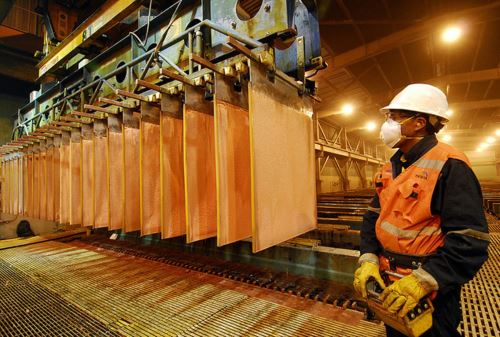
Mining exports totaled US$42.120 billion between January and September 2025, a 20.6% increase compared with the same period in 2024 (US$34.913 billion).
Copper shipments rose by 12.1%, gold by 43.1%, and silver by 33.1%, according to Minem.
For its part,
the Central Reserve Bank (BCR) revised upward its forecast for the 2025-2026 trade balance surplus, citing more favorable terms-of-trade prospects. Thus, it projects that the surplus will increase from US$32.893 billion in 2025 to US$38.208 billion in 2026.
It also anticipates that Peruvian exports will exceed US$100 billion in 2027, according to its latest Inflation Report, which analyzes macroeconomic variables and the global economic environment, the BCR stated.
Outlook
Amid global geopolitical tensions, gold continues to attract interest as a safe-haven asset.
At the same time, various investment banks expect gold, silver, and copper to maintain an upward trend, reflected in increased mining exploration investment and rising exports of these metals in international markets.
Therefore, it will be important to examine what presidential candidates have on their agendas to boost mining exports.
Data
Copper (US$17.264 billion) accounted for 30% of Peru's total exports between January and September 2025, while gold (US$10.999 billion) represented 24.4%.
By comparison, agricultural products (US$8.358 billion) accounted for 13% of total export value in the same period in Peru.
Arequipa is the region with the highest number of people directly employed in mining (45,872), followed by Moquegua (24,183) and La Libertad (23,028) as of October 2025.
(END) DOP/SDD/MVB
Publicado: 19/1/2026