The Ministry of Economy and Finance (MEF) highlighted today that Peru is closing 2025 with solid results in investment, economic growth, and fiscal stability, consolidating a favorable environment for the country's development.
The measures implemented by the MEF have boosted public and private investment, strengthened tax revenue, and consolidated macroeconomic foundations for sustainable growth in the coming years.
The Minister of Economy and Finance, Denisse Miralles, stated that the results achieved reflect responsible economic management.
"We have made progress in establishing clear rules for investment, strengthened tax collection, and maintained fiscal discipline. All of this allows us to leave solid and predictable macroeconomic foundations for the next period, geared towards sustainable growth, with more jobs and closing the gaps for the population," said Minister Miralles.
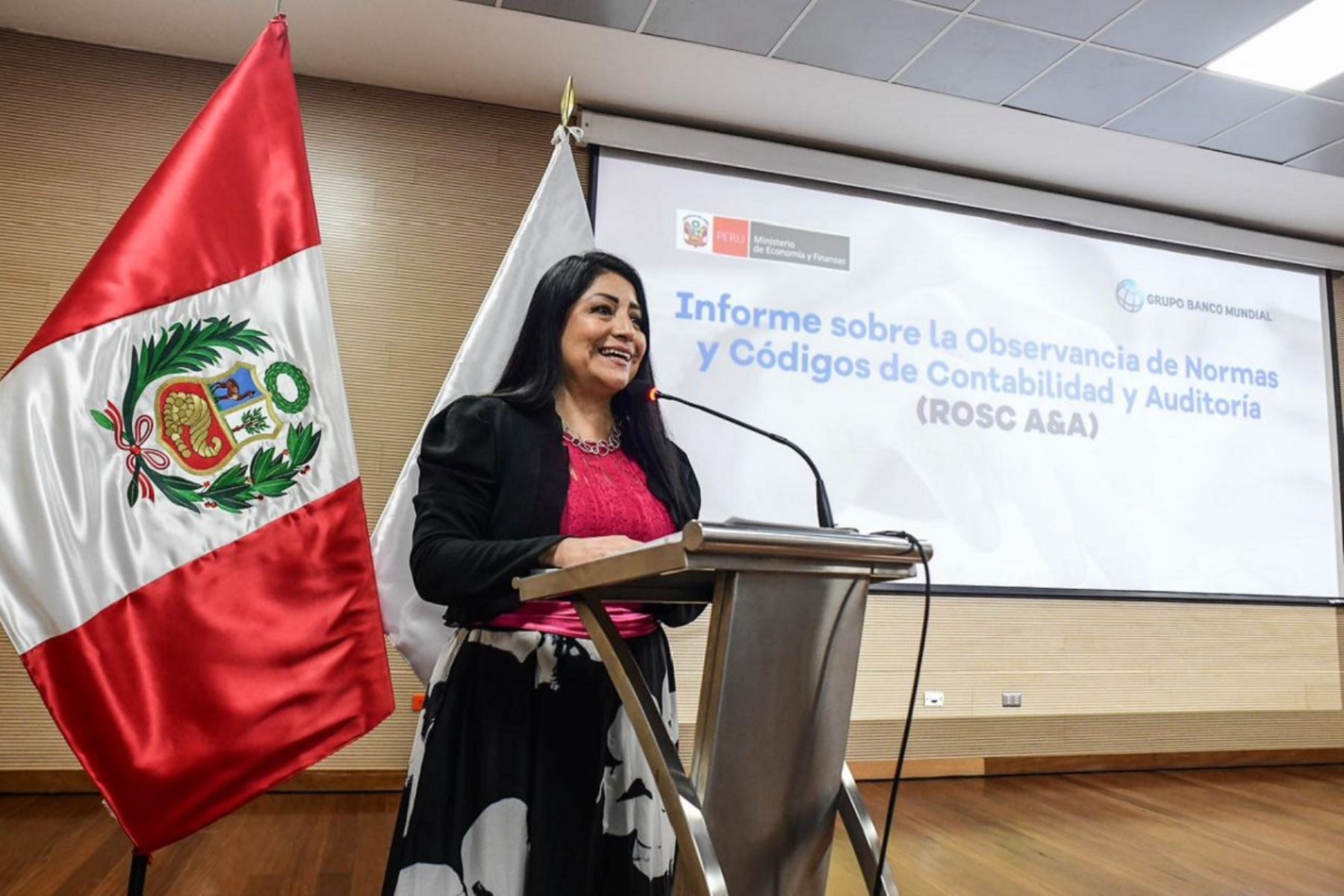
According to available indicators, between January and October, the Gross Domestic Product (GDP) accumulated growth of 3.4%. Inflation stood at 1.4% in November, marking 20 consecutive months within the target range of the Central Reserve Bank of Peru (BCRP).
Furthermore, as of December 23, international reserves reached $92,141 million, equivalent to 29% of GDP, reinforcing the country's financial stability.
- Private Investment in Peru will reach a third consecutive year of growth in 2026
Tax Revenue
Central Government tax revenue increased steadily. Revenue reached 159,496 million soles (approximately $47,403 million) between January and November 2025, representing a cumulative growth of 11.5%, equivalent to an additional 18,611 million soles (approximately $5,382 million) compared to the same period of the previous year, also exceeding the total revenue recorded in 2024.
This result will allow for the financing of more essential services in health, education, security, infrastructure, and pensions.
Public Investment
Public investment exceeded 49,185 million soles (approximately $14,618 million) as of November, the highest level of execution in the last decade, while private investment grew 11.4% in the third quarter of the year and it is projected to grow 9.5% in 2025, according to the Central Reserve Bank of Peru.
Fiscal Deficit
Responsible fiscal management let achieve these advances, reflected in a fiscal deficit of 2.3% of GDP annualized as of November, close to the annual target of 2.2% of GDP, within a context of ongoing efforts to meet it.
With the aim of preserving macroeconomic stability and promoting responsible growth in the coming years, the Ministry of Economy and Finance (MEF) established the Fiscal Agreement for Sustainable Growth in December, based on three pillars: fiscal sustainability, efficiency of public spending, and broadening the tax base.
This forum brings together the Executive Branch, the Congress of the Republic, regional and local governments, constitutionally autonomous bodies, the private sector, trade associations, academia, and civil society.
Along the same lines, the Government issued an Emergency Decree in November with extraordinary measures for austerity and efficiency in public spending, aimed at prioritizing the timely completion of projects and the responsible use of resources.
Also in December, Congress granted delegated legislative powers to the Executive Branch to implement, through the Ministry of Economy and Finance (MEF), eight measures aimed at strengthening the country's economic management. Five of these measures focus on strengthening tax and customs regulations, one on citizen security, and two on optimizing the promotion of private investment and the execution of strategic projects.
Facilitating Public Investment
In the last quarter of 2025, the Transitional and Reconciliation Government promoted an economic reactivation strategy through the implementation of clear rules and mechanisms that facilitate the execution of projects throughout the country.
Within this framework, the annual limit for the issuance of Regional and Local Public Investment Certificates (CIPRL) was increased by 50%, reaching 66,838 million soles (approximately US$19,864 million), the highest figure since the creation of the Public Works for Taxes (OxI) mechanism.
Of this total, 32.589 billion soles (approximately $9.685 billion) correspond to regional governments and 34.249 billion soles (approximately $10.179 billion) to local governments.

As of the last week of December, 479 projects were awarded through the Works for Taxes program for more than 4.7 billion soles (approximately $1.396 billion), exceeding the amount recorded in 2024.
Additionally, the Government awarded nine projects under the Public-Private Partnership (PPP) model for $3.683 billion, also signed a strategic addenda for the port of Matarani, which will mobilize investments exceeding $700 million.
Along these advances, the Government approved the regulation of the new Public-Private Partnership Law, which corrects redundancies, establishes maximum timeframes for evaluating contract modifications, and provides greater predictability for investors.

Less bureaucratization Shock
This is in addition to the less bureaucratization Shock, which by year's end had reached over 70% completion, with 469 measures finalized (between approved and under review) and the elimination of 187 bureaucratic barriers, in coordination with National Institute for the Defense of Competition and the Protection of Intellectual Property (Indecopi).
In parallel, the Specialized Investment Monitoring Team (EESI) facilitated the acquisition of 152 permits and/or milestones necessary for the execution of 65 investment projects totaling over $85.9 billion, contributing to the disbursement of $2.542 billion during the year, in strategic sectors such as mining, transportation, energy, health, and education.
Finally, through the 27 ConectaMEF centers nationwide, more than 79,000 specialized consultations, 74,000 technical assistance sessions, and provided over 1,500 training sessions to public servants, strengthening the fiscal management of subnational governments and contributing to a more efficient use of public resources throughout the country.
More at Andina:
Publicado: 31/12/2025