11:56 | Mariscal Caceres (San Martin region), Sep. 28.
Gran Pajaten is one of Peru's most enigmatic and impressive archaeological sites. It is attracting growing scientific interest as researchers seek to unravel its mysteries, as well as increasing attention from tourists eager to admire its imposing presence within the northeastern Amazon rainforest.
When and where was it discovered? Which ancient Peruvian culture does it represent? What are its main features? What international recognition has it received?
This archaeological site, also known as El Dorado of Antisuyo, is located within the Rio Abiseo National Park, Huicungo district, Mariscal Caceres province, San Martin region, at an altitude of 2,895 meters above sea level, between the Marañon and Huallaga Rivers.
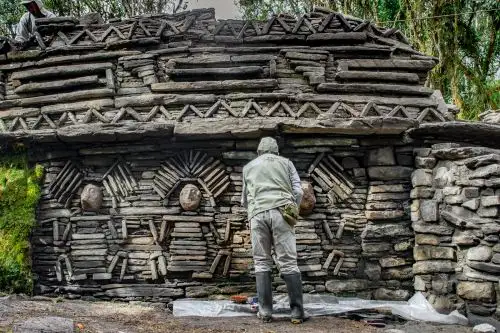
Also known as the Lost City of the Chachapoya, Gran Pajaten was discovered in 1963 by a group of Pataz residents led by Carlos Tomas Torrealva.
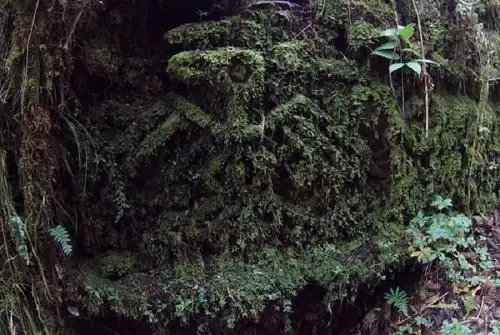
This archaeological monument covers an area of approximately 20,000 square meters. Upon its discovery, it was covered by dense vegetation which, together with the rugged terrain and the impenetrable nature of the jungle, helped preserve it for many centuries.
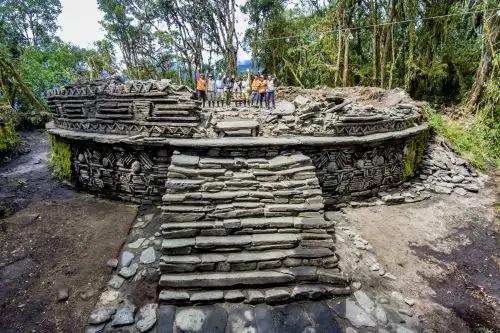
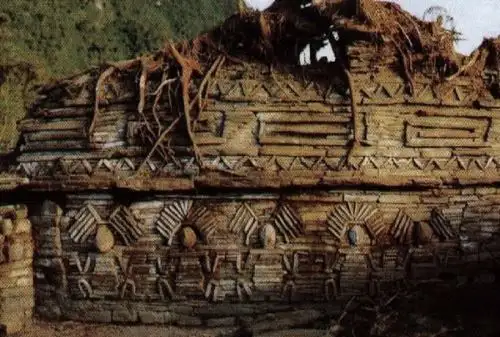
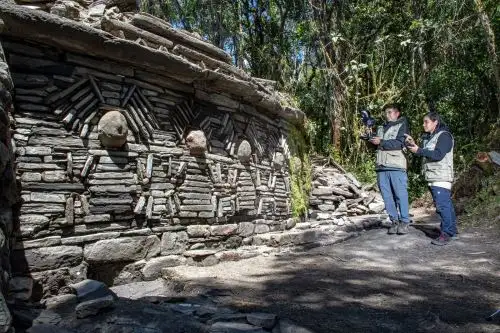
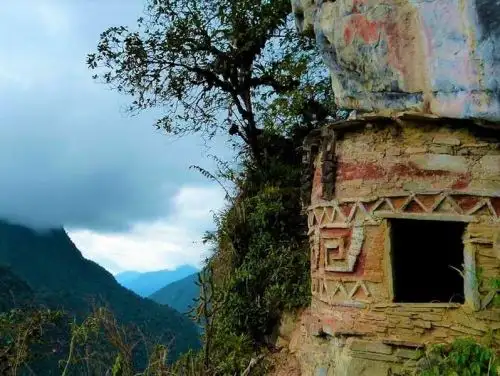
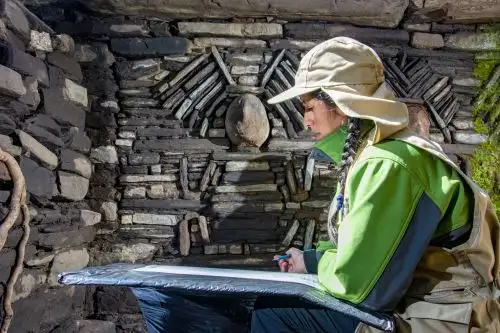
Gran Pajaten, estimated to be more than 800 years old, comprises a group of circular buildings similar to those at Kuelap. They are decorated with slate mosaics depicting birds, human figures, and geometric motifs.
Some structures feature exquisite architectural decoration, including extensive mosaic compositions and even wooden sculptures.
These compositions provide exceptional evidence of the artistic traditions developed by the ancient Chachapoya culture.
Among those who studied Gran Pajaten was renowned Peruvian archaeologist and Chachapoya culture expert Federico Kauffmann Doig.
Since the 1980s, he has conducted research on the Chachapoya culture and participated in several expeditions to the territory in which this pre-Hispanic civilization developed, which encompasses San Martin, Amazonas, and La Libertad regions.
Although it is unknown when it was abandoned, Kauffmann Doig estimated that this took place long after the Inca conquest, because the governing structure that looked after it had disappeared.
He stated that food had to be produced at Gran Pajaten both for daily consumption and storage, because Peru has always been battered by harsh weather conditions.
This situation prompted the site's rulers and administrators to order residents to store sufficient resources to cope with periods of scarcity caused by natural disasters.
World Heritage Site
The presence of numerous exceptional archaeological remains within a vast forested area is unique on the continent.
This led UNESCO to declare Rio Abiseo National Park a mixed World Heritage Site in 1992, recognizing its natural and cultural significance.
In Peru, only the Historic Sanctuary of Machu Picchu shares this mixed designation.
Likewise, the Gran Pajaten Biosphere Reserve was recognized by UNESCO on March 19, 2016, during the 28th International Coordinating Council of the Man and the Biosphere (MAB) Programme, held in Lima.
Covering an area of 2,509,698.84 hectares, the Gran Pajaten Biosphere Reserve encompasses eight provinces and 33 districts across the Amazonas, La Libertad, and San Martin regions, making it the largest biosphere reserve in Peru.
Both designations aim to protect and preserve this enigmatic lost city in the Peruvian cloud forest, as well as its surrounding environment.
UNESCO highlights that the authenticity of the archaeological remains in Rio Abiseo National Park remains unquestionable.
"No significant human interventions have occurred since its abandonment in the 16th century until its rediscovery in the 19th century. The geographical configuration, isolation and the inaccessibility of the area have contributed to keeping intact the authenticity of the pre-Columbian sites," UNESCO stated.
"These conditions show that the diversity of archaeological sites within the various altitudes and areas of the Rio Abiseo National Park still bear witness to the process and the historical continuity of adaptation, evolution and human development in the cloud forest and the paramo of the high Andes territory," it underscored.
Difficult access
Although Gran Pajaten is located in San Martin region, the archaeological site can currently only be accessed through Pataz province, which belongs to La Libertad region and borders San Martin.
However, tourist access to this enigmatic archaeological gem of the Chachapoya culture remains highly restricted because restoration and enhancement work has yet to be carried out.
This is largely due to the fragility of the structures, which could be damaged if the vegetation growing between the stones used to build them were removed. Technical studies are still pending to ensure the safeguarding of the archaeological site.
(END) LZD/MAO/MVB
Publicado: 28/9/2026