16:25 | Luya (Amazonas region), May. 12.
Last April, major news came from Amazonas region that went largely unnoticed due to the General Elections: the monumental
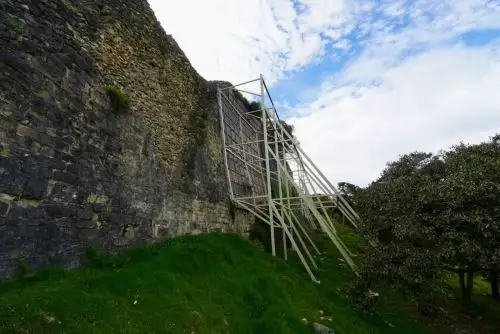
Kuelap Fortress, the region's main tourist and archaeological icon, fully recovered the southern wall's section that collapsed in April 2022, following a complex research, conservation, and reconstruction process.
The official highlighted that the tasks carried out since 2023 made it possible to restore the monument's original configuration through the use of photogrammetry, archaeological studies, and conservation techniques compatible with international standards.
The collapse of Kuelap's southern section in 2022 not only affected one of the most visible areas of this archaeological monument.
The first image visitors see upon arriving at the site is precisely this sector; in addition, the news generated worldwide media attention regarding the Chachapoyas complex's state of conservation.
Photogrammetry, codes, and stone-by-stone work
The key to a recovery faithful to the original state was the documentation available prior to the collapse.
The DDC team had photogrammetry and detailed photographic records of the area, which made it possible to reposition each stone in its exact location.
To achieve this, every lithic element was marked with an individual code.
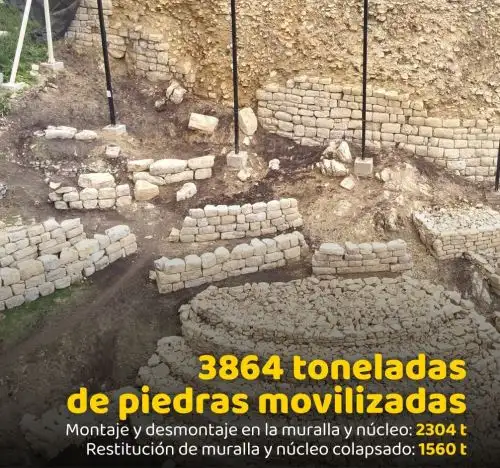
The expert explained to Andina News Agency that the first step after the collapse of said wall — which in that sector reaches 17 meters in height — was to recover and classify thousands of lithic elements scattered across the place where the incident had occurred.
"The entire team first had to select the stones to determine which could be reused and which could not. That process took nearly four months," she revealed.
Sanchez said the effort relied on photographs and photogrammetric records taken prior to the incident, which made it possible to reconstruct the structure "exactly as it was before the collapse."
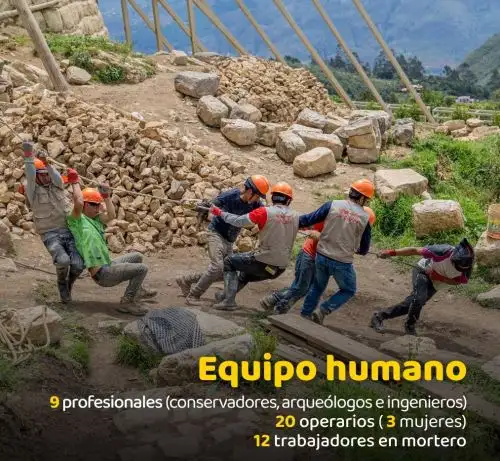
The recovery involved archaeologists, architects, engineers, and specialized local labor.
Many workers have experience at Kuelap since 2004 and recently received certifications from the Ministry of Labor in stone conservation and treatment.
How the wall was reconstructed
Sanchez stated that the process not only consisted of repositioning visible stones, but additionally involved rebuilding the wall's structural core, using mortar as a binding material behind the outer stone facing.
Additionally, geomeshes were installed inside the structure as extra support to prevent future incidents.
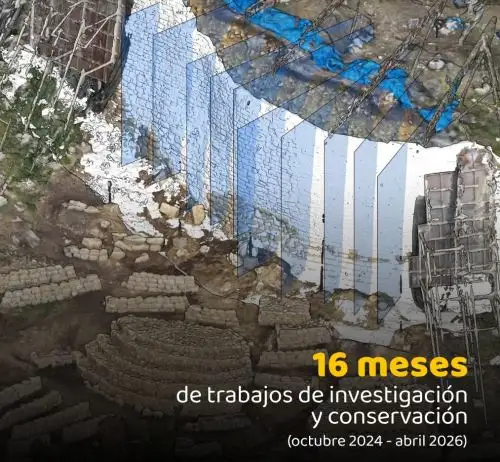
"When a wall collapses, not only do the external stones fall, but also the entire internal core that supports them," she explained.
Similarly, geomeshes and internal supports were installed to reinforce structural stability and reduce the risk of future detachments.
The DDC director stated that the effort was carried out mainly during dry season due to the intense rains characteristic of the Amazon cloud forest region where Kuelap is located.
Archaeological research delayed works
The DDC Amazonas head clarified that one factor extending the timetable was the need to conduct prior archaeological research before structurally intervening in the affected area.
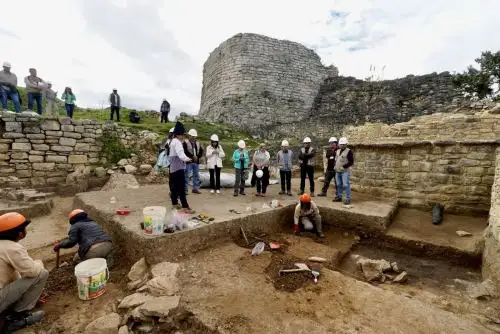
"First, the entire site had to be investigated in order to later allow drainage and waterproofing works. That stage alone took around six months," she indicated.
Sanchez revealed that during the research fragments of ceramics, bone remains, and metallic pieces composed of gold, silver, and copper were discovered, currently undergoing specialized analysis to determine their function and age.
The DDC director specified that the metallic pieces were sent to the Brüning Museum for conservation processes and later returned to Chachapoyas to continue archaeometric studies.
Kuelap still faces risks
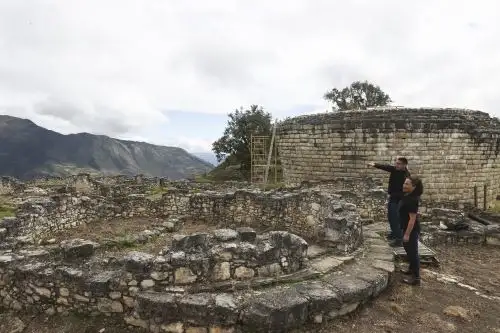
Although the area affected by the 2022 collapse has already been recovered, Sanchez acknowledged that Kuelap still has vulnerable sectors due to climatic factors, invasive vegetation, and structural problems accumulated over centuries.
The official even revealed that research confirmed that the Chachapoyas themselves faced similar collapses and made modifications to the walls to correct them.
"During the research, we have found evidence of ancient collapses and how the Chachapoyas corrected the wall angles to stabilize them," she remarked.
Human burials were additionally detected inside some structures, a situation that may have contributed to weakening certain sectors of the monument.
Reopening and new tourism circuits
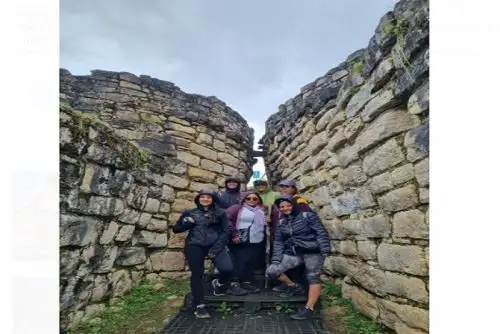
The DDC official reported that the llaqta of Kuelap has remained open to tourism since August 2023, although visiting circuits are constantly modified as research and conservation works progress.
The southern wall area will be reincorporated into the tourist route at the end of May, once works on the external path affected by the collapse are completed.
"We want visitors to see not only the majesty of Kuelap, but also the delicate conservation work being carried out," she noted.
More research until 2029
Sanchez explained that Kuelap currently has an Archaeological Research Program in force until 2029, much broader than previous focused archaeological projects.
According to her, when the current administration took over, they discovered that only 20% of the complex had been investigated. Today, progress ranges between 32% and 33%.
Among the new work areas is the Malcapampa monument, located within the archaeological complex, where investigations will begin supported by the World Monuments Fund.
Tourism recovering
The recovery of Kuelap is additionally beginning to be reflected in visitor figures.
The Culture director reported that the complex closed 2025 with nearly 67,000 visits. This year, growth between 10% and 15% is projected, which would make it possible to reach approximately 80,000 visitors.
The official specified that visits increased around 60.7% during the long Holy Week holiday (April 2-5) compared to the previous year.
Moreover, Sanchez highlighted that the continuity of flights to Chachapoyas has been favoring the destination’s recovery, although she insisted on the need to expand air connectivity.
"If we want to grow more, we need a greater number of flights," the expert underscored.
Lastly, she announced that Kuelap will soon be promoted in activities organized by the Commission for the Promotion of Peru for Exports and Tourism (Promperu) and within the framework of the Peru Travel Mart fair.
These efforts are aimed at strengthening Amazonas' tourism positioning, as well as consolidating the regional tourism value chain.
(END) MAO/MVB
Published: 5/12/2026