President of the Republic Keiko Fujimori highlighted El Salvador’s experience in public security, stating that her official visit to the country aims to examine and evaluate measures that could be adapted to the reality in Peru.
“Successful experiences must be analyzed, studied, and adapted. While we are certainly different countries, we can adopt whatever works—the positive aspects,” the head of Peruvian state remarked after being welcomed by Salvadoran President Nayib Bukele at the Presidential Palace.
President Keiko Fujimori noted that the two nations share 160 years of friendship, and she expressed a commitment to strengthening their bilateral relationship.
“Through this visit, we aim to elevate our ties of friendship into a strategic alliance,” she stated.
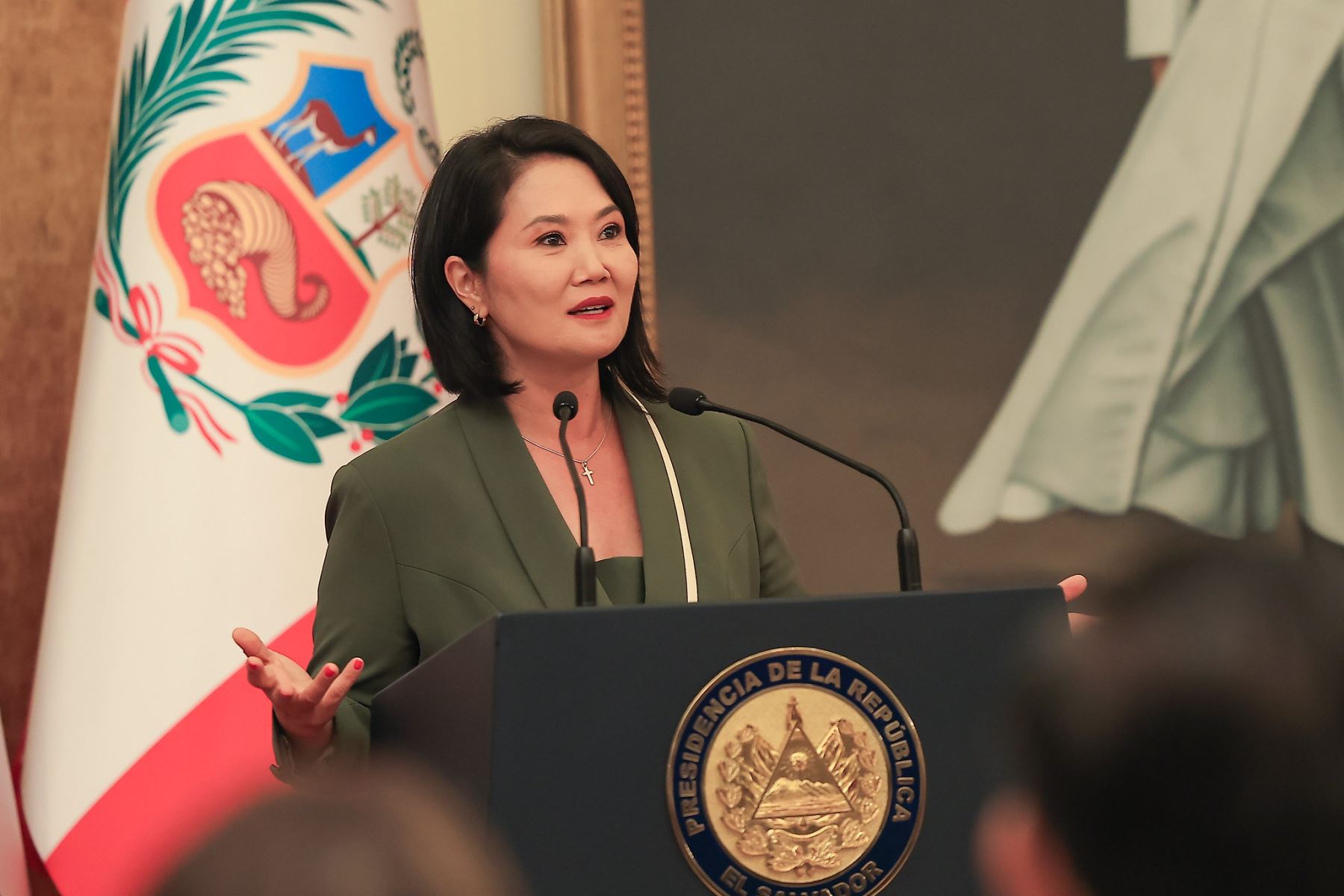
“Your administration has restored something sacred to the citizens of El Salvador: peace, security, and the freedom to walk the streets once again without fear. Today, El Salvador stands as a beacon of hope for Latin America,” she said.
In this context, she reported that the Peruvian delegation visited the Terrorism Confinement Center (CECOT), where they gathered insights that could help strengthen the fight against crime in Peru.
“We are gathering several ideas,” she affirmed, describing the penitentiary facility as an “impressive” and “emblematic” structure.
“Peru has several prisons yet to be completed, and we are set to begin two more. One will be for high-risk inmates, for which we will build something similar. We will also construct a facility for lower-risk inmates, where we intend to implement productive workshops and the ‘Zero Idleness’ (Cero Ocio) program—another initiative we are adopting,” said President Keiko Fujimori.
She also indicated that her government is actively promoting measures to strengthen both the penitentiary system and internal security.
“In Peru, we are taking very important steps, such as reunifying the efforts of the Armed Forces and the National Police,” she noted.
Likewise, she emphasized that her administration will focus on areas including education, health, and digital transformation.
“For me, one of the most significant legacies will be education, because we are talking not just about the present, but about the future,” she stated, highlighting the construction of new schools, improved connectivity via satellite internet, and the use of artificial intelligence tools.
Invitation to President Bukele
The president announced that she has extended a formal invitation to President Bukele to visit Peru, and she reiterated her interest in deepening economic and commercial cooperation between the two nations.
“Here in El Salvador, it has also been demonstrated that peace cannot be improvised,” she emphasized.
Later, during a press conference, President Fujimori noted that one of the key lessons learned during her visit to the CECOT (Terrorism Confinement Center) is the necessity of preventing prisons from continuing to serve as operational hubs for organized crime.
In this regard, she pointed out that the government is implementing measures to strengthen prison control—including perimeter security managed by the Armed Forces—and taking action to disrupt illicit communications by inmates.
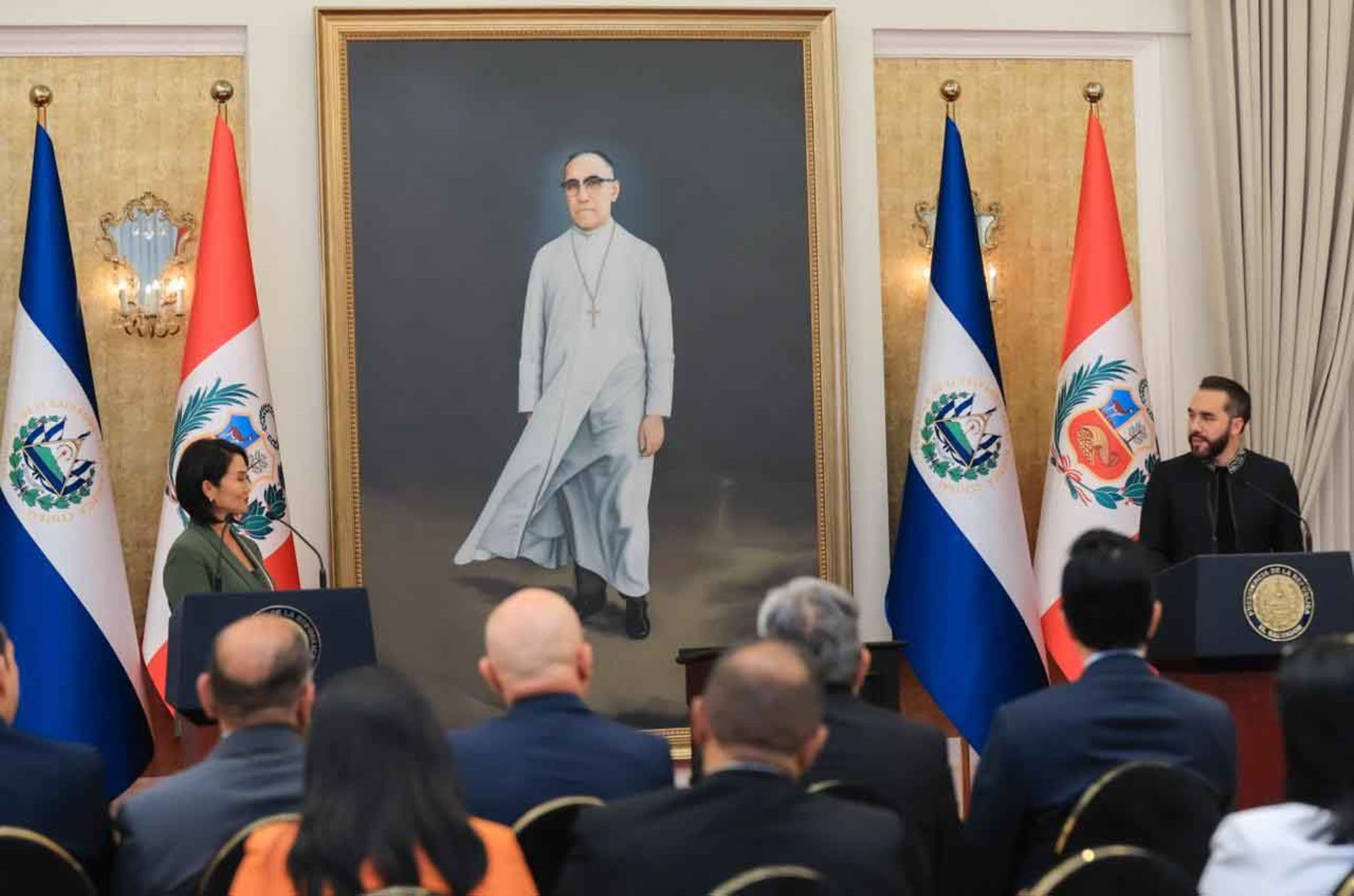
President Bukele highlights historic relationship with Peru
For his part, the President of El Salvador, Nayib Bukele, welcomed President Keiko Fujimori and expressed his confidence that this official visit would help strengthen the ties between the two nations.
He also highlighted the historic bonds of friendship between his country and Peru, noting that they share common challenges in areas vital to the well-being of their populations. In this context, he underscored the importance of fostering an exchange of experiences regarding security, health, and education.
“We are Latin American brothers, and now we have the opportunity to share experiences on issues of such great importance to our people—namely security, health, and education,” he stated during his meeting with President Keiko Fujimori.
Regarding public security, Bukele noted that El Salvador has gone from being “the most dangerous country in the world” to becoming “the safest country on the entire continent,” thanks to a comprehensive strategy against crime.
He indicated that his government has made its experiences, strategies, and penitentiary system available to Peru, so that they may be evaluated and adapted to the country’s specific national reality.
Furthermore, he emphasized that “there are things that are universally applicable” in the fight against crime, and that each country can adopt the measures it deems useful to strengthen the security of its citizens.
Agreements signed
During the event, the presidents of Peru and El Salvador signed a joint declaration in which they agreed to deepen their bilateral relationship through a results-oriented agenda.
Furthermore, agreements were signed to strengthen cooperation in the areas of health, security, justice, and tourism, along with the establishment of a bilateral partnership that reaffirms the bond of brotherhood between the two nations.
The event was attended by the Minister of Foreign Affairs, Carlos Espá; the Minister of the Interior, César Astudillo; the Minister of Justice and Human Rights, Ernesto Álvarez; and the Minister of Health, Luis Dyer.
Also in attendance were the Vice Minister for Pedagogical Management, Miriam Ponce; the Director of the National Program for Educational Infrastructure (Pronied), Pedro Morales; the Peruvian Ambassador to El Salvador, César Augusto Jordan; and the Director General for the Americas at the Ministry of Foreign Affairs, Roberto Rafael Max Rodríguez.
More from Andina:
(END) NDP/JCR / MDV
Publicado: 29/10/2026