15:00 | Ayacucho (Ayacucho region), Aug. 24.
Good news for tourism in Ayacucho. The Decentralized Directorate of Culture (DDC) in Ayacucho announced the extension of the opening days of the Wari Site Museum and Archaeological Complex, the monumental capital of the Wari Empire, the first major pre-Hispanic Peruvian state, which flourished between the 6th and 11th centuries AD.
The measure was implemented to provide greater convenience for tourists visiting Ayacucho, travel agencies, and tour guides.
According to the statement, the new measure takes effect today, Monday, August 24, 2026.
From this date onward, the site will remain open Monday to Sunday, from 9:00 a.m. to 5:00 p.m., becoming a tourist attraction available every day of the week.
Wari, one of ancient Peru's great cities
The Wari Archaeological Complex is located in Huamanga province, Ayacucho region, approximately 22 kilometers northeast of the city of Ayacucho, on the road to Quinua.
The archaeological site was characterized by complex urban planning, large stone-and-mud structures, ceremonial spaces, and water management systems.
According to the Ministry of Culture, the archaeological site covers approximately 2,000 hectares.
Due to its size and organization, Wari is one of the foremost examples of the political, architectural, and administrative capabilities of pre-Inca societies in the Andes.
Its importance also lies in the fact that it offers insight into a fundamental period of Peru's history before the development of the Inca state.
A museum to learn about the Wari culture
Next to the archaeological area is the Wari Site Museum, administered by the Ministry of Culture.
The museum was inaugurated on July 16, 1996. It preserves and exhibits materials recovered during archaeological research conducted at the complex.
Its collections include ceramic pieces, lithic artifacts, textiles, and monoliths, as well as graphic and explanatory information about the Wari culture and the different sectors of the ancient city.
A visit to the museum complements a tour of the archaeological structures, as the objects recovered during excavations help visitors understand the daily life, religious practices, and social organization of those who inhabited this important urban center.
A heritage site that continues to yield new discoveries
Wari's archaeological importance is also reflected in the research that continues to be carried out at the site.
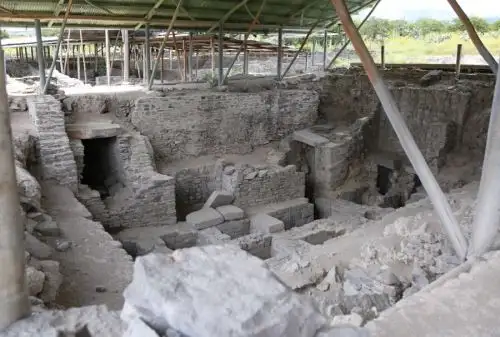
The Ministry of Culture has reported discoveries in areas such as Vegachayuq Moqo and Monqachayuq, where ceremonial spaces and structures associated with funerary practices were identified.
Among the discoveries are a mausoleum built with finely-worked stones and a D-shaped architectural structure.
These works show that a considerable part of the ancient city still holds information yet to be investigated, meaning Wari remains a site of great interest for archaeology and for understanding Andean societies’ development.
New opportunity for tourism in Ayacucho
The extension of opening hours represents an opportunity to strengthen the tourist circuit linking Ayacucho, Wari, Quinua, and Pampa de Ayacucho.
The complex's proximity to the city makes it possible to visit the site as part of a one-day trip and combine the tour with other historical and cultural attractions in the province.
With the new measure, domestic and international tourists will be able to plan their visits with greater flexibility, especially on weekends and on days when the site was previously closed.
New opening hours
Wari Site Museum and Archaeological Complex
Days: Monday through Sunday, every day
Hours: 9:00 a.m. to 5:00 p.m. (local time)
Effective: Monday, August 24, 2026
Location: Km 23 of the Ayacucho–Quinua Highway, Ayacucho
The measure announced by the Ministry of Culture will facilitate access to one of Ayacucho's foremost archaeological sites.
It will also bring more visitors closer to the legacy of one of ancient Peru's most important pre-Inca civilizations.
(END) NDP/MAO/MVB
Publicado: 24/8/2026