11:22 | Chachapoyas (Amazonas region), Sep. 15.
Researchers from the
Kuelap Institute of Archaeology and Anthropology Research (INAAK) at the Toribio Rodriguez de Mendoza National University of Amazonas made a surprising discovery during excavations at the Ollape archaeological site: a pre-Hispanic “die,” it was reported.
According to INAAK, the small object, made of sandstone, has an elongated, prismatic shape, with worked surfaces and horizontal incisions on its faces.
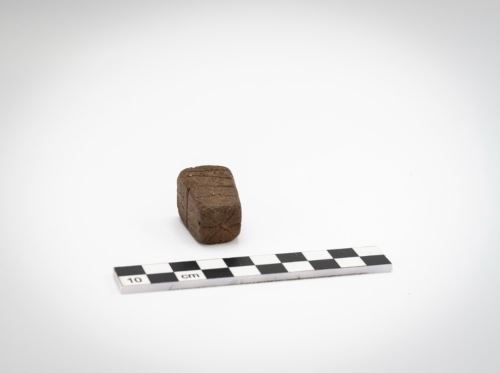
The stone artifact could change our understanding of ritual practices among pre-Hispanic populations settled in the area: a Pishca (a die) whose name comes from the Quechua word Pichqa, meaning five.
Based on its characteristics, it resembles Andean dice known in ethnohistorical and archaeological sources as "Pishca" or "Pichca," associated with games, luck, and possibly ritual practices.
The discovery is notable because it is a rare artifact in Peru's archaeological record and provides insight into a still little-known aspect of the lives of pre-Hispanic societies in Amazonas region.
Its study raises new questions about the use, meaning, and context in which this object served.
The discovery was made in Excavation Unit 05, in Grid B, toward the exterior of one of the site's structures.
A deposit of long stones, similar to cornices, was being removed.
They had been piled up in a disorderly manner, with no traces of mortar, suggesting that they had been moved and placed there at a later time, after their original use.
Among the stones were traces of organic matter, the result of centuries of plant accumulation typical of the forested environment surrounding the site.
(END) NDP/MAO/MVB
Publicado: 15/9/2026