The
Ministry of Housing, Construction, and Sanitation (MVCS) presented progress in implementing the Roadmap for Circular Economy in Potable Water and Sanitation to 2030 during the
Organization for Economic Cooperation and Development's (OECD) Eighth Roundtable on circular economy in cities and regions.
Through the General Directorate of Environmental Affairs (DGAA), the ministry presented the main achievements in applying the Roadmap for Circular Economy in Water and Sanitation to 2030, highlighting not only the approval of a policy instrument, but also successful experiences identified so far.
The MVCS's participation took place during the session "Circular Water Economy in Latin America," where challenges and opportunities were addressed for advancing toward more sustainable models in water resource management, amid growing pressure from climate change, urban growth, and demand for services.
These examples are aimed at optimizing the recovery of byproducts from the sanitation sector, promoting wastewater reuse, and improving sanitation services' sustainability.
"The presentation was received with great interest and favorable expectations by international participants, who valued our country's efforts to incorporate circular approaches into water management, as well as the institutional coordination for its implementation," the MVCS stated.
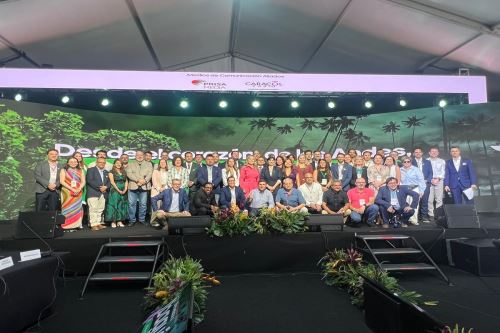
At the session, dedicated to circular economy in cities and regions, the importance of having planning instruments such as the Roadmap was also highlighted, as they help guide concrete and measurable actions toward the circular transition.
They agreed on the need to strengthen cooperation and implement circular solutions to address the region's water challenges.
With this participation, the MVCS reaffirmed its commitment to innovation in the sanitation sector, contributing to improving the population's quality of life and the sustainable management of water resources.
(END) NDP/CNA/MVB
Publicado: 27/4/2026