By Fidel Gutierrez MendozaAs the New Year 2026 approaches, the Ministry of Development and Social Inclusion (Midis), under the leadership of Lesly Shica, is emphasizing improvements to the School Feeding Program, strengthening preventative measures to address potential problems in this area.
What are the main points of the work you have carried out since taking the helm at Midis?
We decided to focus on the core of our seven social programs to promote entrepreneurship and business ideas with seed capital for the entire life cycle of the beneficiaries we support. We also implemented extraordinary measures, prioritizing early childhood development.
We are also taking care of the present, seeking progress and long-term impact from the cash transfers provided by our programs. We are supporting more than 5,000 mothers who have started entrepreneurial projects. We also spoke with other organizations that help us not only by providing seed capital, but also with technical support and training.
What results are being reported from the extraordinary measures you mentioned?
Social programs like “Juntos,” which supports mothers from the stage of pregnancy, recognizing their children as subjects of rights, and the “Cuna Más” program, which supports children until age 3, a crucial stage for the development of the cerebral cortex, guaranteeing secure attachment and breastfeeding.
These programs are helping us reduce rates that were previously a major concern in the country, such as anemia.
Are we ending 2025 with childhood anemia on the decline?
Regarding the impact of our social programs on early childhood development, we have managed to reduce anemia to less than 20%. However, we will increase our efforts to further reduce these numbers from the high rates of anemia we experienced previously, rates we do not want to return to.
Regarding early childhood support, will the Midis follow the established guidelines?
We have strengthened our home visits, such as in the "Cuna Más" program, where we have two intervention models: one on-site, which are the Comprehensive Care Centers; and the Family Support Service.
In urban areas, parents can take their children to the daycare center while they work. But in rural areas, it is very difficult to have this meeting point due to space limitations and distances. What we do there is visit homes to assess whether the children are receiving the appropriate nutrients and cognitive development.
Will the Midis establish any other conceptualization or mechanism for next year regarding social programs?
We have been working with universities to establish a baseline and milestones for public policy and goal achievement in fieldwork. Whoever takes over in the coming months will have a work plan, a "white paper," to improve the implementation of social programs.
That covers early childhood development, but we also focus on the next stage of life.
When our children finish school, we review their life plans and support them so they can pursue higher education. We partner with the private sector for this. Then, through the Social Development Cooperation Fund (Foncodes), we prioritize seed capital to support entrepreneurial and business ideas.
How is the implementation of the School Feeding Program (PAE) progressing?
There have been name changes without a true structural reform of the program, which has significantly affected, by both external and internal factors. Today, this version of the PAE program serves more than 4.2 million children and, for the first time in its history, has an executive leadership committed to nutrition, headed by Sabi Mauricio, former dean of the College of Nutritionists, with an impeccable career.
We place nutrition at the heart of this program, and from there, we develop the corresponding logistical processes and controls. For this reason, we have sought the support of all relevant oversight bodies. This structural reform cannot be ready in two or six months, it takes a long process.
What can parents and children benefiting from this program, expect in 2026?
By March 2026, we are strengthening oversight mechanisms for the School Feeding Program (PAE). We have approached the Comptroller General of the Republic and the Public Prosecutor's Office. Furthermore, to establish technical working groups and an open, transparent market, we have engaged with the National Society of Industries.
The director of the School Feeding Program (PAE) is holding open technical meetings to develop technical specifications that meet the highest quality standards. The PAE has a budget of over 2 billion soles.
Making these changes will have repercussions in the market and among various stakeholders. All those who want to contribute positively are welcome, but we cannot allow them to corner us and tell us we have to add this or that product.
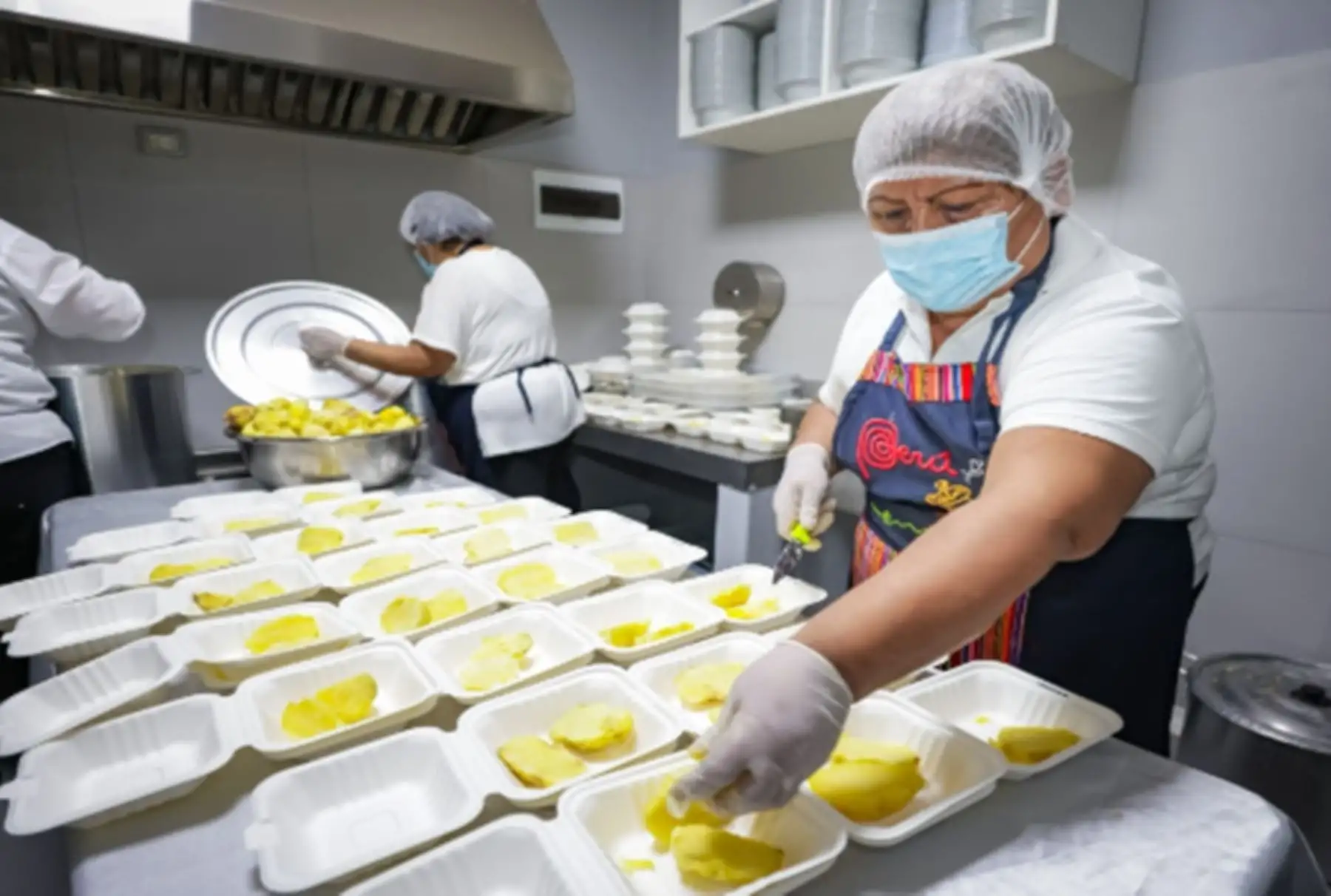
Putting a stop to opportunists
Minister Shica emphasized that the School Feeding Program employs a rigorous selection process for nutritional products, preventing any opportunity for agents who have sought only personal gain rather than the benefit of children.
"We don't want any more companies created solely for the feeding program," she stated. "We cannot allow this to be a platform for companies to test whether their food works or not," she stressed.
She also specified that the nutritional quality of these products requires that they demonstrate their ability to reach a large population. Therefore, companies that demonstrate a certain level of activity in the market are being asked to participate.
“These must be foods that we can all afford, that we can buy for our children. Furthermore, financial backing must be demonstrated,” she stated.
Regarding reports that individuals under investigation for irregularities in previous food programs are still employed at the Ministry of Development and Social Inclusion (Midis), Shica urged that the procedures “be carried out correctly.”
More at Andina:
(END) DOP/FGM / MDV
Publicado: 29/12/2025