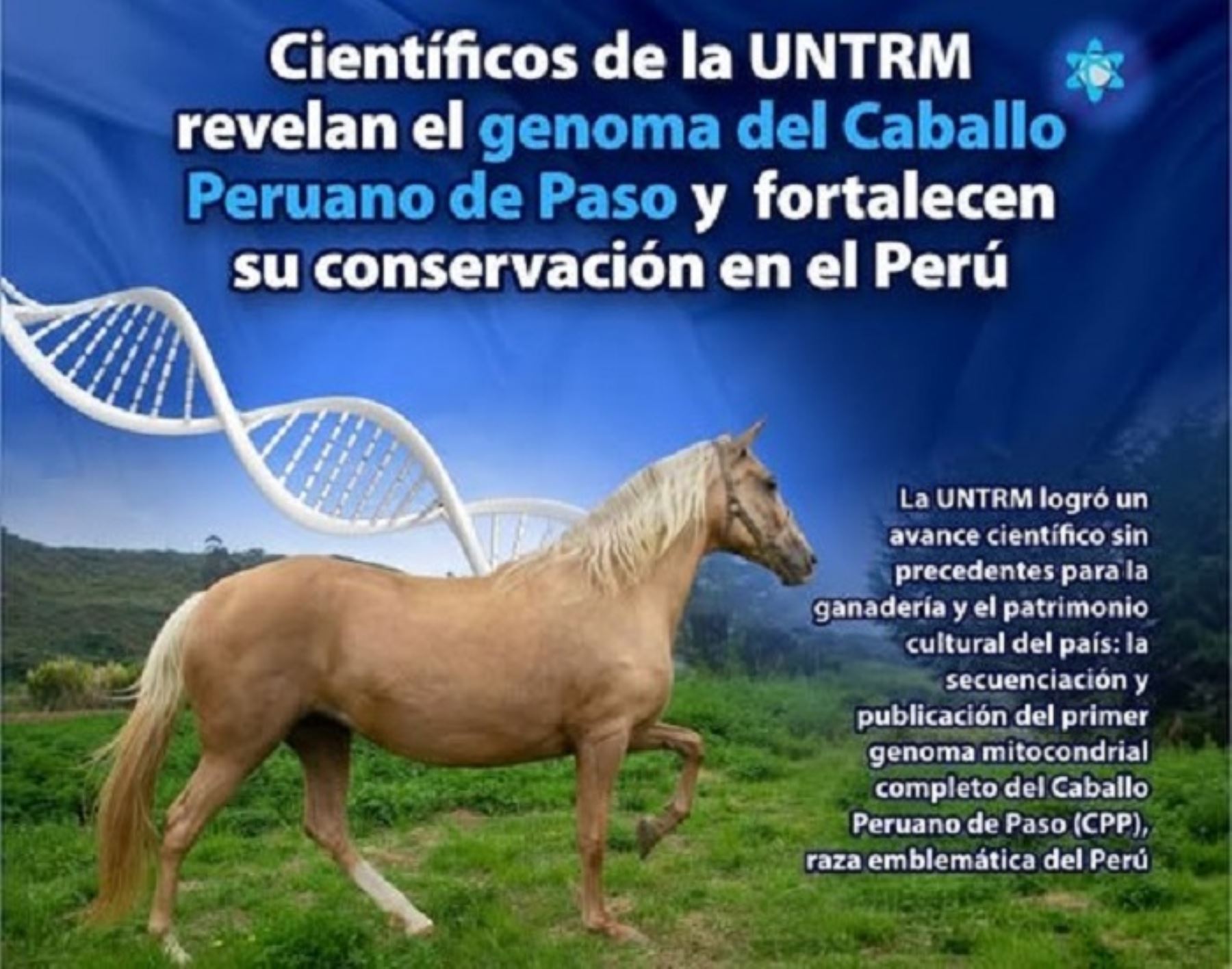
Researchers from the Peruvian National University Toribio Rodríguez de Mendoza (UNTRM) of Amazonas have made a fabulous scientific discovery: they have successfully sequenced and published the first complete mitochondrial genome of the Peruvian Paso horse, an emblematic breed of Peru.
UNTRM highlighted this achievement, emphasizing the elegance, stamina, and unique gait of the Peruvian Paso horse and stating that this discovery represents an unprecedented scientific advancement for livestock and the country's cultural heritage.
The university maintained that this discovery allows, for the first time, the precise understanding of the maternal genetic information that defines the biological identity of the Peruvian Paso horse, making it a key tool for its conservation, genetic improvement, and protection against the loss of genetic variability.
The research, conducted by the Livestock and Biotechnology Research Institute (IGBI) of UNTRM, was published in the scientific journal Scientific Reports (Q1, IF: 3.9) by the Springer Nature publishing group, positioning this national breed on the international scientific stage.
What does the study reveal?
The study explains that using next-generation PacBio HiFi sequencing technology, researchers were able to assemble a mitochondrial genome of 16,617 base pairs, identifying 35 heteroplasmic variants and high structural stability, which confirms the genetic strength of the Peruvian Paso Horse compared to other equine breeds.
"This means that the breed retains well-defined genetic characteristics, fundamental to maintaining its purity and functional performance," UNTRM emphasized.
"One of the most significant findings was the comparative phylogenetic analysis of 681 mitochondrial horse genomes worldwide, which placed the Peruvian Paso Horse within European maternal lineages, with genetic affinity to breeds from southern and central Europe. This result provides solid scientific evidence regarding its origin, evolution, and adaptation process in Peruvian territory, strengthening its historical and cultural value," explained the university.

The National University Toribio Rodríguez de Mendoza stated that the impact of this study extends beyond the academic sphere. The results will serve as a basis for genetic improvement programs, lineage certification, breed conservation, and decision-making in breeding farms, directly contributing to the sustainability of the Peruvian Paso Horse as a national zoogenetic resource.
He also highlighted that this is the first study in Peru to apply PacBio HiFi long-read sequencing to a native animal breed, and that the genomic and bioinformatics analyses were made possible by the use of the UNTRM–Data Science high-performance server, demonstrating the university's scientific and technological capacity to lead cutting-edge research.
More at Andina:
(END) NDP/MAO / MDV
Publicado: 27/12/2025