By Luis Zuta DavilaThe apostolic visit of Pope Leo XIV to the city of Cusco invites both domestic and international visitors arriving in the Imperial City of the Incas to take part in events led by the Supreme Pontiff. It is also an opportunity to discover and appreciate the depth of Catholic devotion and the cultural richness found in the churches and sites that make up the religious tourism routes in this iconic destination in southern Peru.
Below, we explore the most notable religious tourism routes that Cusco offers its thousands of visitors.
Route in the Historic Center
This religious tourism route includes visits to the following Catholic churches located in the historic center of the city of Cusco.
Cusco Cathedral
Situated on the iconic Plaza de Armas, the Cusco Cathedral is a masterpiece of colonial architecture. Built between 1560 and 1664 on the site of the former Inca palace of Viracocha, it houses three separate churches within its walls. Its imposing Baroque façade and gilded altarpieces reveal the splendor of Cusco’s sacred art.
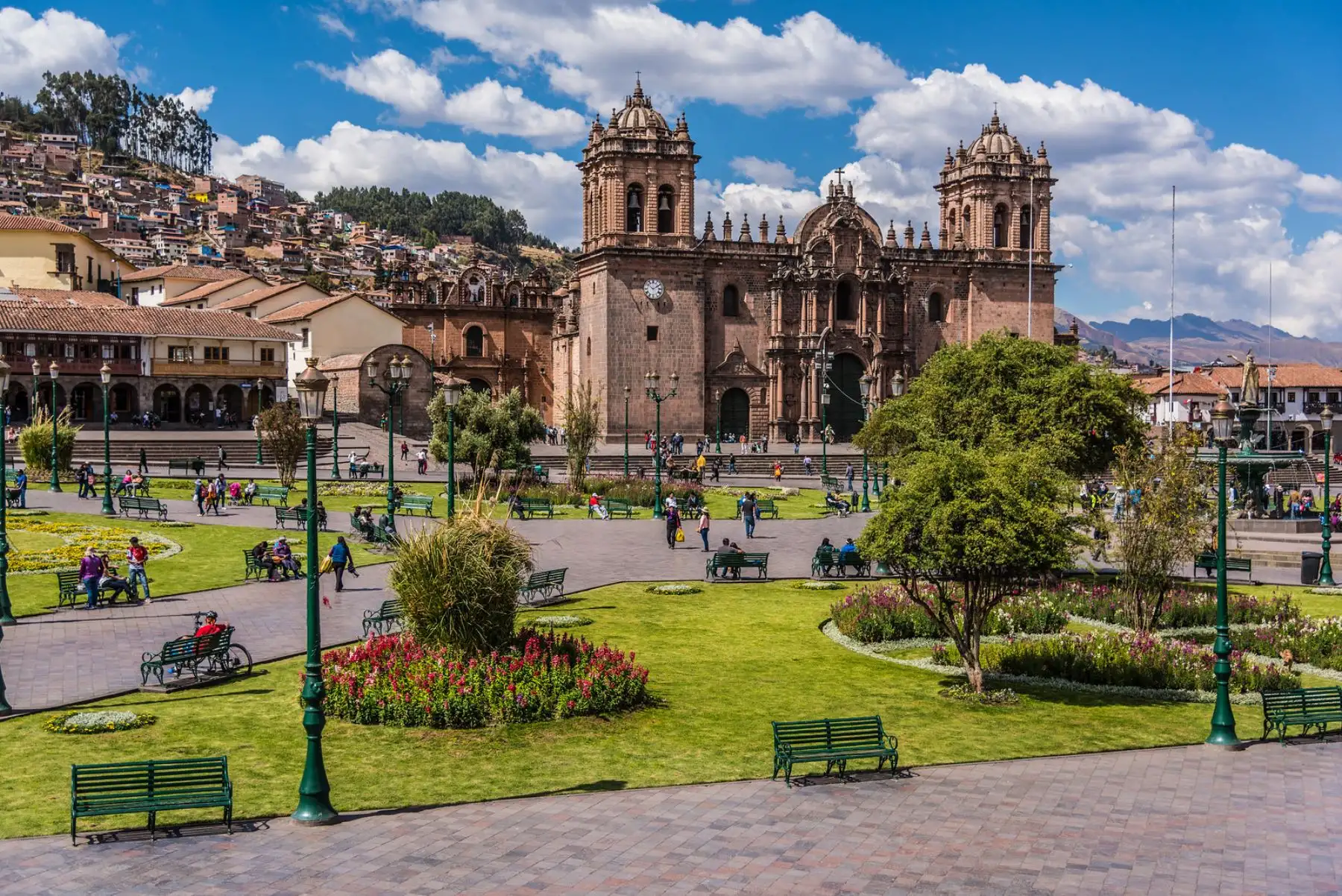
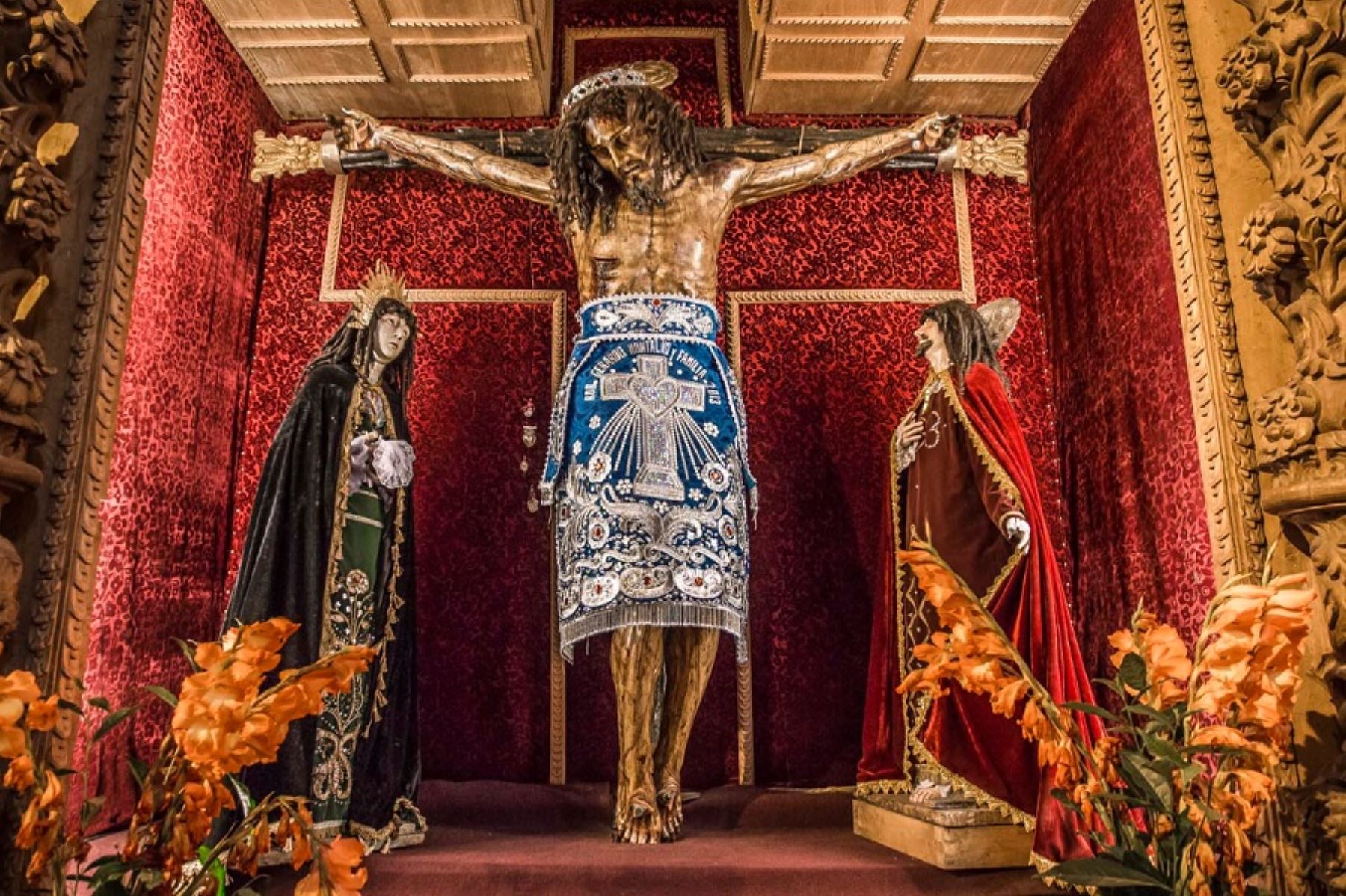
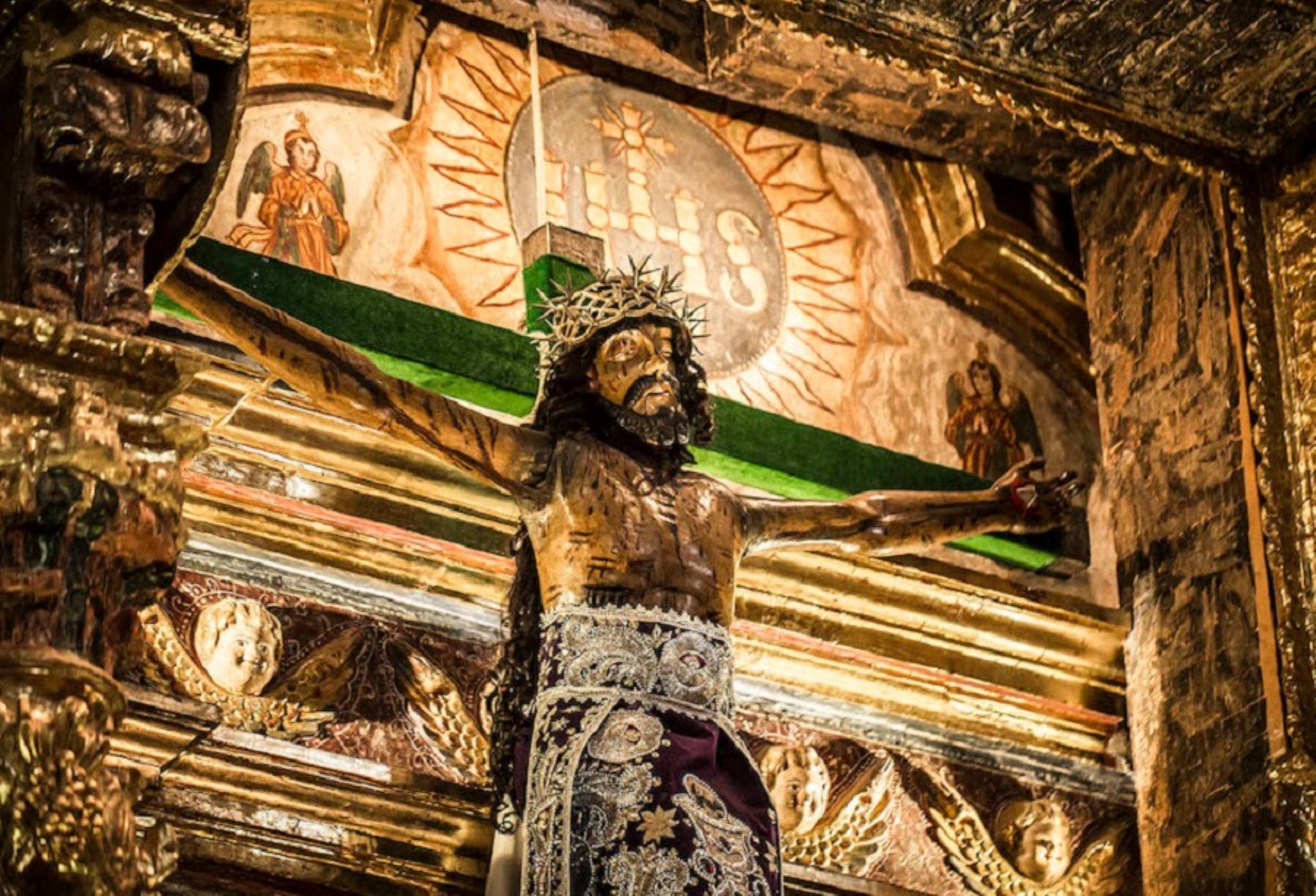
Inside, it holds a 27-kilogram gold monstrance inlaid with precious stones, as well as over 400 paintings from the Cusco School and the image of the "Lord of the Earthquakes" (*Señor de los Temblores*), the patron saint of the city of Cusco.
Archbishop’s Palace
Another site included in this route is the Archbishop’s Palace, which houses the Museum of Religious Art. Its galleries contain paintings depicting biblical scenes and other examples of colonial art. Visitors can also view works from the Cusco School that feature religious themes.
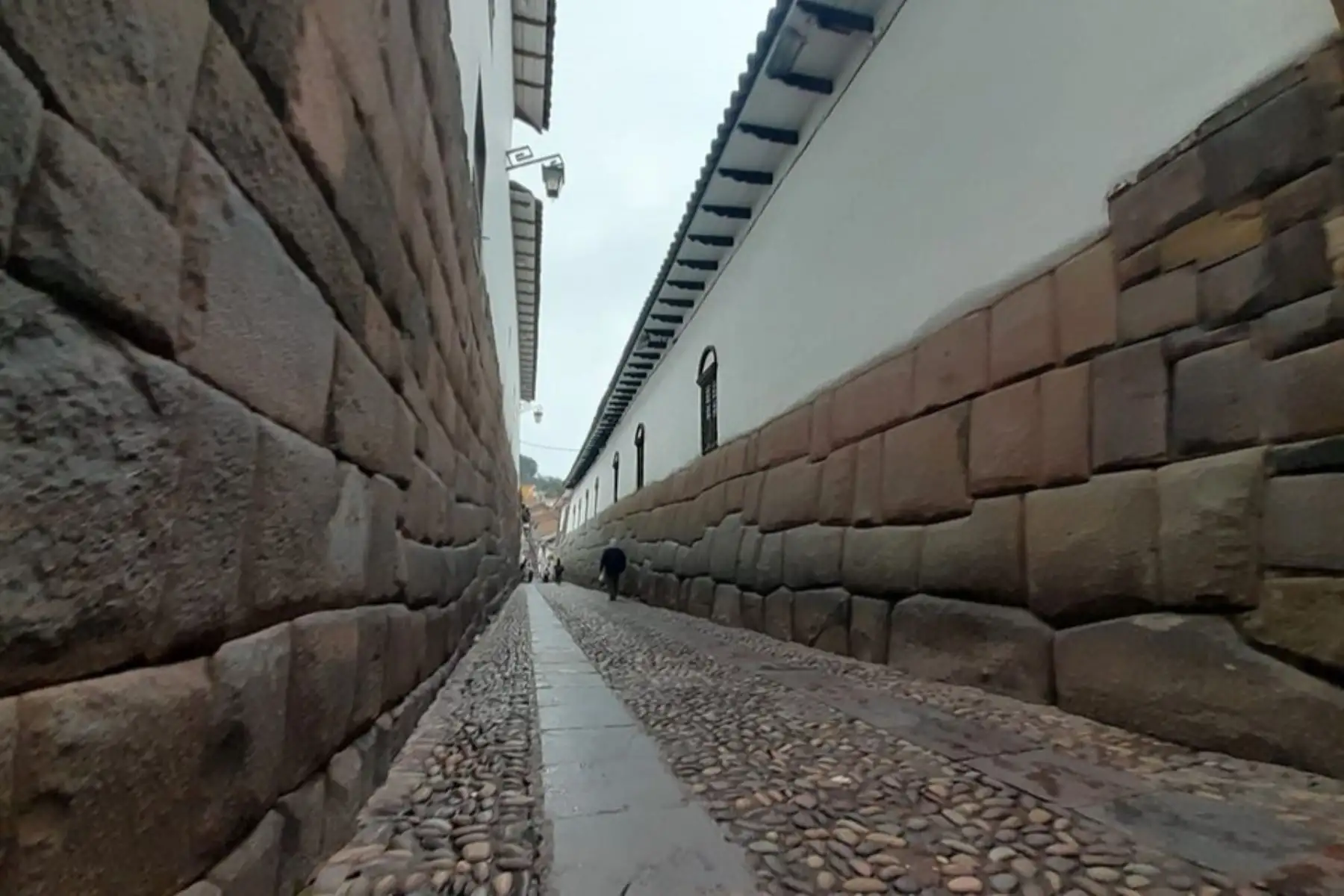
The twelve-angled Stone
On the outside, along Hatun Rumiyoc Street, one can see the famous twelve-angled stone. It is part of the Inca wall upon which the Archbishop’s Palace was built and is visible from the public street. It serves as an example of how structures from different eras coexist within the historic center of Cusco.
Church of San Cristóbal
This church is located in an elevated area of the historic center of the "Imperial City." Inside, the main altar—featuring a silver-clad front—is a notable highlight.
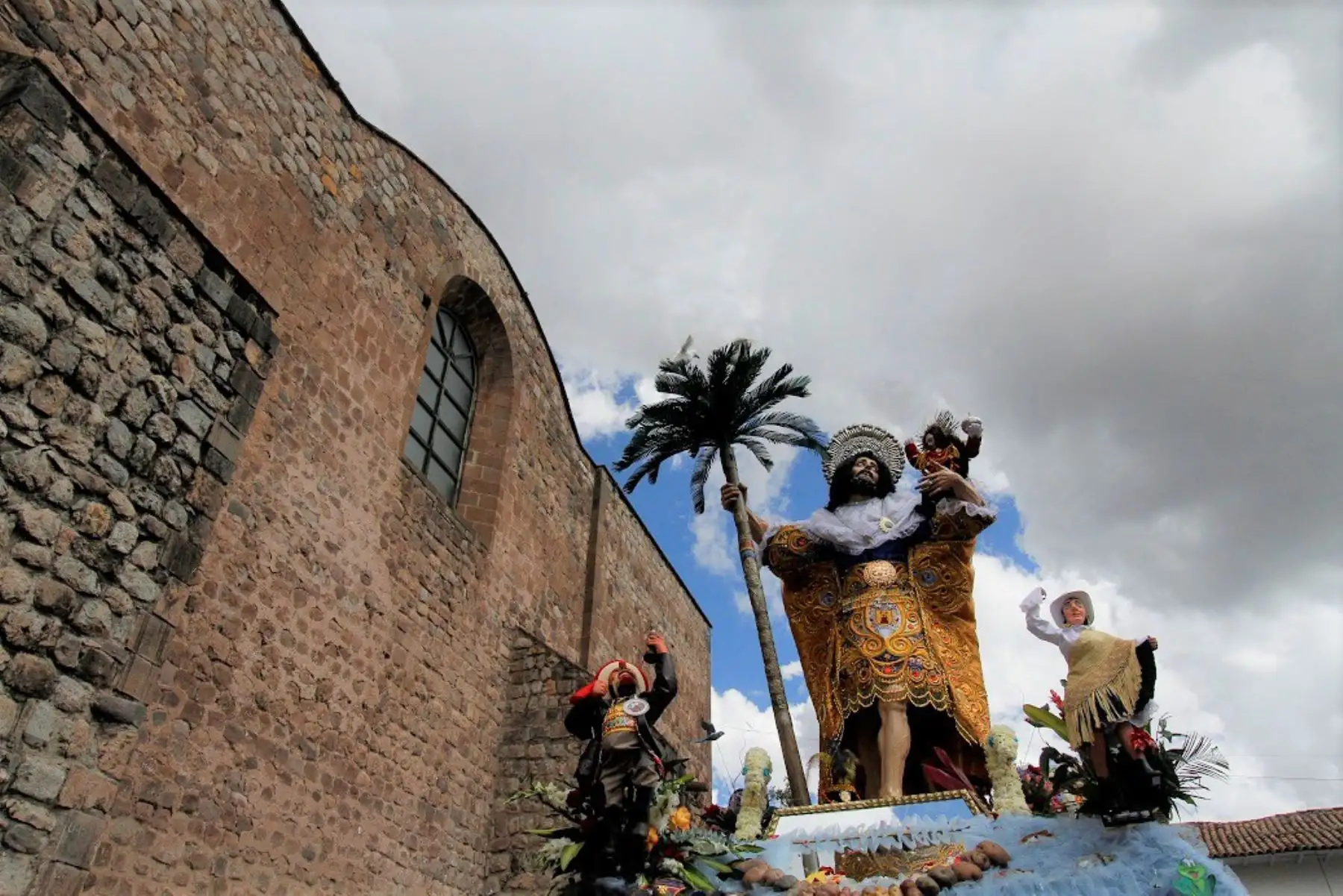
From the area surrounding the church, one can view part of the city of Cusco, and it is also possible to climb the bell tower.
Church of La Merced
Located in Plazoleta Espinar, this Baroque-style church dazzles with its artistic and spiritual richness. Its main attraction is the monstrance of La Merced—a unique piece crafted from solid gold and adorned with numerous diamonds and pearls, weighing a total of 22 kilograms.
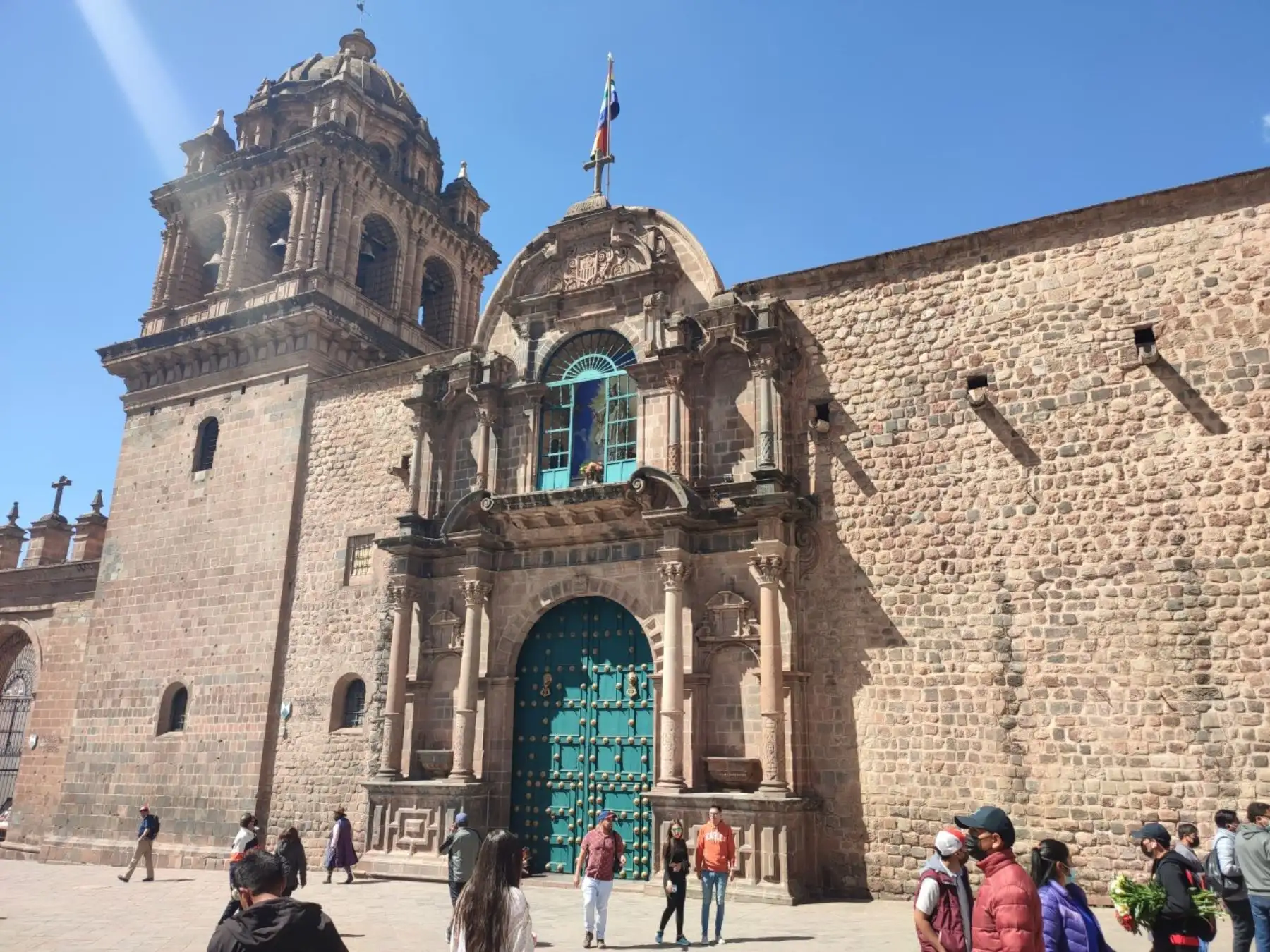
Visitors can also admire colonial-era murals and intricate wood carvings. The church has been rebuilt several times following earthquakes, yet it remains one of the city’s iconic religious landmarks.
Church of San Blas
Situated in the cobblestone square of the traditional San Blas neighborhood, this church is known for its intimate atmosphere and an exquisite, hand-carved cedar pulpit in the Baroque style—a true masterpiece of *mestizo* (syncretic) art.
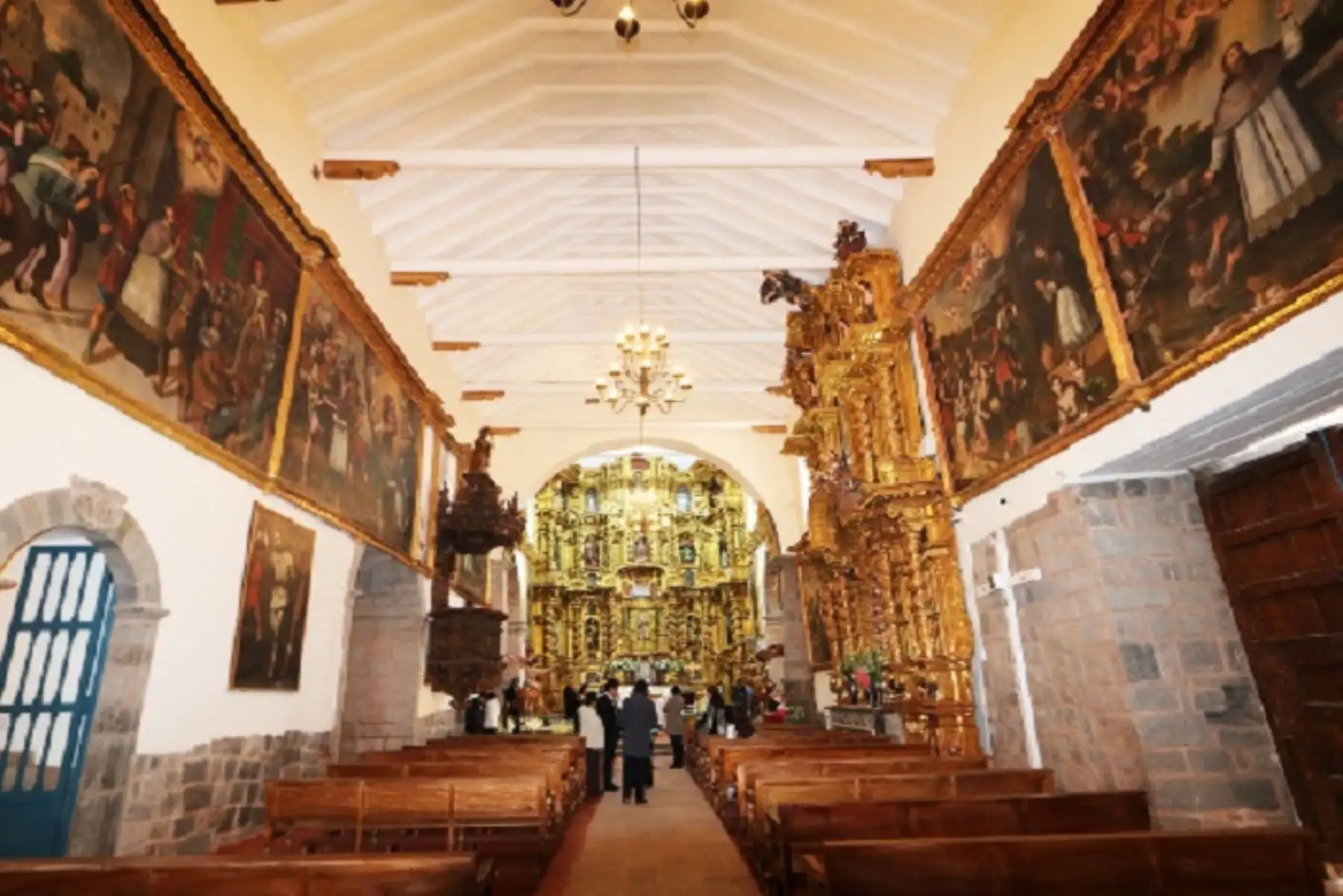
Its history dates back to 1544, when it was built atop an ancient Inca temple dedicated to the god Illapa.
Monastery of Santa Catalina
Erected on the site of an Inca *Acllahuasi* (House of the Chosen Women) at 401 Santa Catalina Angosta Street, this monastery was once home to women dedicated to Catholic religious service.
Today, it houses a fascinating museum that offers a glimpse into convent life through the centuries, featuring latticed screens, cloisters, and religious artworks that chronicle the spirituality of women during the Viceroyalty.
The site contains paintings from the Cusco School, as well as spaces still used for monastic life.
Coricancha – Convent of Santo Domingo
Located in Plazoleta Santo Domingo, the Coricancha—or "Golden Enclosure"—was the most sacred sanctuary of the Tahuantinsuyo (the Inca Empire).
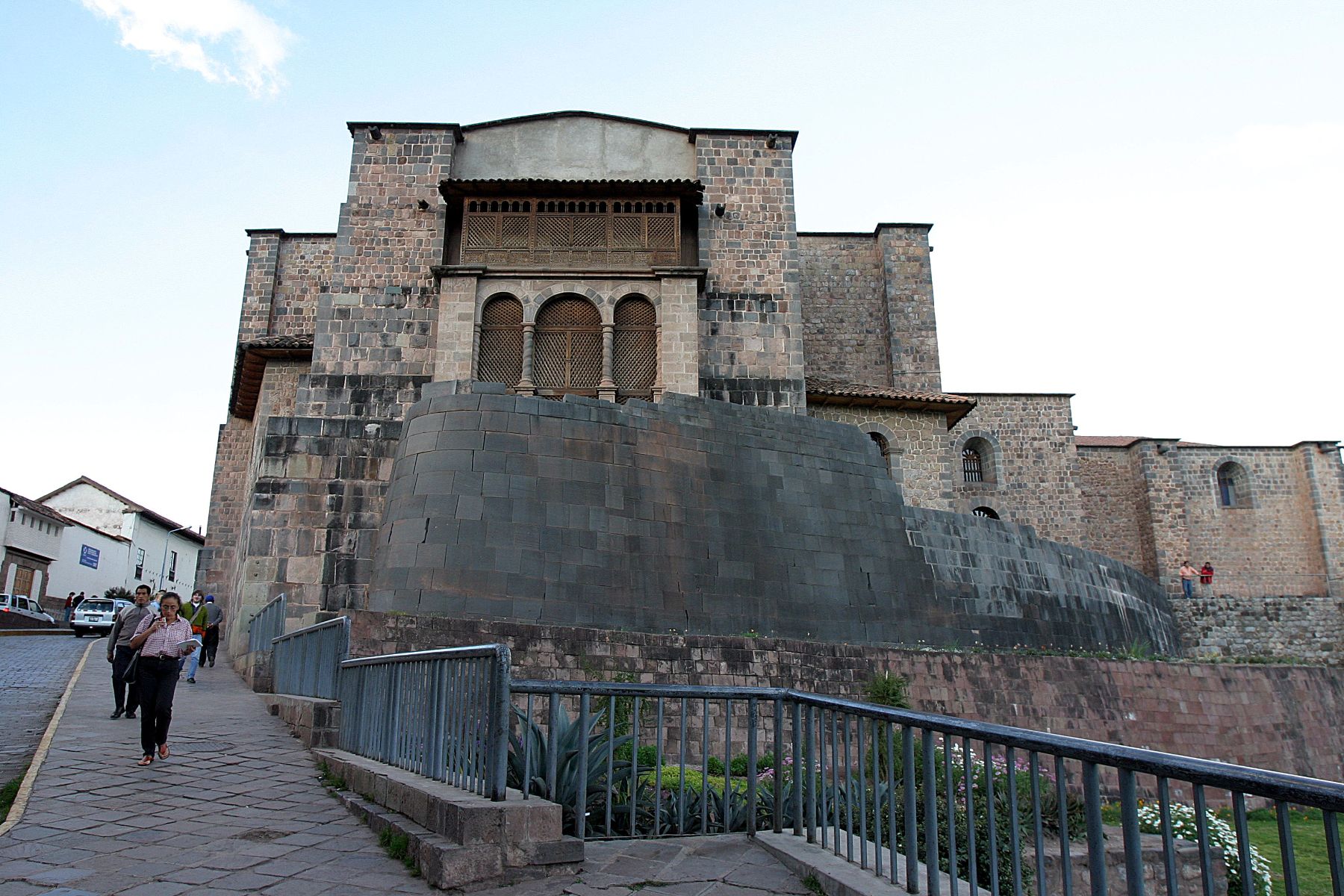
It was here that the god Inti (the Sun) was worshipped, and its walls once gleamed, covered in sheets of gold. Following the arrival of the Spanish, the Convent of Santo Domingo was built upon its foundations, merging two spiritual worlds into a single space. Inside, one can see Inca walls of, quite literally, millimetric precision, as well as a convent tower, a colonial museum, and temples dedicated to the moon, the stars, and other celestial bodies.
The Baroque route
The Andean Baroque Route is promoted by the Society of Jesus (the Jesuits) and encompasses churches in the "Imperial City" (Cusco) and the Southern Valley that showcase impressive architecture and art.
The Andean Baroque Route includes four churches: La Compañía, located in Cusco’s Plaza de Armas, and those in Andahuaylillas, Huaro, and Canincunca—all situated in what is known as the Southern Valley of Cusco. This geographical corridor connects the capital of the Inca Empire to the Madre de Dios rainforest and Lake Titicaca.
Long before the Incas, this area served as a commercial artery through which gold, silver, coca leaves, and animal fibers were transported. Traces of this ancient past remain at various archaeological sites along the route—such as Tipón, Pikillacta, and Rumicolca—as well as at the old textile mill in Lucre.
The Southern Valley runs parallel to the Vilcanota River and passes by two lagoons, one of which is Huacarpay—a Ramsar site rich in birdlife and reed beds, offering beautiful sunsets.
The valley is home to small communities of farmers, merchants, and herders. It is also inhabited by shamans, bakers, and tile-makers, as well as musicians and dancers who pay homage to the Lord of Qoylluriti.
A visit typically takes about half a day. The sites are easily accessible: the three churches in the Southern Valley are just an hour away from Cusco, while the church of La Compañía is located right in the Plaza de Armas.
Attractions of the Andean baroque route
The attractions that can be seen along the Andean Baroque Route include the following:
Church of La Compañía
The Andean Baroque Route begins at the Church of La Compañía, located in Cusco’s Plaza de Armas; it is one of the most significant churches of this architectural style. Construction began in 1576 on the site of the Inca temple of Amaru Cancha, and the structure was entirely rebuilt following a powerful earthquake that struck the city in 1650.
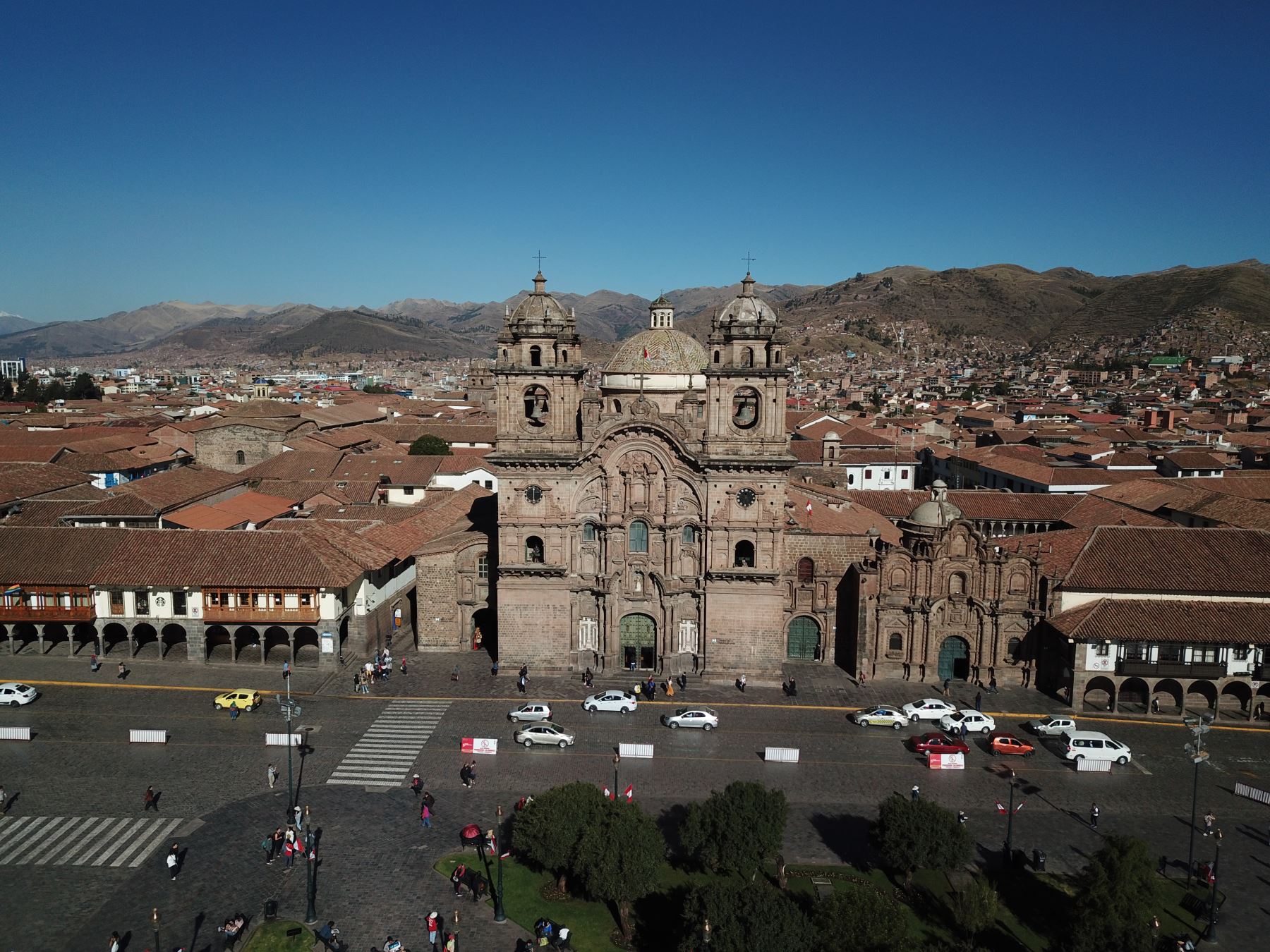
Its construction was part of the Colegio de la Transfiguración (College of the Transfiguration) complex, established by the Jesuits upon their arrival in Cusco.
Featuring a Latin-cross floor plan, the church boasts a lavishly decorated stone façade, two large towers, and two adjoining chapels. The architecture of this church served as a model for many other religious structures built throughout the southern Andes.
The façade features an altarpiece-style portal—organized into three horizontal tiers and three vertical bays—nestled between two slender bell towers, which have served as a template for many other churches in the Cusco region. The lower sections of the two towers are smooth and polished, providing a striking contrast to the rich ornamentation found above.
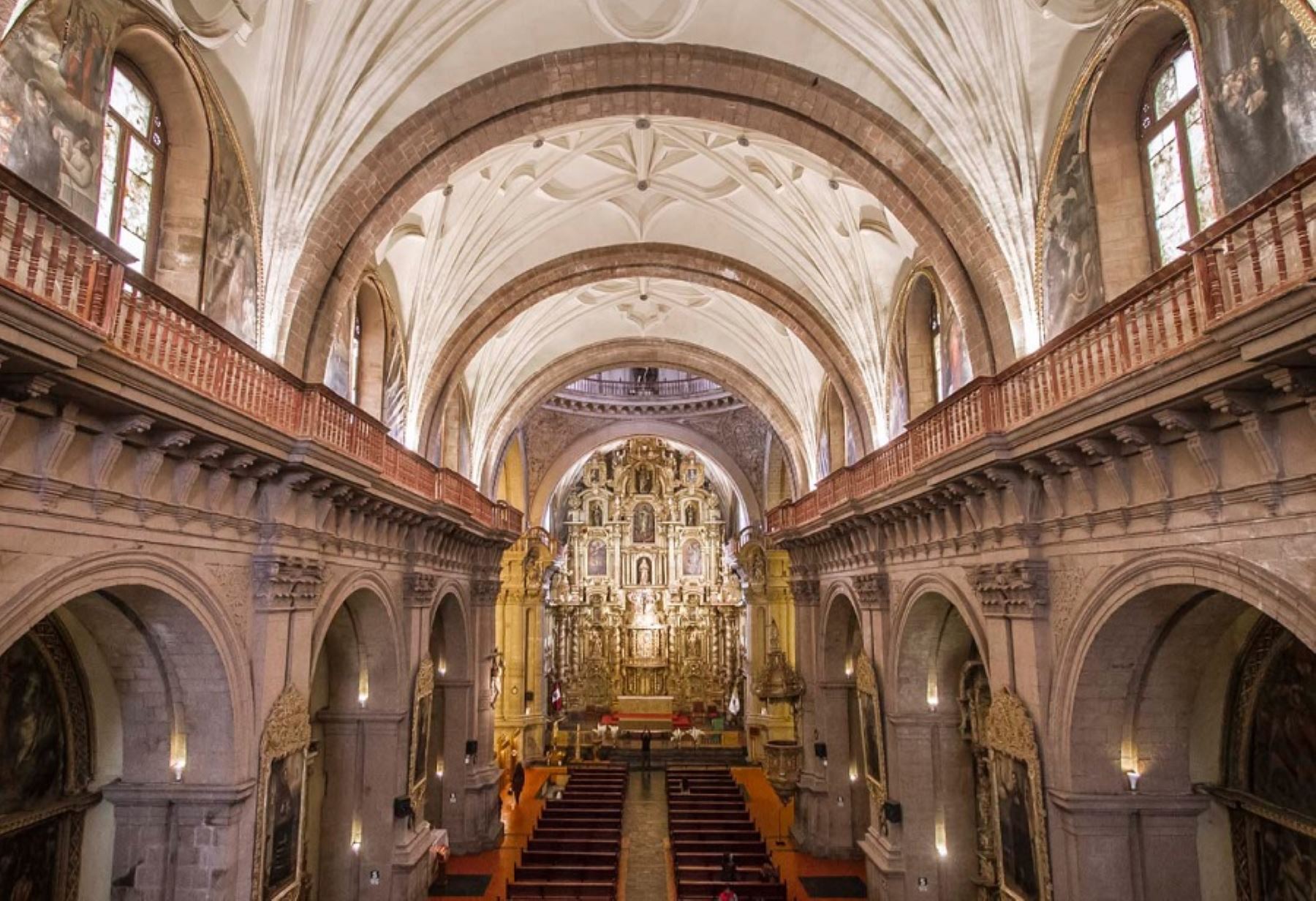
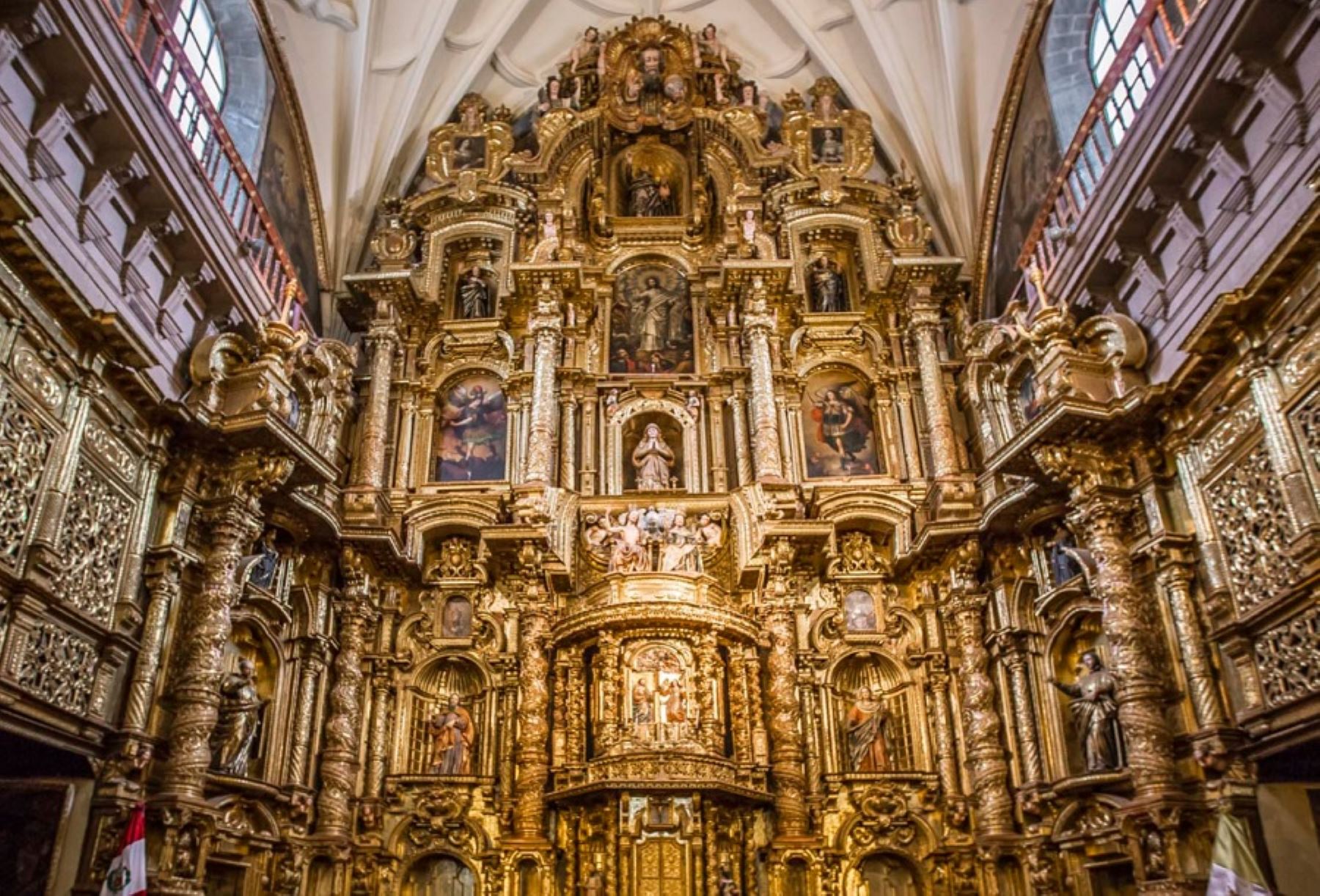
Inside, the church houses one of the most impressive main altars—carved from cedar wood and covered in gold leaf—standing 21 meters tall. It also contains notable works of art, such as a canvas depicting the marriage of Martín García de Loyola to the *ñusta* (Inca princess) Beatriz Clara Coya, as well as a collection of paintings illustrating the life of Saint Ignatius of Loyola.
Church of San Juan Bautista de Huaro
Built in the Renaissance style, this church preserves more than 60 sculptures and 50 paintings of exceptional quality and beauty, in addition to silverware, altarpieces, and other movable cultural artifacts. Built between the late 16th and early 17th centuries, the structure is notable for the impressive murals that cover its entire interior—ceilings and walls alike.
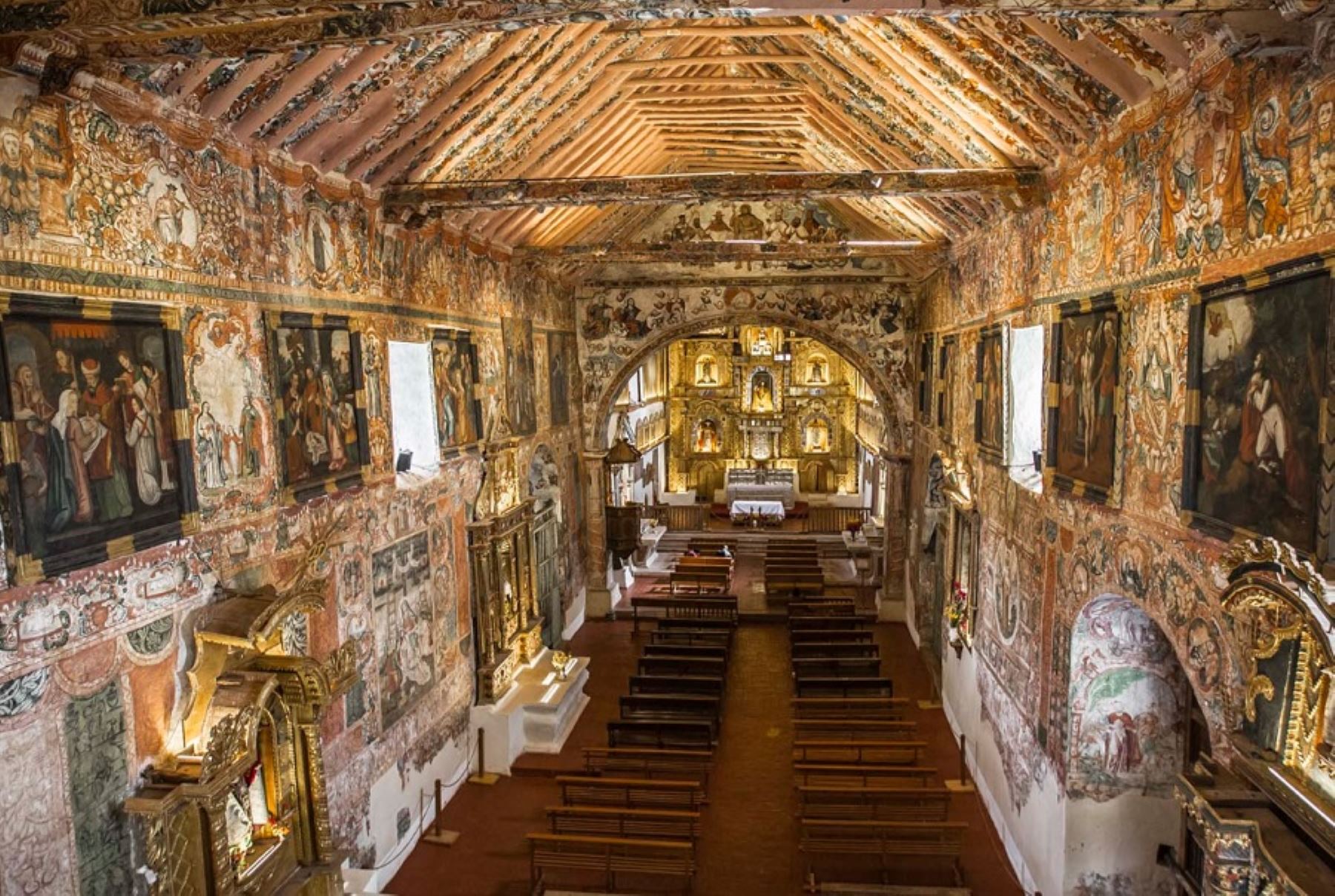
These paintings, the work of the Cusco-based artist Tadeo Escalante, depict the "last things" of human existence: the journey through death, the Last Judgment, heaven, and hell. They represent a fusion of Andean symbolism, folk beliefs, the natural world, and colonial art, reflecting the evangelization programs employed at the time.
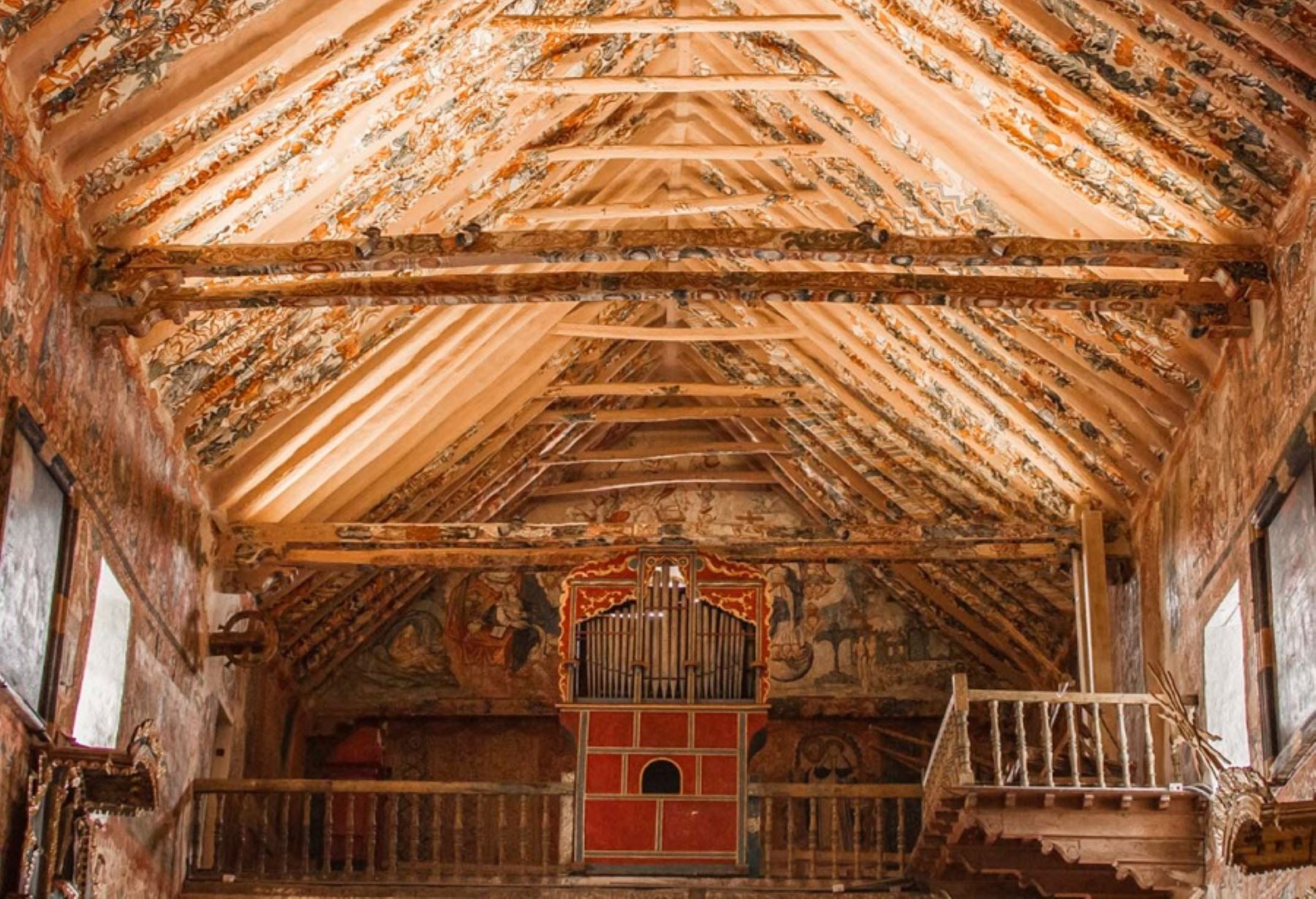
Also noteworthy is the Mudéjar-style coffered ceiling in the presbytery, constructed from wooden panels, as well as the main altarpiece—a 17th-century Baroque creation by Martín de Torres, crafted from carved wood and gilded with gold leaf.
Church of San Pedro Apóstol, Andahuaylillas
Construction of the church, as it appears today, began in 1610 under the direction of parish priest Juan Pérez de Bocanegra and was completed in the early 17th century. It is believed, however, that a smaller chapel—built atop an Inca temple—already existed on the site in the late 16th century, serving as a *reducción* (a settlement for Indigenous people).
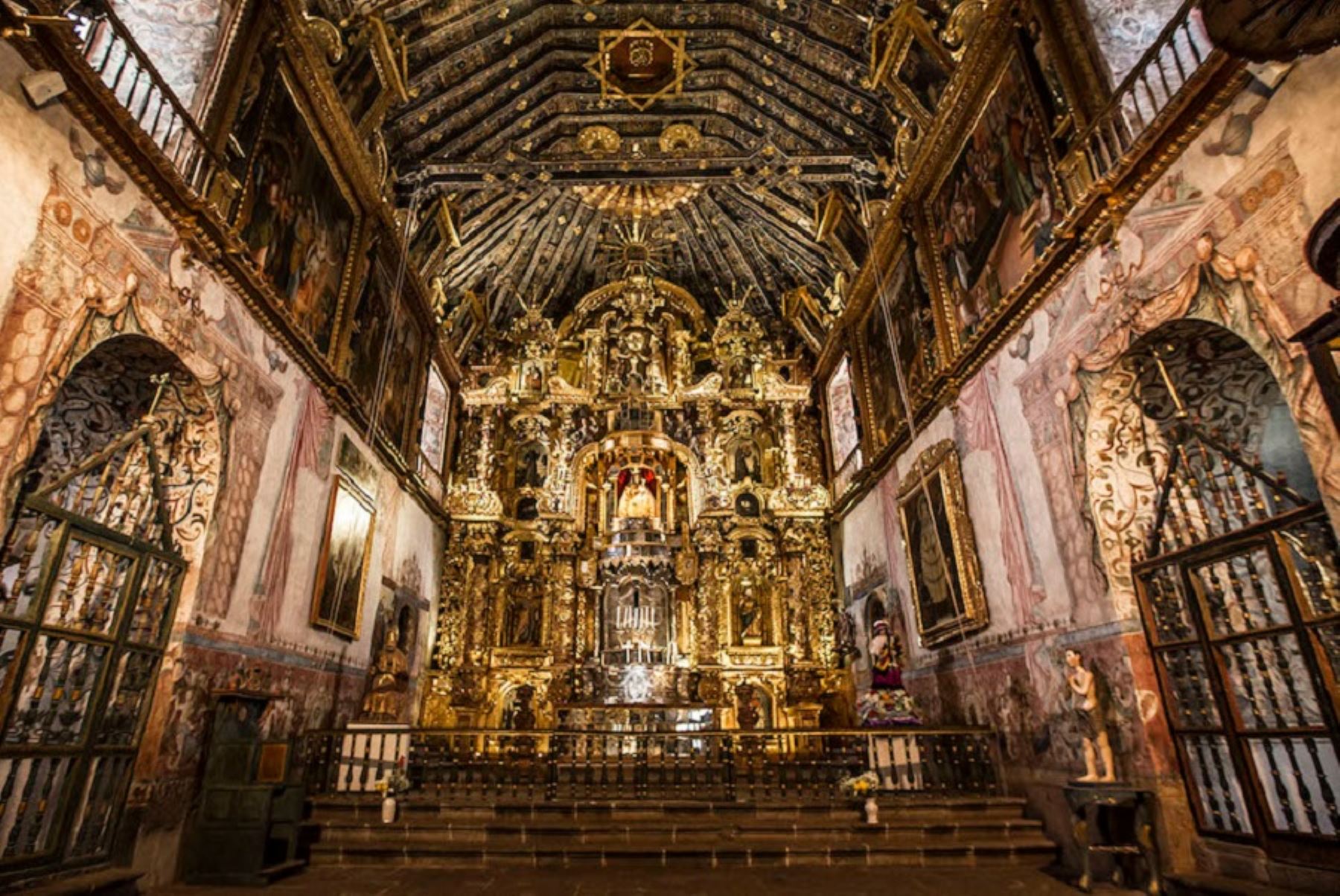
Inside, the church houses two beautifully painted musical organs, considered the oldest of their kind in Latin America. Its artistic grandeur is further evidenced by the Mudéjar-influenced coffered ceiling, a rich and diverse collection of paintings—including a series dedicated to Saint Peter the Apostle, the church’s patron saint—the polychrome ceilings, and the triumphal arch that separates the presbytery from the main nave.
The main façade is flanked by two stone-clad buttresses; between them lies an open-air chapel, with an elaborate, altarpiece-style portal situated below. This open chapel was initially used for religious services and for teaching doctrine to the local population, who gathered in the atrium—as they were, at the time, reluctant to enter enclosed spaces.
The main altarpiece is carved from cedar wood and finished in gold leaf. At the top center is the Coronation of the Virgin; below it stands the image of the Virgin of the Rosary, and beneath that is the tabernacle, covered in silver plating. To its left is an image of Saint Paul, and to its right, an image of Saint Peter.
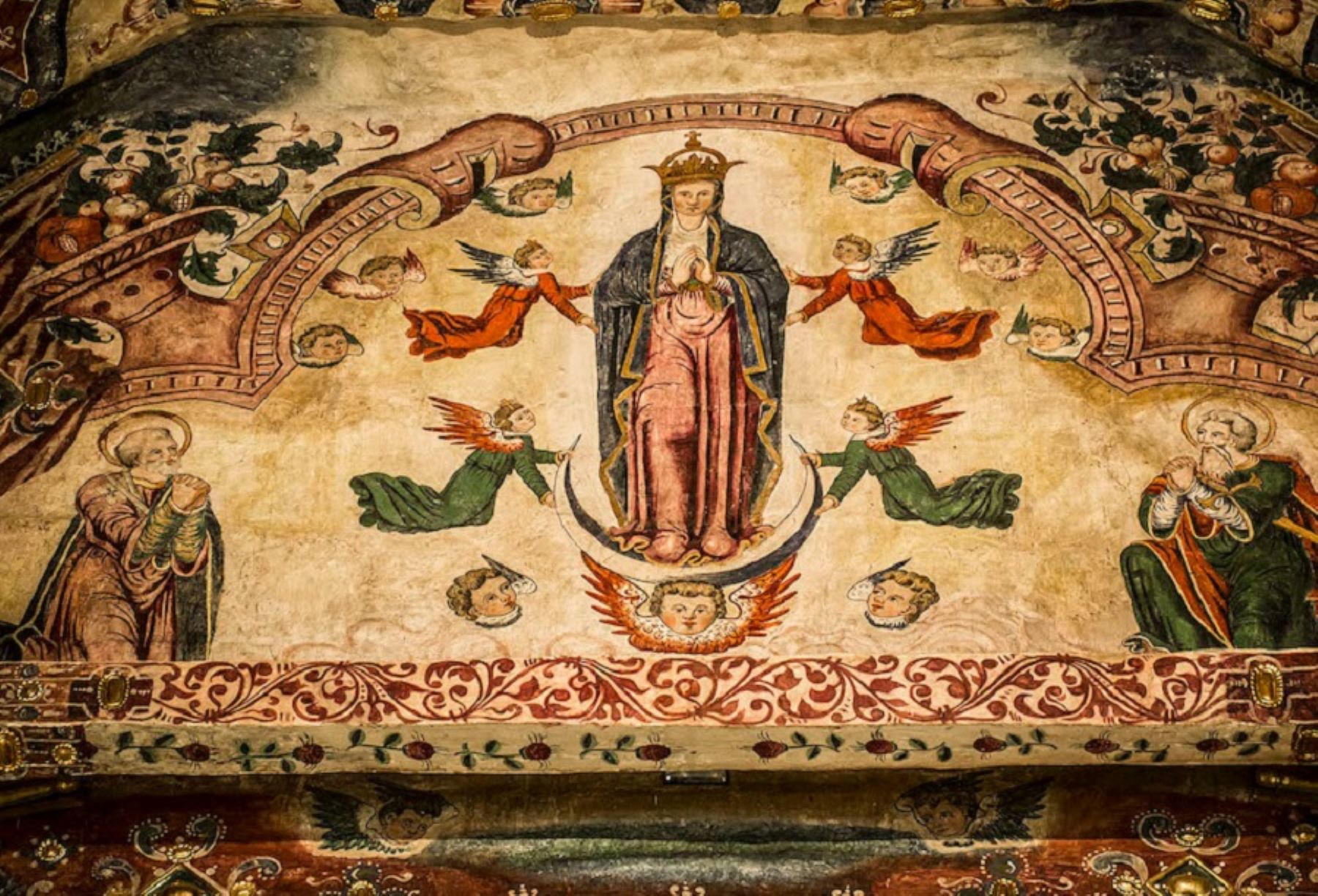
The priest Juan Pérez Bocanegra commissioned the painting of the church walls with extensive evangelizing themes, tasking the Lima-born painter Luis de Riaño with the creation of the primary murals and canvases—most notably "The Path to Heaven" and "The Path to Hell," two murals that flank the main entrance.
On the left is the "Path to Hell"—filled with roses and worldly pleasures, yet leading to damnation—while on the right is the "Path to Heaven," characterized by sacrifices, which offers the reward of eternal life with God in heaven.
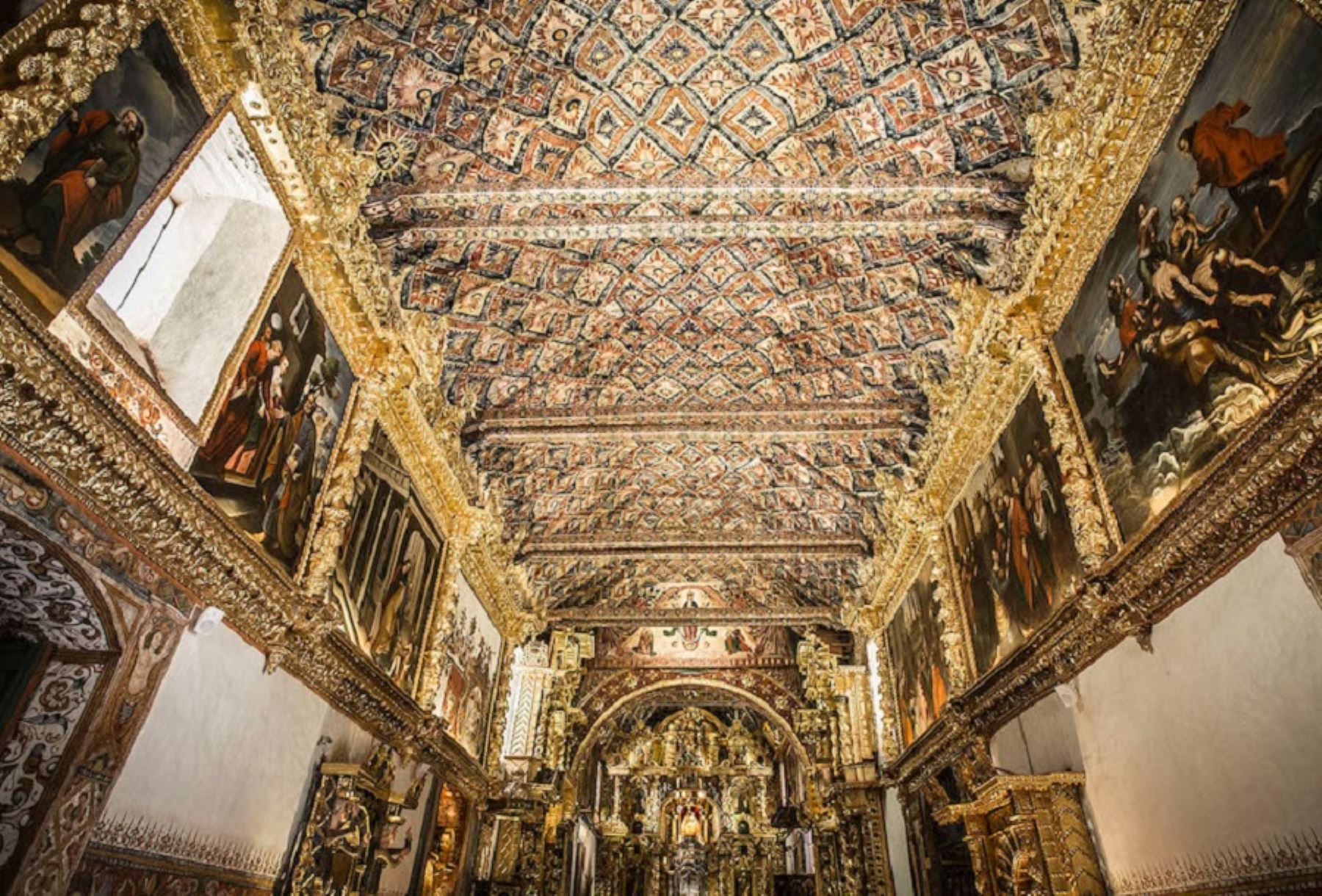
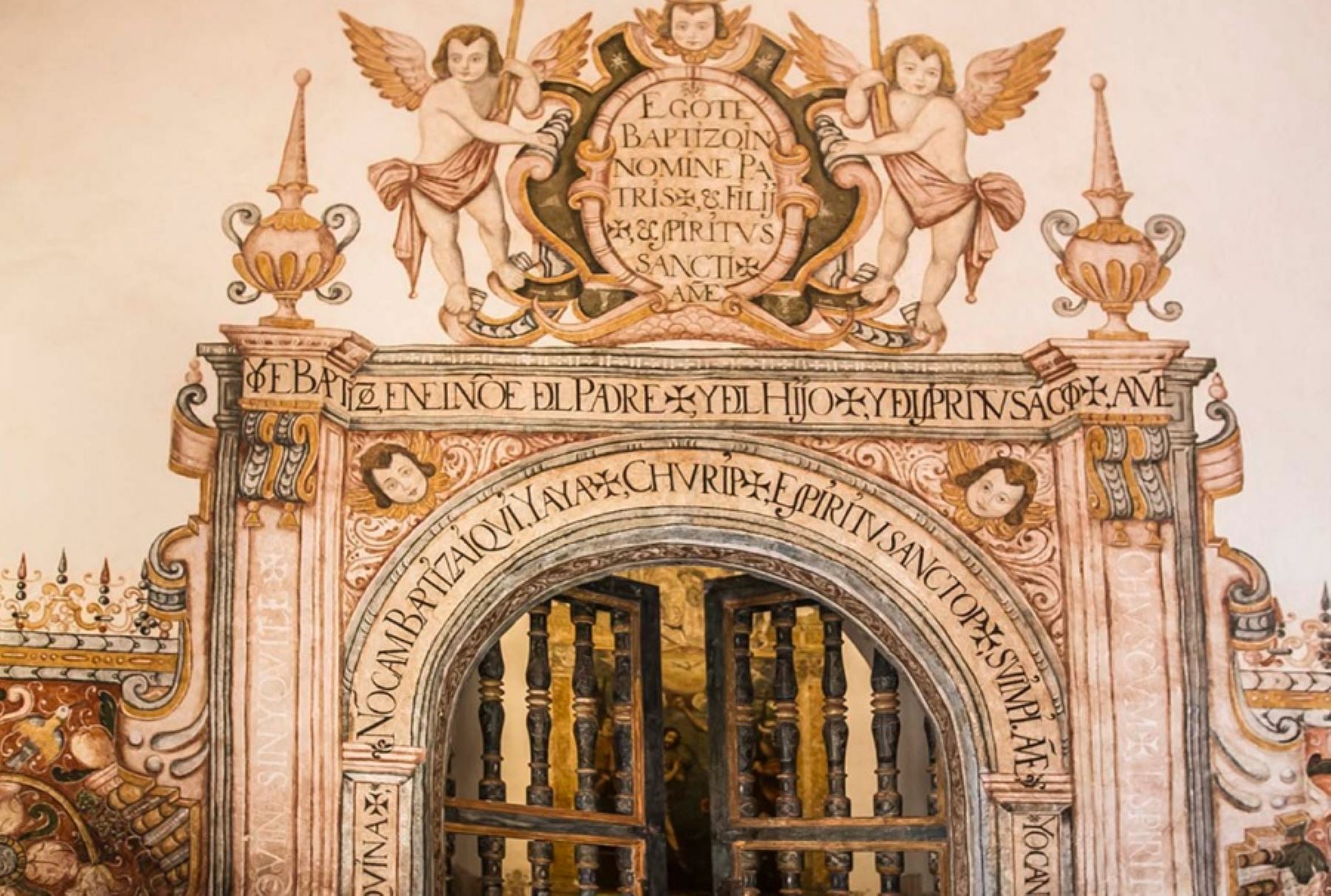
The baptistery features the baptismal formula inscribed above its entrance in five languages: Latin, Spanish, Quechua, Aymara, and Puquina. The paintings adorning the walls are set within massive frames crafted from cedar wood and finished in gold leaf.
Chapel of the Virgin Purified (Virgen Purificada) of Canincunca
Located atop an ancient Wari site, next to Lake Urcos, Canincunca takes its name from the mountain pass—or "neck"—where it is situated along the route connecting Cusco and Puno.
Etymologically, the name derives from the fusion of two Quechua words: "canin," meaning "to bite," and "cunca," meaning "neck." It refers to the narrow gap formed where the lower slopes of two hills meet.
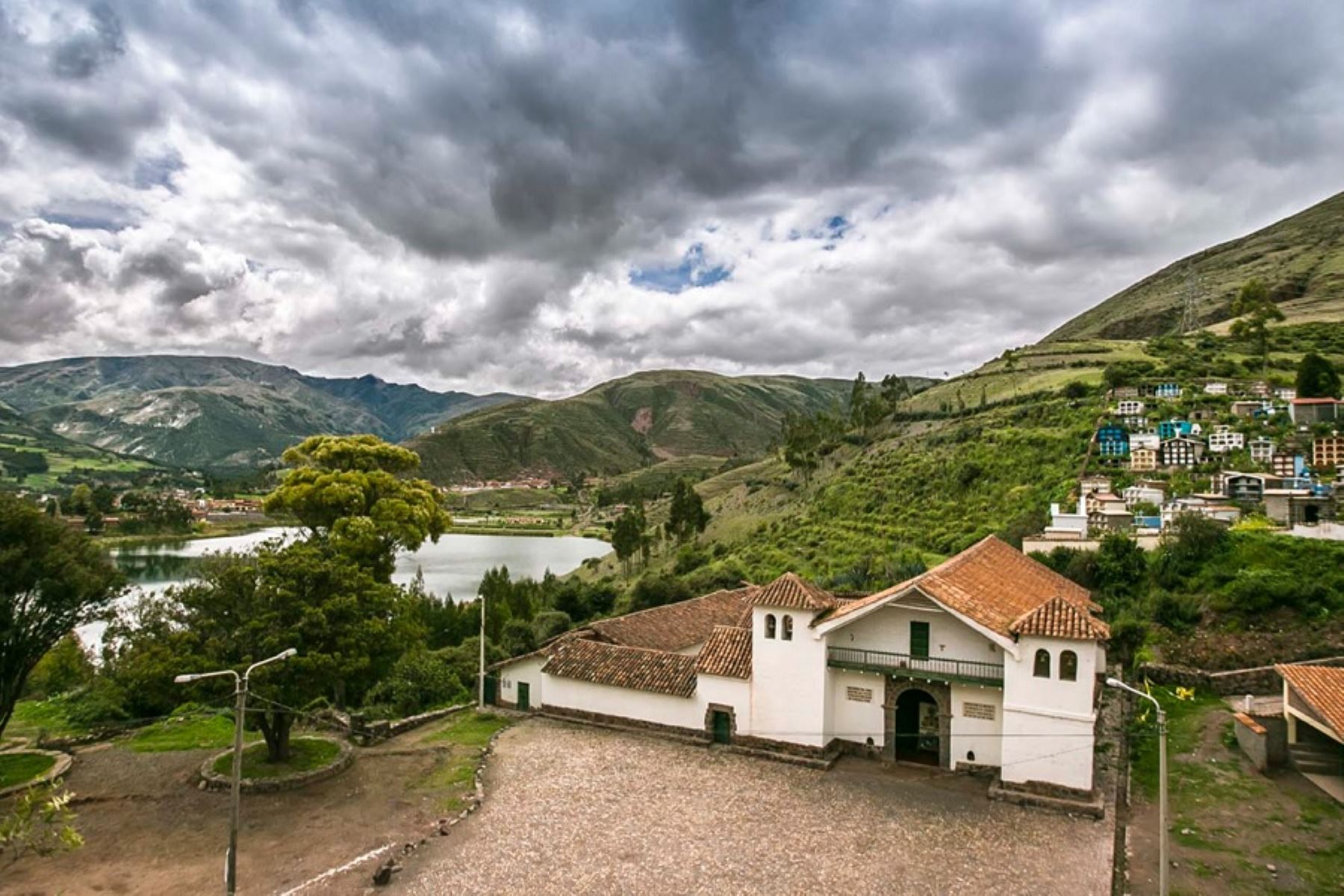
Construction of the chapel began in the early 17th century. It consists of a single nave, with interior walls richly decorated with murals and gold-leaf trim that mimic elegant drapery.
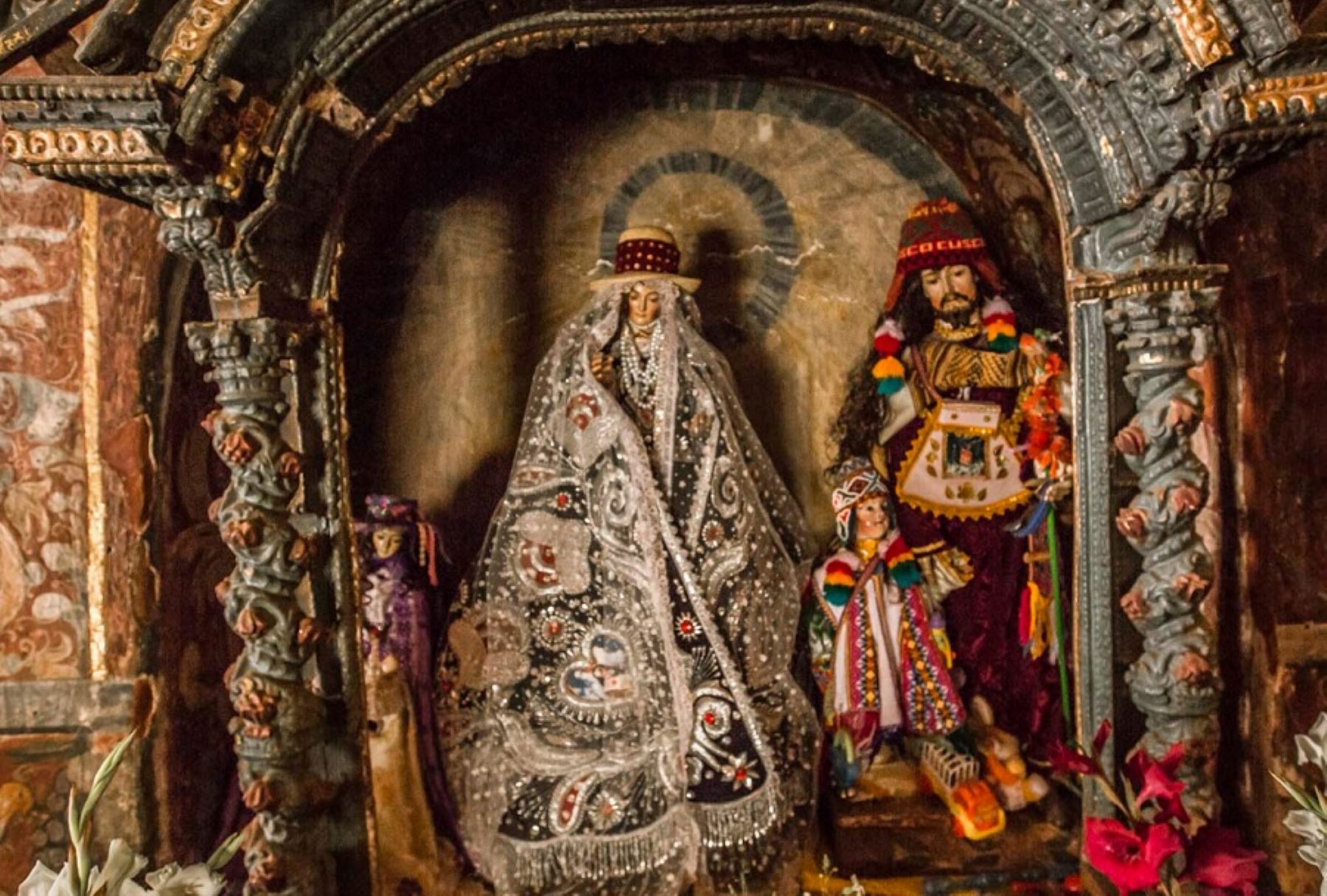
Many of these decorations depict flowers, fruits, birds, and symbols reminiscent of *pallais*—the geometric patterns created by Andean weavers in their exquisite textiles—all showcasing the iconography characteristic of the Andean Baroque style.
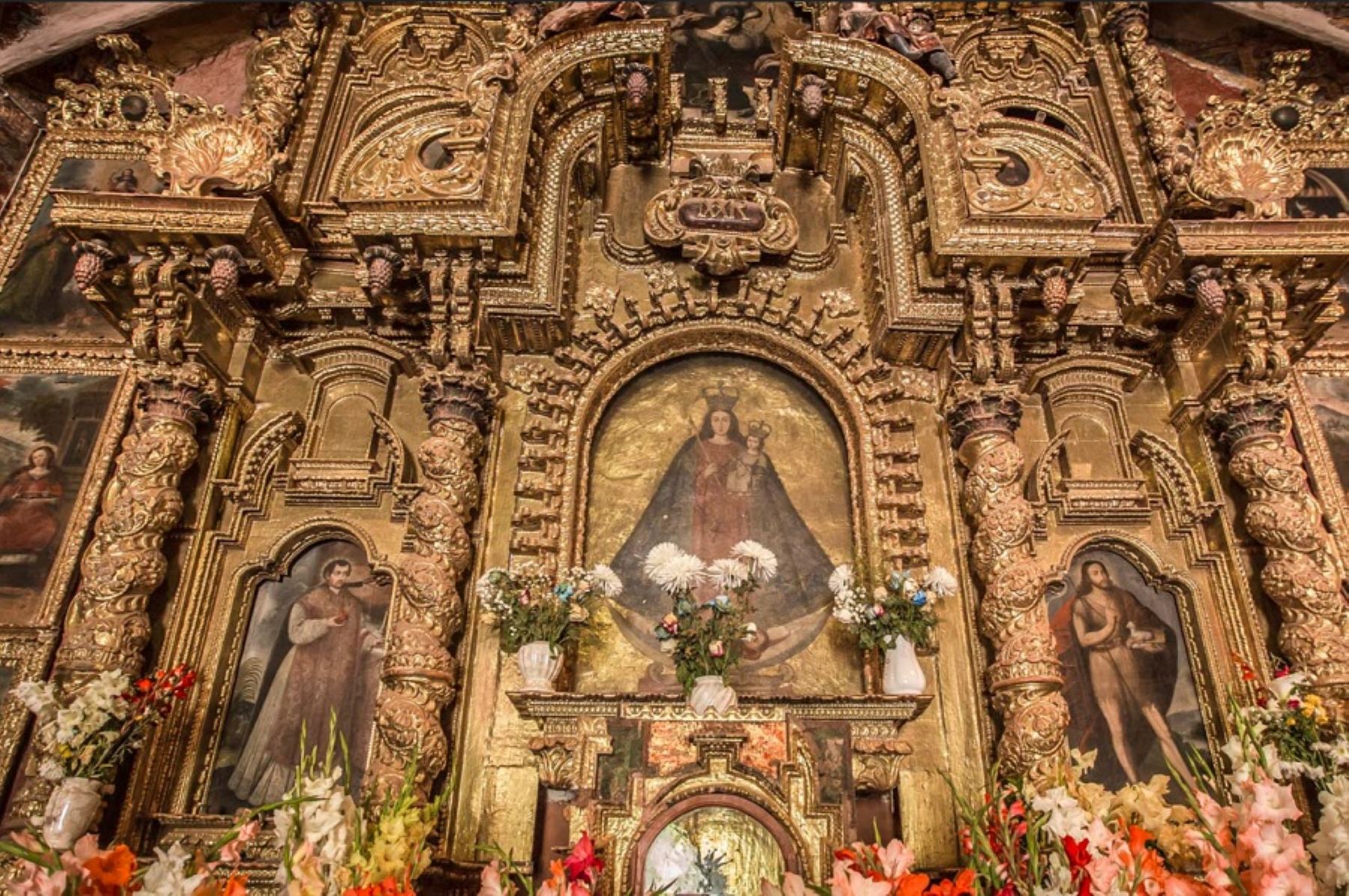
The site of the chapel is believed to have once been part of a religious complex belonging to the Wari culture. Originally, the main altarpiece was a mural; today, only the central niche—featuring the iconography of the Virgin of Candelaria—remains as evidence of this. It was later replaced by the current carved wooden altarpiece, which dates back to the late 17th century.
Social Initiatives
Revenue generated from visits to these churches and purchases made at the shops along the "Andean Baroque Route" is directed toward the preservation of the religious sites and the improvement of local living conditions through social initiatives led by the Jesuits.
Comprehensive development is fostered through social and educational programs that involve the entire family. Services provided include community dining halls, a play center (ludoteca), libraries, computer labs, an advocacy office, psychological counseling, healthcare support, and social assistance.
In this way, the project contributes to the sustainable development of the local community. For more information, please visit the following link:
Social initiatives.
Where to buy tickets for the Andean baroque route?
Tickets can be purchased at the Church of the Society of Jesus (Compañía de Jesús) in Cusco or at any of the churches that are part of the Andean Baroque Route. Once purchased, a ticket is valid for seven calendar days.
Andean baroque route – South Valley (3 churches): General admission: 18 soles ($5.20); Students: 10 soles ($2.94); Domestic tourists: 10 soles ($2.94).
Opening hours for the Chapel of the Virgin Purificada de Canicunca and the Church of San Juan Bautista de Huaro: Monday to Sunday, from 8:30 a.m. to 4:30 p.m.
For the Church of San Pedro Apóstol in Andahuaylillas: Monday to Sunday, from 7:30 a.m. to 5:30 p.m.
Church of the Society of Jesus (1 church): General admission: 12 soles ($3.52); Students: 6 soles ($0.88); Domestic tourists: 6 soles ($0.88).
Opening hours: Monday to Sunday, from 9:00 a.m. to 11:20 a.m. and from 1:00 p.m. to 5:20 p.m.
Full Andean Baroque Route (4 churches): General admission: 25 soles ($7.34); Students: 15 soles ($4.41); Domestic tourists: 15 soles ($4.41).
For more information on how to purchase these tourist tickets, please visit the following link:
Andean baroque route.
More from Andina:
(END) LZD/MAO / MDV
Publicado: 10/11/2026