Regional exports continue to consolidate their position as the main driver of Peru's foreign trade. Between January and November 2025, shipments from the country's regions—excluding Lima and Callao—reached US$68.120 billion, representing a 19.8% increase, double the growth recorded by Lima and Callao (9.7%), the
Ministry of Foreign Trade and Tourism (Mincetur) reported on Tuesday.
According to its Monthly Regional Trade Report, during this period 20 regions increased their exports, and 14 of them surpassed their all-time annual records.
As a result, the share of inland regions in Peruvian exports rose from 84.3% (2024) to 85.3% (2025), confirming a sustained process of decentralization and the strengthening of the regional productive base.
"The growth of regional exports shows that foreign trade development is becoming increasingly decentralized and competitive. At Mincetur, we continue to strengthen capabilities, infrastructure, and market access so that more regions and more producers can integrate sustainably into global value chains," Peru's Foreign Trade and Tourism Minister Teresa Mera stated.
In this regard, the Cabinet member noted that the strongest dynamism was seen in San Martin, where exports expanded 94% due to higher shipments of cacao, coffee, and palm oil; Cajamarca (+64%) supported by gold and coffee; Amazonas and Junin, (+54%); as well as Ayacucho (+41%) and Pasco (+35%). These regions reached new export records as of November.
By macro-regions
By macro-regions, northern Peru posted a uniform and positive performance, showcasing export growth across all its regions.
Cajamarca stood out (+64%), followed by Lambayeque (+30%) driven by fruit exports, and La Libertad (18%), supported by gold shipments and agro-exports.
In the south, all regions increased their shipments, led by Apurimac and Puno (both +34%), followed by Arequipa (+21%), Moquegua (+15%), and Tacna (+10%), mainly driven by minerals such as copper, gold, and molybdenum.
In central Peru, Junin (+54%), Ayacucho (+41%), and Pasco (+35%) surpassed their historic records.
Meanwhile, in the eastern region, San Martin, Amazonas, and Madre de Dios reached record levels, driven by agro-industrial products and goods derived from Amazonian biodiversity.
Agro-exports
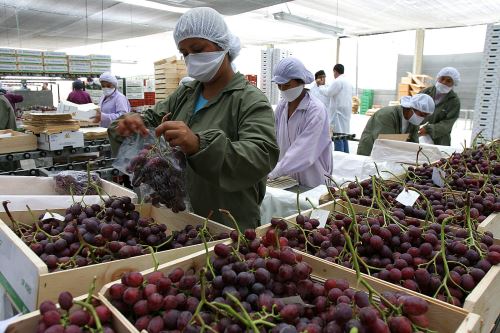
Meanwhile, Minister Mera noted that Peruvian agro-exports maintained solid growth. Between January and November 2025, they expanded by 18.5% compared with the same period in 2024, driven by all of Peru's natural regions.
The rainforest region led (+35%), followed by the coast and the highlands (both at 15%).
Inland regions, which account for 81% of agro-exports, expanded 18.2%, with standout performances by San Martin, Cajamarca, Junin, and Lambayeque.
These results confirm the potential of agriculture as a key pillar for productive diversification and sustainable regional development.
Export growth was accompanied by improved logistics performance.
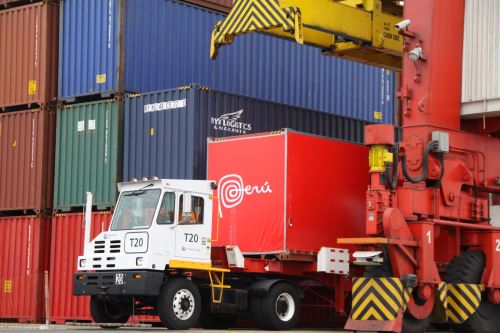
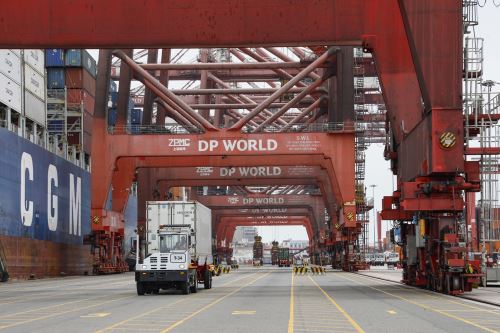
Between January and November 2025, the value of exports shipped through the Port of Callao—Peru's main gateway accounting for 34.6% of the total—grew by 15%.
Exports through Jorge Chavez International Airport, which accounted for 22% of the total, rose by 36%, while shipments through the Port of Matarani (12.5% share) increased by 15%.
Similarly, the Chancay Multipurpose Port Terminal recorded exports totaling US$613 million, further expanding the Peruvian logistics capacity.
In the period from December 2024 to November 2025, Arequipa and Puno led exports from Peru's inland regions, with shares of 9% and 8%, respectively.
Meanwhile, Piura consolidated its position as the leading exporter of non-traditional products, non–mining-energy goods, and fishery products, while Arequipa and Puno stood out in mining.
Regarding agro-exports, La Libertad, Ica, and Piura led performance.
(END) NDP/SDD/MVB
Publicado: 13/1/2026