The architectural structures of the
Sacred City of Caral are being adapted to withstand the rainfall expected as a result of El Niño and prevent deterioration.
"Measures are being taken, but there are several settlements and many archaeological buildings that make up these," Aldemar Crispin, chief archaeologist at the Ministry of Culture's Caral site, told Andina News Agency.
"The work is quite intensive," Crispin pointed out.
Thus, in anticipation of these contingencies, drainage channels and water outlets have been installed, he explained.
"We have started with those structures," he said, recalling that some of these monuments "are already prepared to withstand rainfall" because of the way they were built by members of the Caral Civilization—one of the oldest and most advanced societies in human history, which developed between 3000 and 1800 BC.
The archaeologist highlighted that the walls were built according to standards that enabled them to withstand the impact of earthquakes, which are common along Peru's central coast.
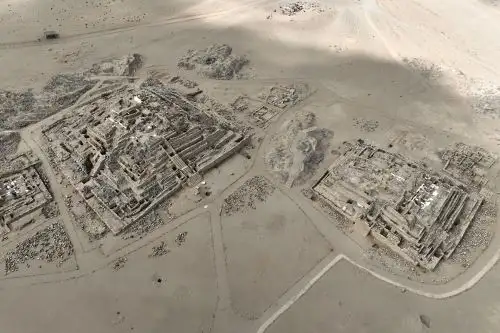
Earthquake-resistant shicras
In this regard, the specialist highlighted the use of shicras, a technology consisting of grouping rocks of different sizes in bags made of plant fibers and building walls with them.
This method has also been used in recent times in Japan—a country whose territory is also highly seismic.
Likewise, he recalled that Caral's inhabitants took care to establish their settlements away from riverbanks.
"For example, the 2017 Coastal El Niño, which devastated numerous crops in the Supe Valley itself, severely affected agriculture but did not destroy the archaeological sites of Caral or other settlements contemporary with it," Crispin explained.
This also reveals an understanding of nature, developed, among other aspects, through astronomy, thus making it possible to determine periods of river flooding and harvest times, he added.
Current efforts
Regarding the preventive measures currently being implemented, Crispin indicated that reinforcement and protection efforts are being carried out using both public resources and private funding.
The protection measures implemented also include installing roofs and coverings to prevent rain from directly reaching the archaeological structures.
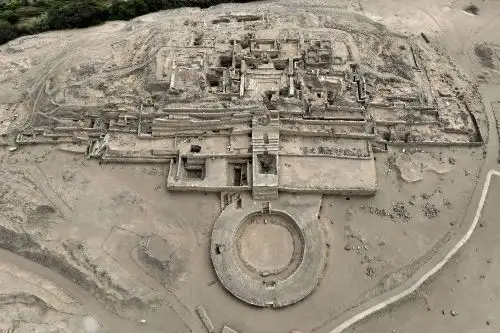
Windbreaks have also been installed to prevent the wind from eroding the walls and the material from which they are made, the archaeologist said.
This month, the Caral Archaeological Zone celebrates 32 years since research began at the Sacred City.
Ruth Shady, the lead researcher studying this archaeological site and the Caral Civilization, highlighted the ancient society's respect for nature and harmonious coexistence with it.
The archaeologist announced the call for participation in Caral Raymi 2026, which will celebrate 32 years since research began at the site.
The celebration will take place at the Sacred City of the Caral Civilization in Supe on October 23 and 24.
Caral is located four hours north of Lima, at kilometer 184 of the North Pan-American Highway, in Supe district, Lima region.
(END) FGM/MVB
Publicado: 13/10/2026