Starting today, Peru has a new technological tool to strengthen the conservation of its forests, particularly the ancient Shihuahuaco trees.
Through the use of artificial intelligence (AI), Shihuahuaco trees will be automatically detected from images captured by drones.
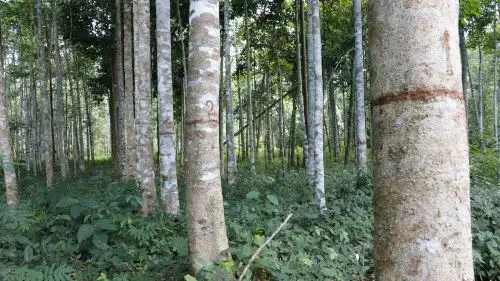
This ancient tree stands out for its towering height and is one of the largest in the Amazon.
Its high-quality timber has made it a target for illegal logging, threatening not only the species itself but also the diverse habitats it supports.
To strengthen its conservation and protection, researchers from the University of Sheffield (UK), together with experts from Peru's Forest Resources and Wildlife Supervision Agency (OSINFOR), have developed ARBOR.
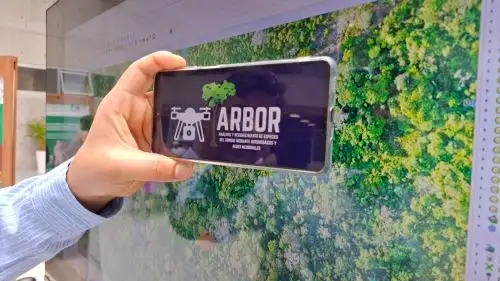
ARBOR is an AI-based plugin that will enable the identification of forest species from images captured by drones.
In an interview with Andina News Agency, Jefersson dos Santos—who holds a Ph.D. in Computer Science from the University of Sheffield—explained that ARBOR has been trained to recognize Shihuahuaco trees and functions as a plugin for the geographic information system (QGIS)—a free and open-source software platform.
"Our tool is embedded in the QGIS platform and can detect existing Shihuahuaco trees with an accuracy rate of 65% in initial tests, based on training conducted with a limited dataset of 700 samples," Dos Santos explained.
The project is currently in a two-year expansion phase—he added—with the aim of improving the model's accuracy and expanding its detection capabilities to include other protected species.
For his part, OSINFOR Chief Williams Arellano noted that the ARBOR implementation will make it possible to determine more accurately where Shihuahuaco trees are located and assess their status in the forest.
"This information will strengthen monitoring efforts and can be harnessed by various institutions in the forestry sector, such as the Ministry of Environment and the Ministry of Agrarian Development and Irrigation (Midagri), to make management, protection, and comprehensive conservation decisions regarding this emblematic species," Arellano pointed out.
How does it work?
ARBOR was developed using information generated by OSINFOR itself over years of forest monitoring activities.
To train the model, researchers used a database comprising 176 orthomosaics (high-precision and high-resolution aerial images) obtained through drone flights over forest management areas.
This dataset included records of 1,883 trees, among them more than 700 Shihuahuaco specimens, enabling the AI system to learn the species' particular characteristics.
Additionally, the tool was validated under real forest conditions on June 19, 2026, at the Alexander von Humboldt Experimental Center of the National Institute of Agrarian Innovation (INIA) in Ucayali region.
AI use
The tool uses artificial intelligence to analyze images captured by drones, automatically delineate tree crowns, and recognize patterns that make it possible to identify forest species in their natural habitat.
To do so, it compares the observed characteristics with the Shihuahuaco data used during its training process, enabling it to distinguish this species from others present in the forest.
This innovation represents a significant shift in the way forests are monitored.
"With ARBOR, it will be possible to determine which species exist in the forest, where they are located, and how they are being harnessed. Previously, technicians had to visually identify tree crowns, but the Amazon is vast, making this approach difficult to scale. This tool significantly reduces the workload of specialists tasked with detecting endangered species," the University of Sheffield researcher emphasized.
Thus, OSINFOR will have access to georeferenced information that will strengthen oversight of Shihuahuaco harnessing, as this species requires 100% verification during inspections, in accordance with Article 46 of the Forestry and Wildlife Law (Law No. 29763).

(END) MFA/MVB
Publicado: 24/6/2026