By Antonio MancoThe official gazette El Peruano has not only been a part of the country’s history since its founding 201 years ago, but it has also successfully adapted to technological shifts and new forms of communication.
From its early days—printed on a large Vomag rotary press and composed using linotype machines—to its current presence across digital platforms and social media, El Peruano has continuously evolved. It is now incorporating artificial intelligence (AI) as part of its digital transformation process.
AI with History
One of its most notable initiatives is "AI with History," which utilizes photographs from the El Peruano Historical Archive to create audiovisual content through artificial intelligence.
Using tools such as Kling AI, Higgsfield, and Google’s Flow, historical images are brought to life, transformed into audiovisual sequences that recreate significant events, figures, and moments from Peruvian history.
However, the images are not the only source material. Captions and information—reprocessed by specialists from El Peruano’s Documentation Center (Cendoc) and its Historical Archive—ensure greater accuracy.
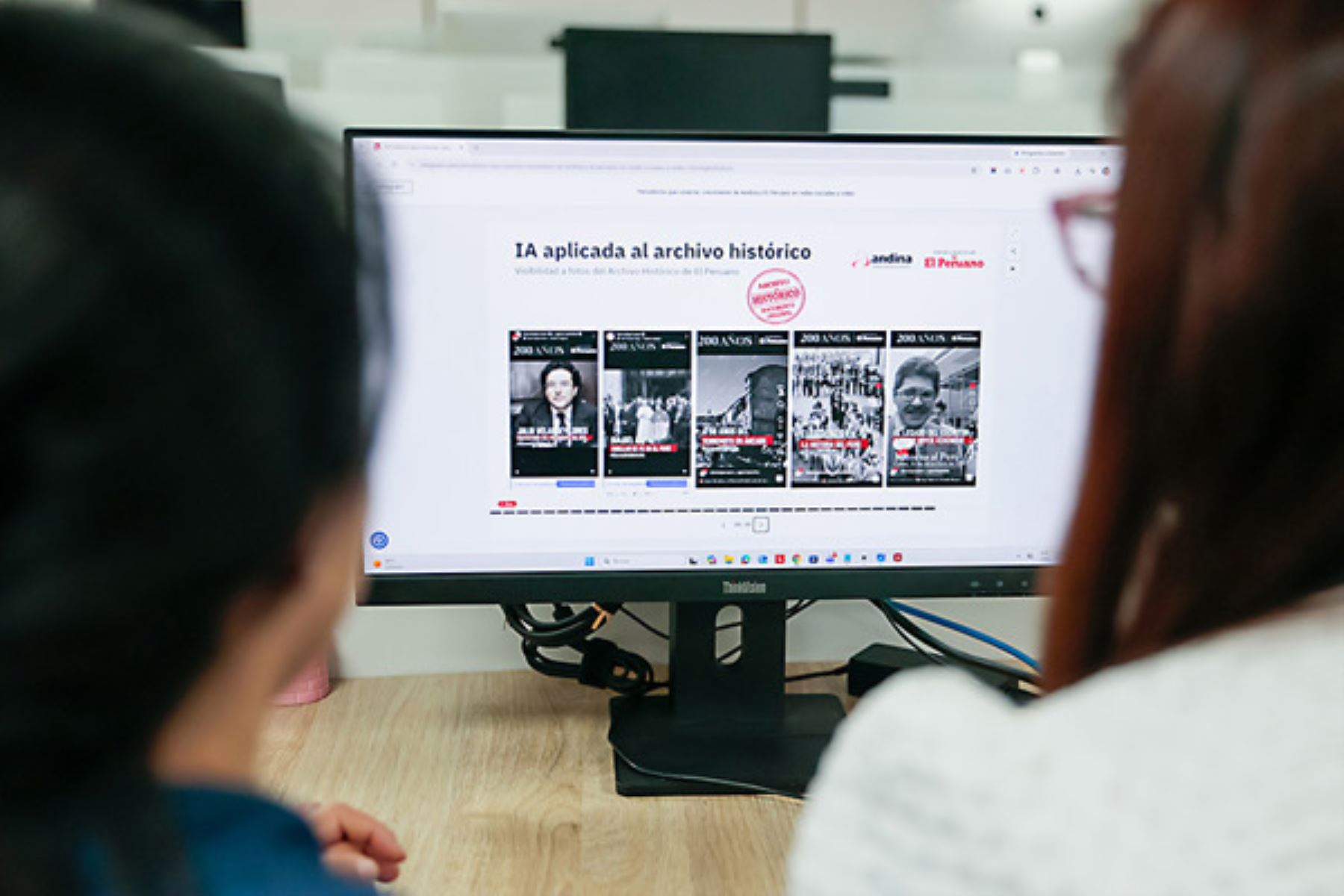
This allows for the creation of a new format featuring fresh digital narratives, designed to bring the past closer to generations that consume information on platforms like TikTok, Instagram Reels, Facebook, and YouTube Shorts.
Between July and December 2025, the "AI with History" videos garnered over 350,000 views across El Peruano’s social media channels. So far in 2026, that figure has reached 1,271,900 views—a clear demonstration of the potential these formats have to spark interest in national history.
Interactive Features
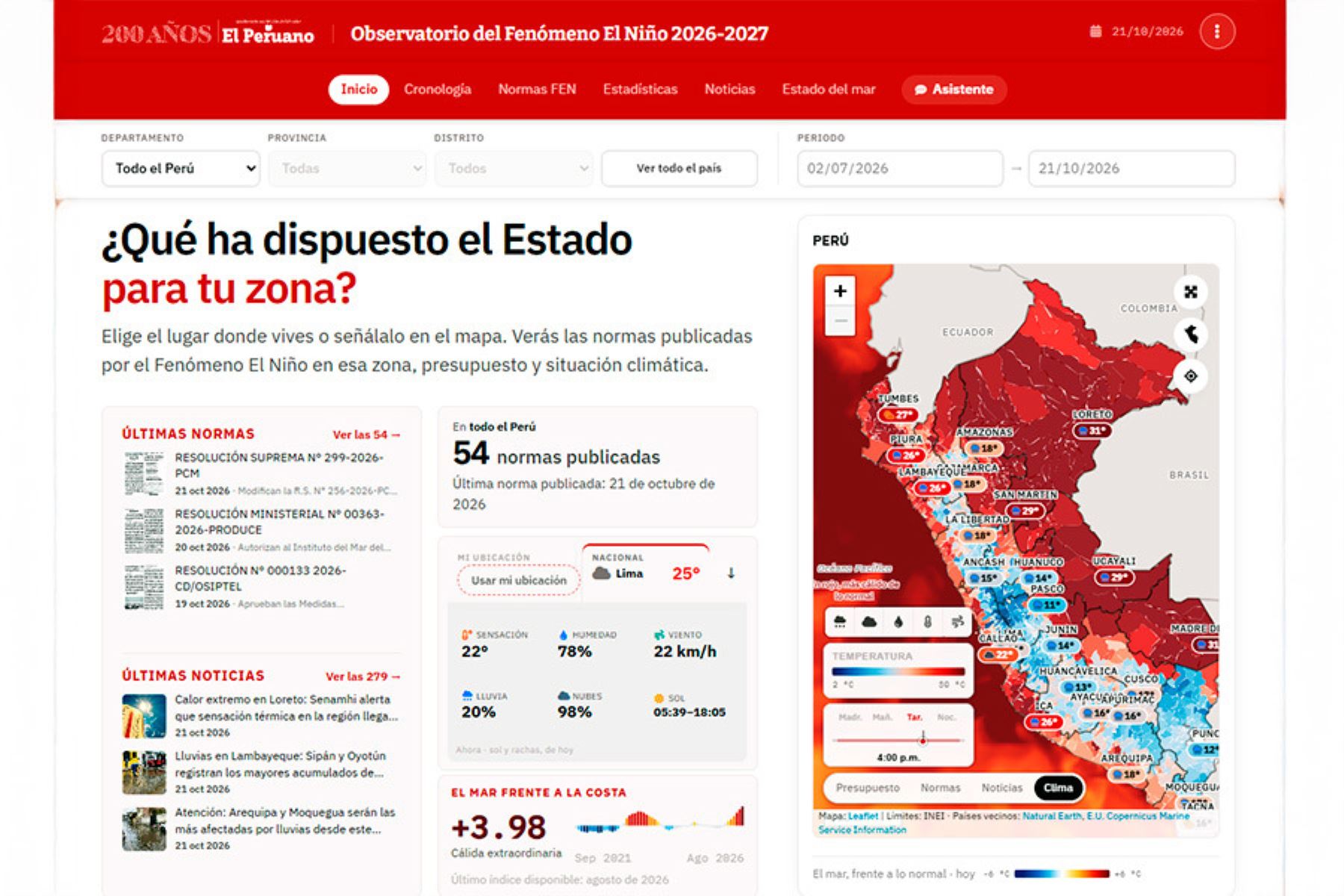
Innovation also extends to the development of interactive tools that facilitate access to public information. During the 2026 General Elections and the 2026 Regional and Municipal Elections, El Peruano incorporated interactive formats that allowed voters to access official results from both elections, based on data provided by the National Office of Electoral Processes (ONPE).
By integrating application programming interfaces (APIs) and utilizing AI, these visualization tools transformed electoral data into clear, understandable charts and results, featuring automatic updates and the ability to query information based on specific geographic areas.
These tools make it easier for citizens to review electoral information without having to interpret lengthy, complex tables of results.
Another notable initiative is the "2026 Regional and Municipal Elections Vote Simulator"—an interactive application developed by the digital team at *Andina* and *El Peruano*. It was designed to help citizens familiarize themselves with the six different ballot paper templates used in the elections held on October 4th.
The simulator allowed voters to identify the correct ballot for their specific region, province, and district, and to practice marking their votes. Its development was a response to information needs identified through the analysis of search queries and public discourse on digital platforms.
AI Skills
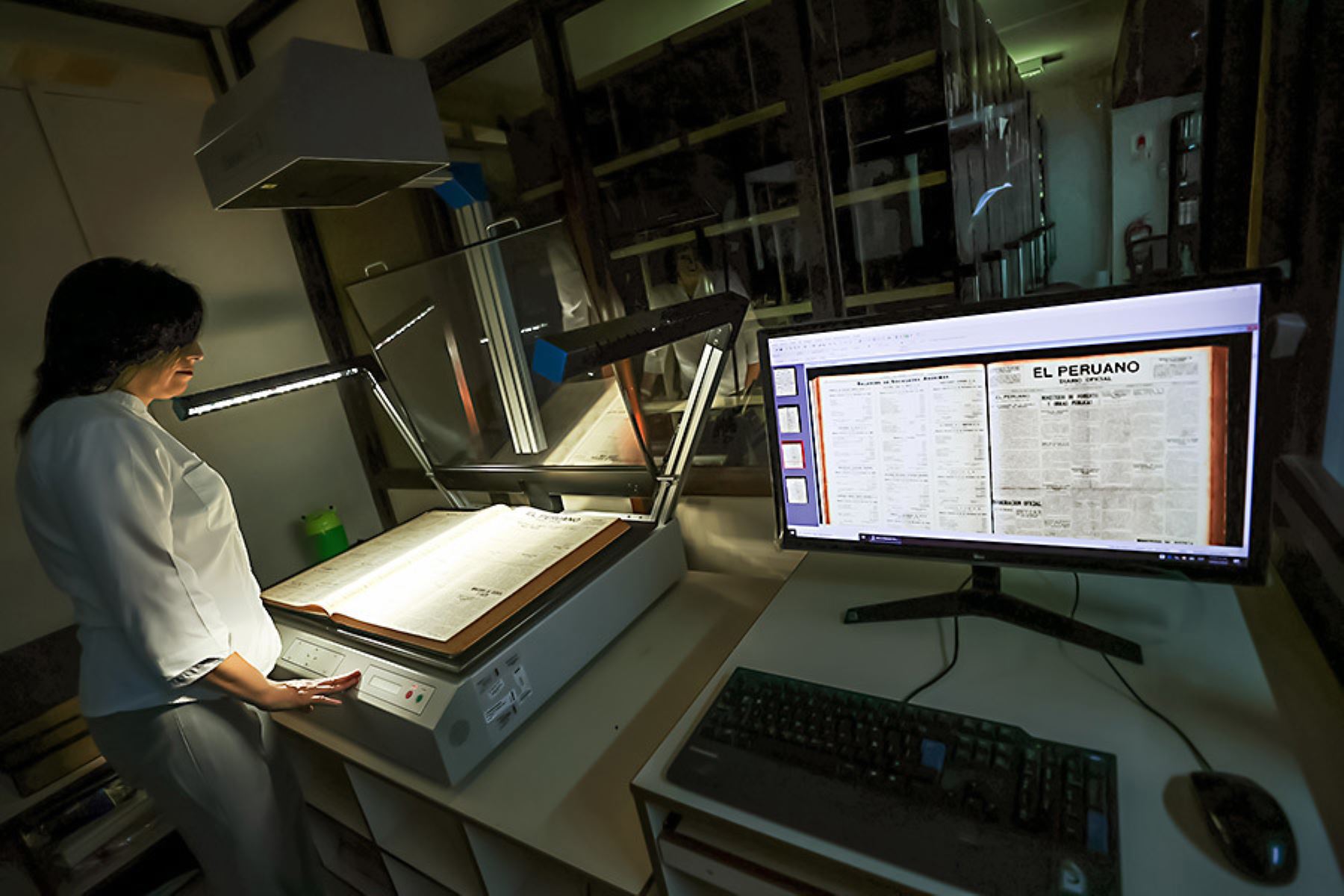
Artificial intelligence is also integrated into the daily workflows of news production and digital content creation.
Journalists at El Peruano have access to customized assistants—referred to as "skills," "GPTs," or "Gems"—which follow instructions pre-designed by the Digital Department of Editora Perú to carry out repetitive tasks.
These include, for example, transcribing audio, using OCR (optical character recognition) to process handwritten text, optimizing content for SEO (search engine optimization), converting journalistic articles into video scripts, drafting social media copy, and generating interactive photo carousels.
The team is currently developing four additional "skills" focused on recurring editorial tasks, such as adapting content for various platforms and generating graphic assets that align with the organization’s institutional identity.
Its primary contribution lies in reducing the time spent on repetitive tasks, standardizing processes, and enabling journalists to focus more of their efforts on research, analysis, fact-checking, and the creation of original content.

Clear approach to the use of AI
However, our editorial team is clear that AI does not replace journalistic judgment or editorial responsibility. Content generated using these tools must undergo review by journalists, who verify the data, sources, context, and the appropriateness of its publication.
New Challenges
The integration of artificial intelligence also presents new challenges regarding the visibility of content on search engines and conversational platforms.
In September 2025, Agencia Andina and El Peruano reported that 5.3% of their web sessions originated from tools such as ChatGPT, Copilot, and Gemini—a significant increase from the 0.2% recorded in August 2024.
This shift highlights the need to adapt news positioning and distribution strategies to an environment where the search for information is no longer solely dependent on Google or social media.
The experience of the official gazette El Peruano demonstrates that the incorporation of artificial intelligence can expand the possibilities for journalism: by recovering the value of historical archives, simplifying complex data, creating new formats, and streamlining workflows.
The challenge lies in consolidating these capabilities without compromising the principles that underpin quality journalism: rigor, truthfulness, transparency, and service to the public.
More from Andina:
(END) DOP / MDV
Publicado: 22/10/2026