By José VadilloLucas Jiménez is driven by a persistent urge: he keeps checking his email inbox on his phone. He is awaiting a response from the Holy See Press Office regarding his request to interview Pope Leo XIV.
He wants to hear directly from the Supreme Pontiff why Chulucanas—described by a Spanish writer as a “forgotten corner of the world”—has played such an important role in his pastoral life.
With his notebook in hand, the journalist from Ayabaca, Piura, has gathered testimonies to reconstruct the setting and context in which the Augustinian priest Robert Prevost arrived in what was then the Prelature (now the Diocese) of Chulucanas in 1985—a place with which he has maintained an unbroken bond ever since.
These inquiries led to the book "Donde todo empezó" (Where It All Began; Lima, Artífice, 2026), which contains 10 chronicles.
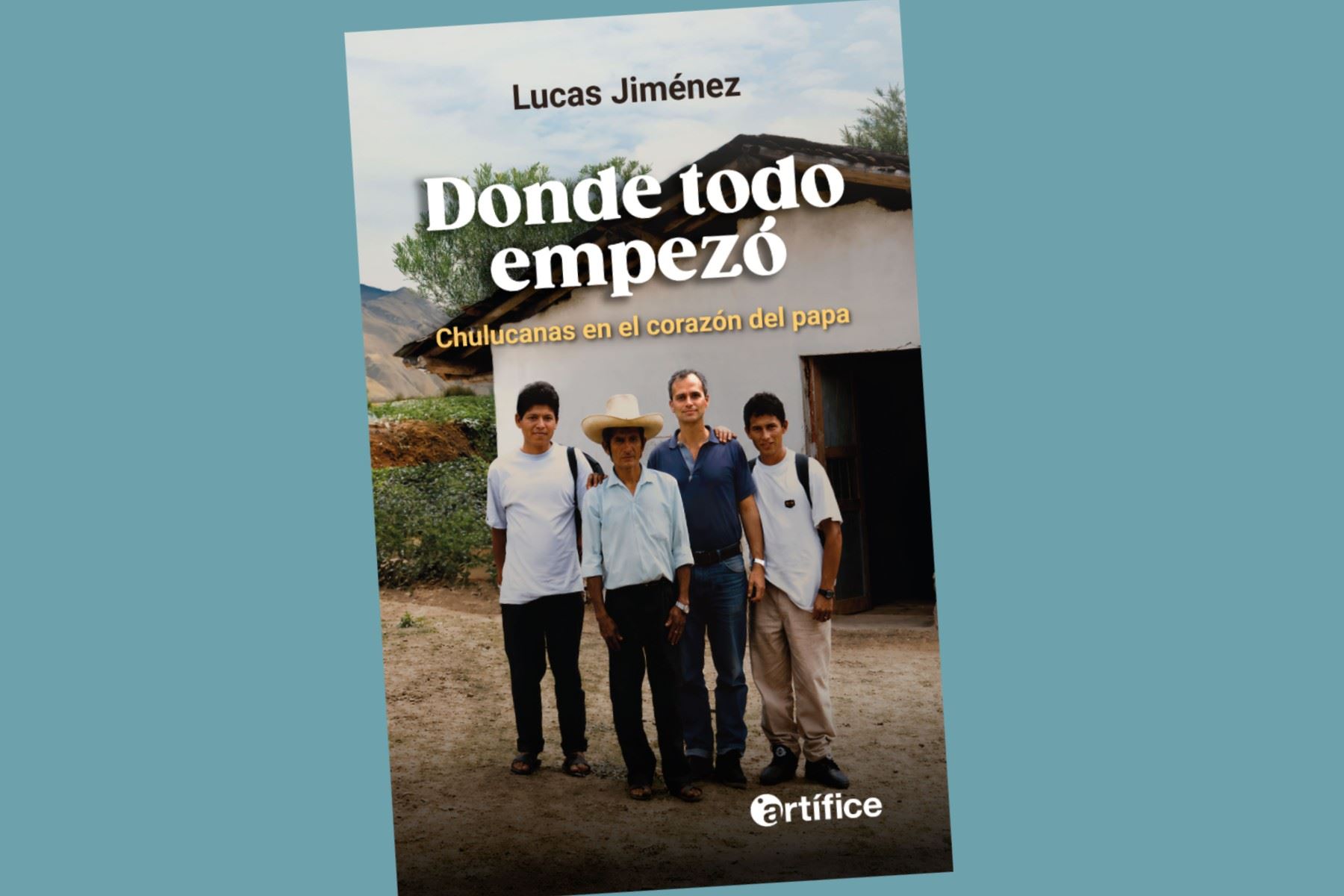
This region—comprising the Piura provinces of Morropón, Huancabamba, and Ayabaca—served as the first pastoral assignment for the current occupant of the Throne of Saint Peter. Father Robert Prevost arrived in Chulucanas in 1985, sent from the Province of Our Mother of Good Counsel in Chicago, United States, to assist Bishop John McNabb—whose remains now rest in the Holy Family Cathedral in Chulucanas.
Although his superiors in the Order of Saint Augustine had been preparing Prevost to become a leading Catholic intellectual, he was suddenly sent to provide support in a Third World country that was then enduring one of its most difficult social and economic periods.
“The Holy Spirit blew in this direction, and Father Robert ended up returning to Chulucanas, where he stayed for nearly 40 years,” summarizes Jiménez.
Robert Prevost took up residence on the second floor of the *Casa de la Fraternidad* (House of Fraternity). He traveled through the rural hamlets, where he witnessed the devastation left by the 1983 El Niño phenomenon—adobe houses reduced to rubble and widespread poverty. There, he worked side-by-side with the local residents and even learned to ride scrawny, worn-out horses.
It was also in Chulucanas that he first tasted dishes like *seco de cabrito* (goat stew), *pepián* (a traditional corn-based stew), and *ceviche*. He would play Atari with the local youth, buying them soccer jerseys and balls—a way to engage them and perhaps draw them toward the priesthood.
In Piura, Lucas Jiménez gathered accounts from people who had worked at the now-defunct Roma Clinic, where Father Prevost was admitted after falling ill with typhoid fever just two months into his time in Chulucanas.
One cannot fully grasp the work Father Prevost carries out today as a leader in the Catholic Church without understanding the collaboration between the clergy and the laity in these towns in the Piura region.
Within the jurisdiction of what was then the Prelature of Chulucanas, he encountered the “New Parish Image” (Nueva Imagen de Parroquia—NIP) initiative, which strengthened ties with the laity by entrusting them with various responsibilities.
“There is a philosophy, a way of thinking, that stems from his time here,” recalls Jiménez.
For all these reasons, Bishop Daniel Turley notes that Chulucanas is etched into Robert Prevost’s soul—a place he will never forget, for it was there that he discovered his first pastoral love.
Today, things are very different. Nearly all the Augustinian priests in the Diocese of Chulucanas are Peruvian—a development due in part to the work carried out by North American Augustinians since the 1960s. The challenge for the religious figures is to carry out their work without the financial support previously provided by the networks of their American counterparts.
In Chulucanas, there is a dual sentiment—one of both joy and responsibility—stemming from the fact that Father Roberto, who traveled through their hamlets and towns, baptizing and marrying many, is now Pope Leo XIV.
“They are very proud that a missionary from the Order of Saint Augustine, who once served here, has been chosen as the universal head of the Catholic Church. But they also view it as a great responsibility. ‘If we mess up, if we misbehave, we’ll make him look bad,’” says Jiménez.
Facts:
- Literature and faith. Lucas Jiménez, the book’s author, grew up in a Catholic household. One of his brothers was a priest, and another was a seminarian. He also wrote crime reports for the newspaper El Tiempo (The Time) in Piura city.
- The book "Donde todo empezó" (Where It All Began) was presented on Saturday the 31st at 4:30 p.m. at the José Carlos Mariátegui House-Museum (Jr. Washington 1946, Lima). Subsequently, on November 6th at 10:00 a.m., it will be presented at the National University of Piura, and on the same day at 6:00 p.m., at the University of Piura (UDEP) in that northern city.
On November 7th, the event will take place at the Pastoral Center in Chulucanas.
More from Andina:
(END) JVV/JVV / MDV
Publicado: 4/11/2026