13:55 | Trujillo (La Libertad region), Sep. 30.
The rise of Peru's northern coastal archaeological school began to emerge more than a century ago with the arrival of the first North American researchers.
Interest in pre-Columbian societies would lead to the training of Peruvian archaeologists and mark the beginning of a close scientific relationship with their U.S. counterparts that continues to this day.
Decades later, researchers from both countries once again joined forces and expertise to promote a project aimed at protecting, conserving, researching, and promoting the cultural heritage carefully safeguarded by the Museum of Archaeology, Anthropology, and History of the National University of Trujillo (UNT).
The museum bears witness to the first discoveries at Chan Chan and other pre-Hispanic sites in Peru's coastal valleys, as well as the historical relationship between the two archaeological schools.
Building on this shared interest, Alejandro Yepjen, director of UNT's Professional School of Archaeology, and Gabriel Prieto, from the University of Florida's Department of Anthropology, spearheaded the project "Collection Management at the National University of Trujillo Museum."
The initiative received the 2026 Ambassadors Fund for Cultural Preservation and US$245,000 in funding.
2,500 artifacts to undergo conservation
Speaking to Andina News Agency, Yepjen indicated that the project will be carried out over 24 months, during which 2,500 archaeological artifacts will undergo conservation work.
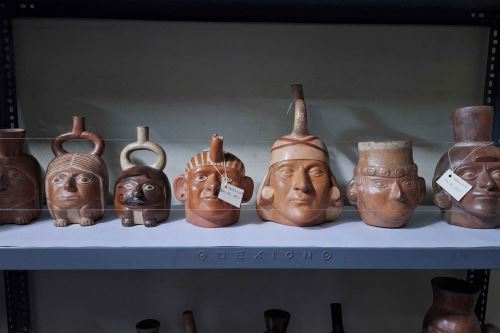
These include ceramic vessels, textiles, stone artifacts, metal objects, and part of the documentary collection related to research and the first discoveries in this area of the country.
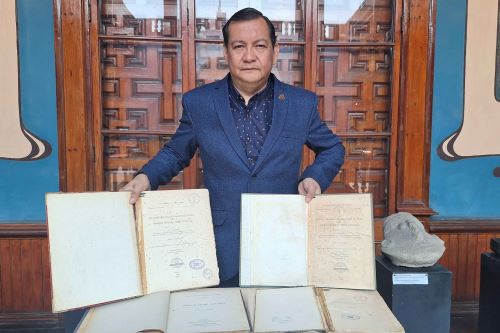
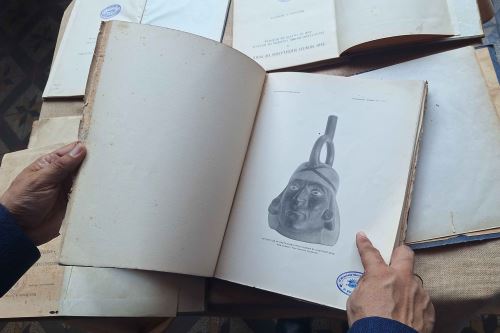
Yepjen highlighted, for example, Volume II of Archaeological Explorations in Peru: Ancient Pottery From Trujillo, published in 1926 by U.S. researcher Alfred Louis Kroeber.
In these publications, for example, the Moche culture had not yet been identified and was instead referred to as Proto-Chimu, a term that changed as new research was conducted and discoveries were made.
Similarly, they contain previously unpublished drawings and photographs of the first archaeological artifacts discovered during excavations.
"Something that other museums do not have is this documentary collection of very early research by American researchers who conducted archaeological studies in Peru, particularly along the northern coast," Yepjen stated.
"Another objective of this project is to conserve these texts and highlight the contributions made by these American scholars to the study of pre-Hispanic societies," he added.
Yepjen also highlighted the influence of Dr. Richard Schaedel on Wendell Bennett's research, among others.
This was precisely one of the arguments they presented in support of the project when applying for the Ambassadors Fund for Cultural Preservation.
Type of intervention
The Peruvian specialist indicated that, as part of the project, conservation work will be carried out, since the aim is to preserve the artifacts' originality and their condition when they were found or arrived at the museum.
"For ceramic artifacts, for example, stabilization will be carried out; natural solvents will be used for cleaning and consolidating painted pigments," Yepjen indicated.
"A very similar procedure will be followed for textiles, including X-ray analysis and other tests to examine the fibers, among other things," he added.
Exchange of expertise
Gabriel Prieto, a researcher at the University of Florida's Anthropology Department, emphasized that the Ambassadors Fund for Cultural Preservation reaffirms the longstanding and ongoing scientific relationship between U.S. and Peruvian archaeologists, as well as the influence of North American research on Peru's archaeology.
He highlighted U.S. archaeologist Richard Paul Schaedel, who, while pursuing his doctoral studies at Yale University, founded the Institute of Anthropology of the Coast of Peru at the National University of Trujillo and later became its director.
"In addition to the conservation of the artifacts and the adaptation of some exhibition spaces, the project will allow specialists from the museum, students, and professors from the National University of Trujillo, as well as students and professors from the University of Florida, to exchange knowledge and experiences," he stressed.
Prieto highlighted the participation of archaeologist Arabel Fernandez.
Fernandez will be responsible for treating the textiles, given her outstanding expertise in the conservation of these types of artifacts, which are a fundamental part of the project.
She is a member of the Peruvian Women in Archaeology Network and participated in the dismantling of Lady of Cao's funerary bundle.
"Arabel Fernandez also helped us create the project that won the Ambassadors Fund for Cultural Preservation," he pointed out.
Exhibition space upgrades
Prieto said that although the funding does not cover the construction of new facilities, one of the areas will be equipped with state-of-the-art shelving.
This will allow the artifacts to be moved from one place to another and ensure they are kept under suitable conditions for protection.
For his part, Yepjen hopes that once the project is completed, some of these artifacts can be put on display to diversify the current exhibition at the Museum of Archaeology, Anthropology, and History and attract more visitors.
Both researchers hope this will be the starting point for authorities at the National University of Trujillo (UNT) to promote a public investment project so as to improve the historic mansion that houses the museum.
Museum
The Museum of Archaeology, Anthropology, and History at the National University of Trujillo (UNT) was founded on April 1, 1939, by Jose Eulogio Garrido Espinoza and Max Diaz Diaz.
It currently houses more than 20,000 artifacts associated with the Cupisnique, Salinar, Viru, Moche, Chimu, Vicus, Cajamarca, Northern Huari, Chancay, Inca, and Nazca cultures.
Many of these artifacts come from past research projects, while others were donated by collectors who chose this museum as the place where they would be preserved.
The collection includes ceramics, textiles, metalwork, as well as sculptures made of wood and stone.
Since its founding, the museum has occupied various locations across the city. In 1995, the Peruvian State granted it exclusive use of Casona Risco, a colonial-era building that is part of the National Cultural Heritage.
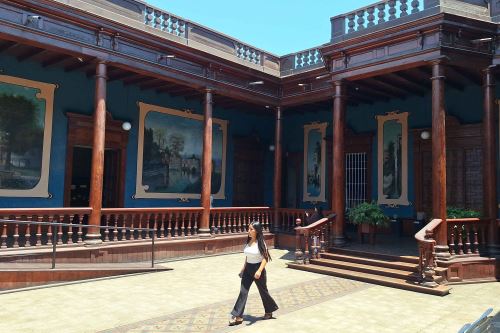
It has six permanent galleries and four temporary exhibition rooms, offering a detailed overview of the technological and cultural changes that have shaped the northern coast over time.
From architecture and agricultural technology to ceramics and metallurgy, visitors have the opportunity to understand the historical role played by Peru's northern La Libertad region in the country's economic and social life.
The museum is open on Mondays from 9:00 a.m. to 2:30 p.m. and from Tuesday to Saturday from 9:00 a.m. to 4:30 p.m. Admission fees are affordable.
(END) LPZ/MAO/MVB
Published: 9/30/2026