09:34 | Cusco (Cusco region), Jun. 24.
The FIFA World Cup being held in Mexico, the United States, and Canada has not affected the flow of tourists visiting the Peruvian city of Cusco, as well as the southeastern region's various archaeological and natural attractions. In fact, the first half of the year has recorded 4% growth.
The Historic Capital of Peru and the Inca Empire is currently celebrating its Jubilee Month.
Its living culture remains vibrant and continues to captivate thousands of domestic and international visitors who arrive at the city's air and land terminals before heading to the Historic Center.
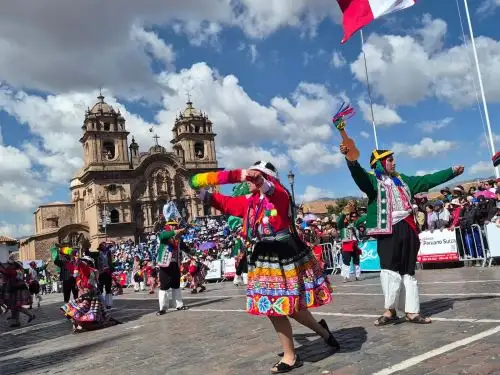
These expressions are reflected in the music, dances, allegorical performances, and traditional displays featured throughout the celebrations.
The festivities began on an auspicious note with a heartfelt offering to Pachamama, or Mother Earth.
This was followed by a series of cultural, academic, folkloric, religious, and contemporary events.
One of the main attractions was Cusco's Corpus Christi celebration, whose expressions of faith and hope drew worshipers from all Cusco province districts over the course of three days.
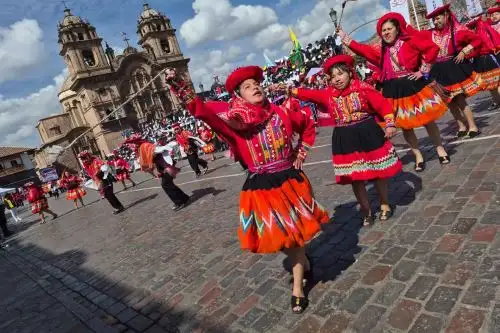
However, Tuesday marked the Grand Civic Parade, during which Cusco residents paid tribute to the Imperial City at the foot of the Basilica Cathedral, built on the foundations of the Inca Temple of Wiracocha.
There, participants show their respect by removing their hats and respectfully greeting local authorities.
Baca said Cusco is expected to close the month with more than 300,000 additional visitors "beyond the number it normally receives."
To accommodate them, reception and hospitality services have been enhanced through financial support provided by the Cusco Region Government to the Provincial Municipality of Cusco and the Municipal Company for Celebrations and Tourism Promotion of Cusco (Emufec). The latter is in charge of organizing the celebrations.
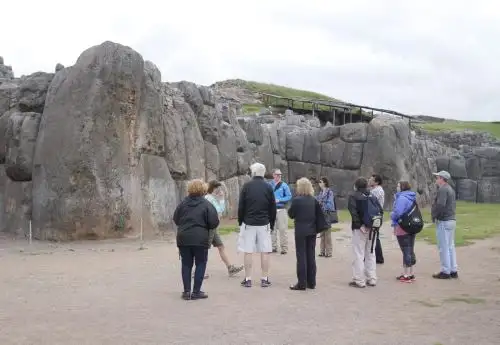
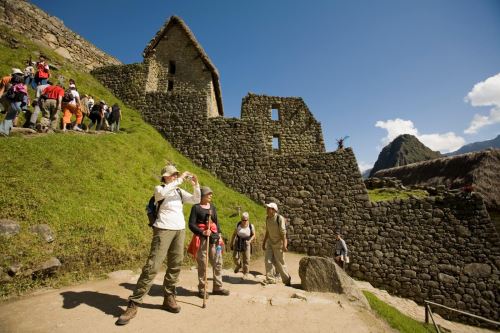
However, the official acknowledged that the Inca citadel of Machu Picchu remains by excellence the region's most admired attraction.
It is followed by the Sacred Valley of the Incas, Vinicunca, Humantay Lake, and other destinations promoted by tour guides as part of efforts to diversify the tourism offering.
Visitor arrivals have not been affected, despite the soccer fever currently gripping North America, Baca noted.
"I understand that these are two different target audiences. There are people who always plan to attend World Cups, which are held every four years, and they will continue to do so. However, there is another target audience that comes for cultural, experiential, and traditional tourism, and they are present here," he underscored.
"The indicators show that we are reaching a peak of 55 flights per day. We are operating at maximum capacity. In the first half of the year alone, airport traffic increased by at least 150,000 additional passengers," he emphasized.
According to the official, Cusco has recorded sustained growth of 4%.
"We will likely conduct an assessment at the end of the month, as we have been aware of fluctuations due to the political uncertainty surrounding the electoral process," Baca said.
The official said this year Cusco is expected to surpass the tourism levels recorded before the COVID-19 pandemic.
"I believe we will surpass that benchmark this year, even though the conditions are different. However, there is coordinated work being carried out among various institutions," he stated.
According to Gercetur figures, Peru welcomed more than 3.6 million tourists last year, and the target for this year is to reach 4.2 million.
In Cusco, that growth is expected to be reflected in the total arrival of 1.55 million tourists by the end of 2026.
"It is a benchmark that will make it possible to show that this year's objectives have been achieved," he underscored.
Machu Picchu visitor capacity
Since June 19, the Inca citadel of Machu Picchu has increased its daily visitor capacity to 5,600—an additional 1,000 visitors compared to the start of the high tourism season.
This measure enhances the visitor experience.
Nonetheless, challenges remain regarding the sale of the 1,000 in-person tickets, and long queues could once again form in Machu Picchu Pueblo (town).
"It is a palliative. The ultimate solution will be to move to 100% ticket sales through the Culture Ministry's platform," he said.
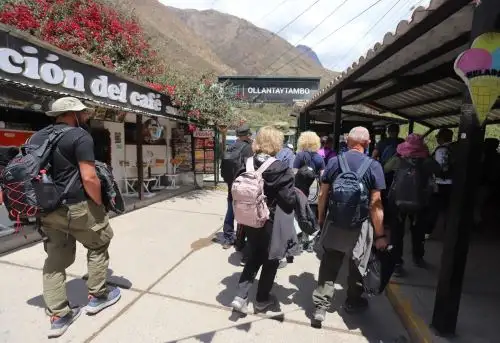
The issue of in-person ticket sales, as well as situations that have arisen along the access route through the Sacred Valley of the Incas and at the Ollantaytambo station, will be addressed at the next meeting of the Machu Picchu Management Unit (UGM), scheduled for the first week of July.
(END) PHS/MAO/MVB
Published: 6/24/2026