Peru is the cradle of the most advanced and mature microfinance experience in the world, highlighted Javier M. Flores, Director General of the BBVA Microfinance Foundation (FMBBVA), at the 60th Annual Assembly of the Latin American Federation of Banks (Felaban 2026), currently taking place in Peru.
In his presentation, titled “Impact That Transforms Lives: Microfinance, Sustainability, and Inclusion in Latin America,” he noted that the microfinance sector has played a fundamental role in the Latin American region over the last few decades.
“Being in Peru today is no mere coincidence; we are in the cradle of some of the most advanced and mature microfinance experiences on the planet,” he emphasized.
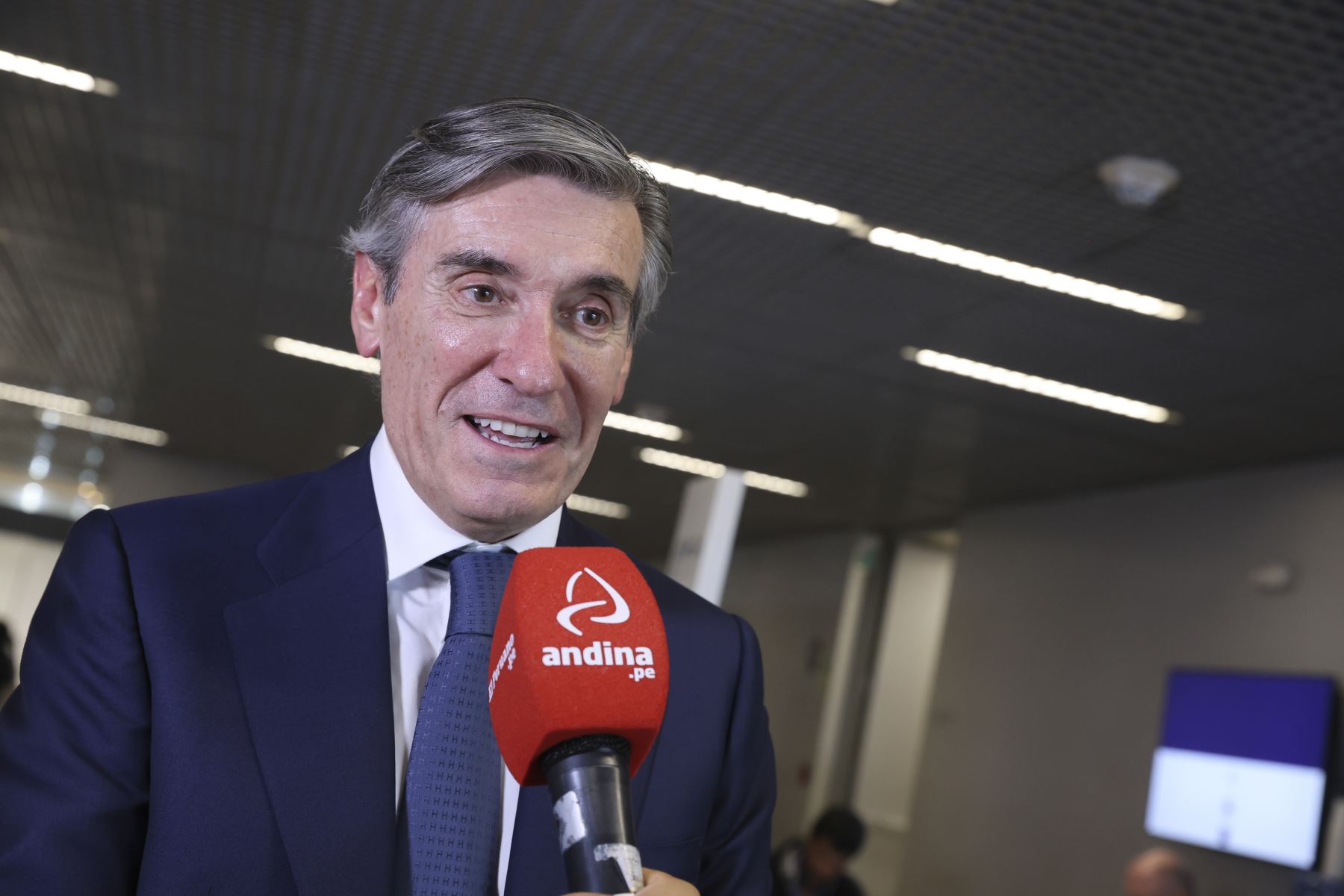
He further pointed out that the world is going through an extraordinary moment, in which microfinance institutions are operating within a reality that is more complex and uncertain than ever before.
“We can no longer understand development challenges in isolation. Everything is connected: the economy, technology, the climate, and social trust. We live in a more fragmented world, at a time when international cooperation is weakening and official development aid is on the decline,” he stated.
“The consequences for Latin America are direct: less concessional financing, greater pressure on public finances, and increased uncertainty for millions of families,” he said.
To this, Flores added, one must also consider migration phenomena and growing pressures on basic resources such as water, energy, and food. “These factors do not act in isolation; they reinforce one another, creating a landscape where individual resilience becomes a fundamental asset,” he commented.
“We are talking about a region with 667 million inhabitants, where nearly 30% of adults still do not have a bank account, and almost half of the employed population works in informal conditions—a figure that, in the cases of Peru and Bolivia, reaches 70%,” he explained.
“Furthermore, self-employment remains the structural response for millions of families facing a labor market that fails to generate enough quality, formal-sector jobs,” he added.
He also noted that while monetary poverty in the region has fallen to historic lows, we are witnessing a profound paradox: poverty is declining, but vulnerability is not.
“Latin America has learned how to reduce monetary poverty, but it has yet to learn how to ensure that households have stable incomes, sufficient assets, and the capacity to absorb unforeseen events,” he pointed out.
“According to World Bank estimates, nearly one in three Latin Americans is economically vulnerable. They may not be poor today, but they are just one unforeseen event—a single shock, an illness, a flood, or a job loss—away from falling into poverty,” he explained.
In this regard, he pointed out that the primary challenge facing the microfinance sector is not merely lifting people out of poverty, but also addressing the ‘revolving door’ phenomenon—ensuring that those who have escaped poverty remain out of it.
“Therefore, the success of this industry (microfinance) should not be measured by how many people cross the monetary poverty line, but rather by how many manage to move far enough away from it to stay out for good,” he emphasized.
More from Andina:
(END) MDV / MDV
Published: 11/5/2026