By Miguel de la Vega PolancoThe outlook for the Peruvian economy is encouraging for the coming years, despite the impact of the El Niño phenomenon—a recurring, transient event in our country’s history, which is expected to be at its most intense in decades during the 2026–2027 period.
Nevertheless, the World Bank recently raised its growth forecast for Peru for 2026—increasing it from the 2.7% projected last April to 3.2%—and also forecasts 3% growth for 2027, according to its latest report from October. Furthermore, business sentiment in Peru remains optimistic for the years ahead.
In this context, the demand for electric power is set to increase, and the challenge lies in being prepared to meet that demand effectively.
Against this backdrop, Jorge Güímac, Vice President of the Peruvian National Committee of the Regional Energy Integration Commission (PECIER), notes that there are renewable energy projects totaling 20 gigawatts currently within the Economic Operation Committee of the National Interconnected System (COES).
“There is certainly the capacity for growth in the energy sector; the goal is to ensure that this energy consumption actually materializes. We have the potential to grow, but we must ensure that we don’t simply stop at that potential,” he stated to the official government newspaper, El Peruano.
He pointed out that the mining sector acts as a catalyst for growth in the energy sector, noting that during periods when no major new mining investments were being made, the electric power sector saw little growth.
Currently, Peru holds a portfolio of mining investments totaling approximately $65 billion, all of which will require an increased supply of electric power.
“There is a great deal of potential, which creates jobs and opportunities for growth. The key is having clear rules in place for decision-making and investment; we are a country blessed with energy sources, but we must turn that potential into reality,” he emphasized.
He also noted that Peru’s electricity matrix is diversified, consisting primarily of thermal power (generated from natural gas) and hydropower (from water), followed—to a lesser extent—by non-conventional renewable sources such as solar and wind, as well as some diesel-powered generation plants.
He explained that building a hydroelectric plant—which offers significantly higher capacity and a steady supply to the National Interconnected Electric System (SEIN)—can take up to 12 years, accounting for both the permitting process and construction, whereas solar or wind power plants require less time.
“What I always say is that the energy matrix must be ‘localized’—tailored to our specific environment. In Peru, fortunately, we have hydropower and natural gas, but looking toward the future, we also have wind and sun. We should continue to harness these, growing our reliance on energy sources that are both clean and efficient,” he stated.
-
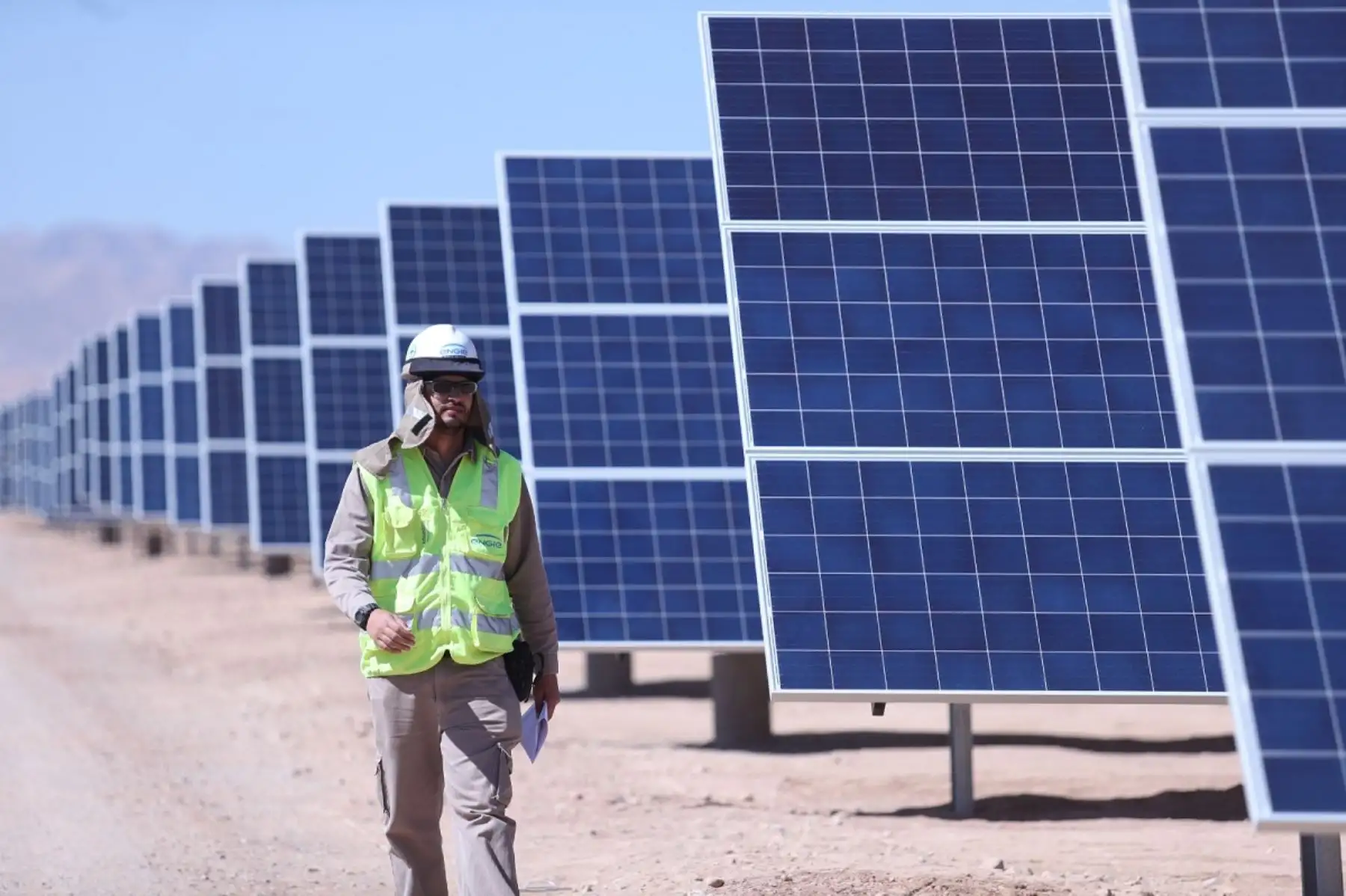
Peru offers significant investment opportunities that drive economic growth
Timely Planning and Execution
Meanwhile, Miguel Cueva Usquiano, general coordinator of Expo PECIER-FISE and an energy consultant, pointed out that the sector must move forward with necessary investments; currently, plans are being executed with delays, causing demand to outpace what was originally projected.
“As an engineer who was once my manager used to say: if you plan to buy a pair of shorts when you’re five years old, but you don’t actually buy them until you’re eleven, they’re going to be too small,” he explained.
Peru’s electricity sector is growing, and while private investment is essential, it must be timely—covering generation, transmission, distribution, and flexible capacity.
“We still have an opportunity rooted in the institutional framework of the government and its authorities. The economic institutional framework is solid, as is the monetary policy—and that is what investors are looking at today", he emphazised.
"As long as this macroeconomic stability persists, global investors will view investment opportunities in the country favorably—not only in energy, but across all sectors, including mining, hydrocarbons, and others,” he said.
Cueva noted that there is foreign investment in the Peruvian electricity sector—from Spain, Colombia, and China—covering generation, transmission, and distribution.
“There is also a significant presence of Spanish companies developing smaller-scale photovoltaic projects. These are equally important, as they target areas where the State has yet to bridge development gaps—specifically, within isolated (off-grid) systems,” he explained.
Furthermore, he pointed out that Peru is home to the world’s largest isolated power system, located in the Loreto region. Because it is not connected to the National Interconnected Power System (SEIN), electricity generation there faces numerous challenges—notably a reliance on diesel, which is costly.
In this context, solar technology is the most suitable solution for bringing energy to these parts of the country.
“Today, energy security is a top priority. Demand is growing, and efforts are underway to increase generation capacity; however, transmission capacity remains a major challenge. Meeting this demand with existing infrastructure—both in terms of transmission and distribution—is a significant hurdle,” explained Cueva.
He drew an analogy to urban traffic: just as a city’s streets and avenues become congested when there are too many vehicles, an excess of energy cannot be effectively transmitted across the grid. Therefore, this electricity requires expanded transmission infrastructure.
To address these and other issues related to the electricity sector in Peru and the region, approximately 4,500 participants—including government officials, business leaders, professionals, technicians, academics, suppliers, and investors—are expected to attend Expo PECIER-FISE 2026.
The event will take place from October 28 to 30 of this year at the Jockey Exhibition Center in Lima and is supported by the Ministry of Energy and Mines (Minem).
It is worth noting that the Regional Energy Integration Commission (CIER) is an international organization comprising 17 countries and over 250 member companies. With a 61-year history of fostering regional integration, it has included Peru—represented by PECIER—since 1975.

Priority challenges in the electricity sector
Jorge Güímac, Vice President of PECIER, points out that the primary concerns within the sector are supply security and contingency resilience.
“This manifests in several ways, such as preparing to take preventive measures against the El Niño phenomenon, addressing technological aspects, and continuing with practices that are already working well,” he indicated.
“Anything that provides a benefit to the State and the end user—such as the expansion of concessions, which demonstrates value to the State by ensuring the necessary energy security—is key,” he noted.
Another challenge, he pointed out, is the timely expansion of the grid—because “without transmission, there is no transition”—to avoid electricity supply issues like those experienced in Chile.
A third challenge for the sector is ensuring system flexibility to integrate renewable energy, which includes energy storage for power generated by solar plants and the provision of ancillary services, among other factors.
A fourth challenge concerns the predictability and execution of investments, with timelines that must be realistic and aligned with the system’s growth requirements.
Finally, a fifth challenge, he noted, involves “quality and regional disparities.” This entails deploying smart metering technology, implementing hybrid solutions where necessary, and establishing regulations for isolated (off-grid) systems that keep pace with actual needs.
“Ultimately, we view this as a matter of supply security—which depends not just on building power plants, but also on having adequate grids that offer capacity, flexibility, resilience, and security. It also requires a tailored approach to service, ensuring what matters most: quality service for the end user at an appropriate price,” he emphasized.
Key Data:
- Peru has a portfolio of 13 solar energy generation projects with definitive concessions, representing an estimated investment of US$ 1,805.9 million and a projected capacity of 2,402 megawatts (MW), according to figures from the Ministry of Energy and Mines (Minem).
- Technical teams from the Ministry of Economy and Finance (MEF), the Ministry of Energy and Mines (Minem), and the Ministry of the Environment (Minam) are working to unblock the development of mining and energy projects.
- In June of this year, Peru awarded four transmission projects—included in the 2025–2034 Transmission Plan—valued at US$ 339 million. These are part of a portfolio of 18 transmission projects slated for 2026, representing a total estimated investment of US$ 950 million, to be developed under the Public-Private Partnership (PPP) mechanism.
- Peru also has 33 electricity generation projects currently underway, representing an investment of US$ 6.5 billion. These projects will add more than 5,000 megawatts (MW) of new installed capacity between 2026 and 2036, according to the Ministry of Energy and Mines (Minem).
More in Andina:
(END) MDV/ DOP / MDV
Published: 10/22/2026