President Keiko Fujimori announced today that the government will allocate 2.5 billion soles (around $ 728 million) for direct grants to vulnerable families. This initiative is part of a set of priority counter-cyclical fiscal policy measures aimed at mitigating the impact of external shocks and the El Niño phenomenon.
She stated that an additional 18 billion soles will be earmarked for four key measures designed to protect the national economy and Peruvian families.
“The 18 billion soles (around 5.2 billion dollars) will be distributed as follows: approximately 2.5 billion soles (around $ 728 million) will go toward direct grants for the most vulnerable families—to be provided over a period of three to five months, depending on need,” she explained.
She noted that these grants will be directed to vulnerable families in the southern Andean region, those affected by rains in the northern part of the country, families impacted by mudslides and river overflows, as well as retirees and senior citizens.
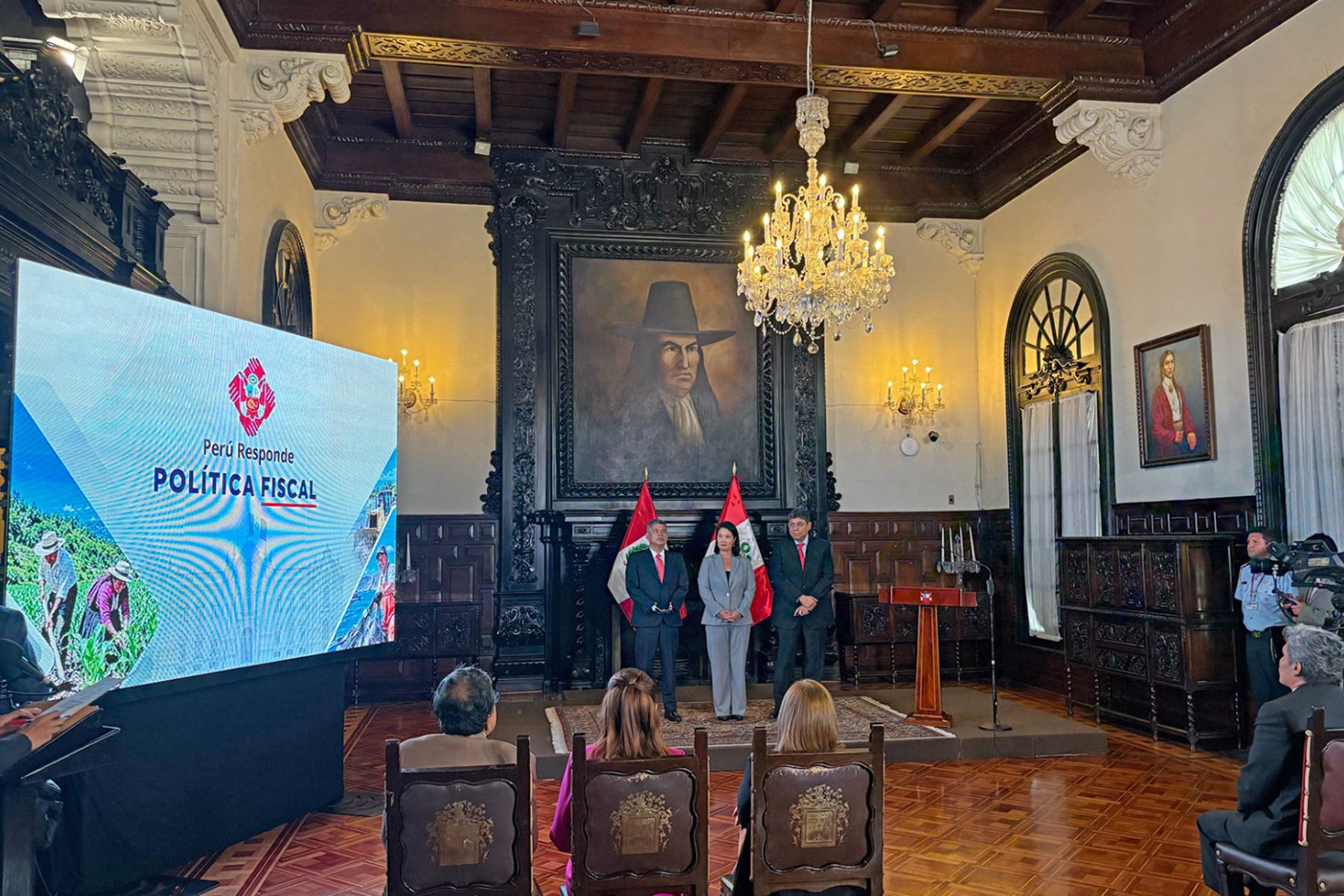
Furthermore, the President announced that 2 billion soles ( around 582 million dollars) will be allocated for the maintenance of public works—a move expected to rapidly generate a significant number of jobs—and 500 million soles (around 145 million dollars) will be used to subsidize fuel costs.
Additionally, she indicated that 13 billion soles (3.7 billion dollars) will be invested in infrastructure: 6 billion soles ($ 1.75 billion) for educational infrastructure, and 7 billion soles ($ 2.04 billion) for the completion of stalled construction projects.
“We are firmly convinced that the El Niño phenomenon and rising fuel prices will in no way halt our country’s economic growth. That is why today is a great day. While it is true that a ‘mega’ El Niño is approaching, the State’s response is robust and historic,” she emphasized.
In this regard, the President urged the Peruvian people to maintain a positive and optimistic outlook.
“I want to address Peruvian families in particular. Beyond all these figures and economic explanations, there is something that concerns us all: ensuring peace of mind in your homes, the security of your jobs, and the future of your children,” she stated.
The President noted that all the measures announced by the Minister of Economy, Elmer Cuba, were analyzed, debated, and discussed within the Cabinet and with the head of the National Superintendency of Customs and Tax Administration (Sunat). Furthermore, they have the full backing of the administration, as Peru possesses solid macroeconomic indicators that allow for the implementation of these additional measures.
She acknowledged that difficult times lie ahead due to the El Niño phenomenon, rising fuel prices—driven by the war in the Middle East—and high interest rates in major economies, all of which will impact the country.
In response, she noted that the government has already taken action, including the supplementary credit approved yesterday by Congress in an initial vote, as well as measures to support the transport sector and prepare for El Niño.
“We are constructing temporary shelters for 30,000 people; we have five Navy vessels ready to assist those in need; field hospitals have already been deployed to Tumbes, Piura, and Lambayeque; bridges are already positioned in the northern region; and we have over 5,000 tons of food supplies,” she detailed.
Finally, the head of state stated that the challenge for the coming year is to ensure that, despite the difficulties, the country achieves greater growth than it did this year.
“Increasing the deficit to 2.4 (percent of GDP) will mean that we will approve an additional 18 billion soles ($ 5.2 billion) for next year,” he stated.
More from Andina:
(END) FHG/CCR / MDV