The President of the Republic of Peru, Keiko Fujimori, on Friday highlighted the strength of Peru's economy and the opportunities the country offers for foreign investment.
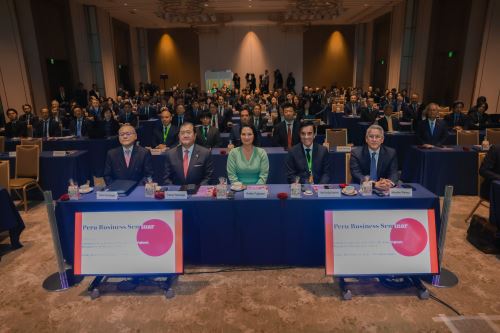
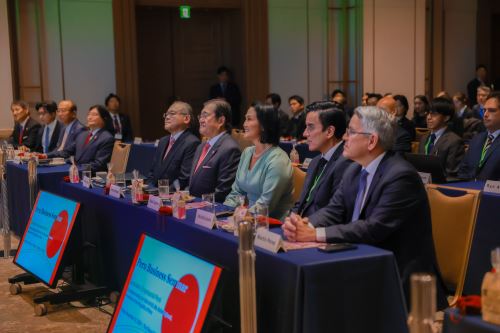
These remarks were made during her participation in the closing ceremony of the Peru-Japan Business Seminar.
In her speech, she stated that, despite international conflicts, South America is a region that enjoys peace and that, within it, Peru stands out for its economic fundamentals.
"We have debt amounting to 30% of gross domestic product (GDP), a deficit of 1.8% of GDP as well, and these figures, compared with the rest of the region, place us at a truly spectacular level," Fujimori stated.
In that context, the Head of State noted that Peru's economy is growing by 3.4%, while private investment exceeds 5%.
She attributed these indicators to the responsible management of public finances and the country's economic institutions.
Peru's top official explained that these results were not achieved overnight, but rather reflect the sustained efforts of successive Ministers of Economy, who have contributed to preserving the country's financial stability over the years.
Clear rules for investment
At another point in her speech, President Fujimori highlighted the guarantees provided by Peru's Political Constitution to companies interested in conducting economic activities within the national territory.
"We give foreign investors the same rules and conditions that Peruvians have, because Peruvians know how to compete," she stated.
The Head of State emphasized another pillar of the Constitution: the autonomy and independence of the Central Reserve Bank of Peru (BCR), whose importance she linked to the lessons learned from the economic crisis of the late 1980s.
"Peru went through a traumatic period (...) we understand that we must maintain a responsible economy to avoid experiencing episodes of hyperinflation again," Fujimori said.
On this point, the top official recalled that one of her first decisions as President-elect was to invite Julio Velarde to remain at the helm of the BCR, a proposal he accepted.
Furthermore, the President addressed the country's trade-opening policy and integration into international markets, highlighting the recent signing of the Free Trade Agreement with Thailand.
"We believe that much of our country's economic growth is due to freedom, openness, and having clear rules," she said.
The Head of State further emphasized that legal certainty must be accompanied by consistent action on the part of the authorities to instill confidence among those seeking to invest in Peru.
"You also need predictability and confidence, and that is not achieved through the speeches I give. It is achieved through consistency between what one thinks, says, and does," Fujimori stated.
In the political sphere, the top official acknowledged that the country has experienced periods of instability, but highlighted the corrective measures adopted.
These include the return to a bicameral parliamentary system comprising the Chamber of Deputies and the Senate.
"This new political system will provide Peru with much greater stability," she said.
After outlining these fundamentals, the President reiterated her invitation to Japanese business leaders to consider Peru as an investment destination
"That is why we believe that, with these clear rules and solid macroeconomic figures, Peru offers you a great opportunity to invest," she emphasized.
Peruvian resilience
During her presentation, the President highlighted Peruvians' ability to overcome adversity.
She recalled the hardships the country faced during the hyperinflation and the violence perpetrated by the terrorist groups Shining Path and the Tupac Amaru Revolutionary Movement (MRTA).
The top official also cited current challenges, such as the fight against crime and the risks posed by climate-related events, expressing confidence in the strength of the population in facing them.
"I am here, proud of my country and grateful to Japan. I am concerned about the months ahead, but absolutely convinced that nothing will stop Peru—not climate-related challenges nor the terrorism-related problems we faced in the past," Fujimori pointed out.
The Head of State specifically warned about the effects that El Niño phenomenon will have on Peruvian territory.
Against this backdrop, she reported that the Government is carrying out preventive measures, including river-cleaning operations, the deployment of machinery and field hospitals, the distribution of food and water, as well as the construction of reservoirs and wells.
The President outlined the countercyclical measures being prepared in coordination with the Ministry of Economy to mitigate the impact of this event on productive activities such as agriculture and fishing.
"An additional US$5 billion will be invested beyond next year's budget to prevent the economy from slowing down, carry out major infrastructure projects, create jobs, and, above all, help vulnerable populations," Fujimori announced.
In this context, the top official thanked Japan for its technical cooperation in the construction of riverbank defenses in various locations across Peru and expressed appreciation for the support received in addressing natural disasters.
Private investment
President Fujimori addressed the role of businesses in national development.
The Head of State explained that 80% of the forces driving Peru's economy depend on the private sector, while the remaining 20% corresponds to public policies and government efficiency.
Along these lines, the top official underscored the importance of establishing direct ties with Japanese business representatives.
Furthermore, she invited them to explore the opportunities offered by the Peruvian market.
"That is why I am here, because I consider the private sector to be very important. I invite you to come to Peru. It would be a great pleasure for us to meet you," she told attendees.
In this context, the President said economic growth and market openness must translate into tangible benefits for citizens, particularly through more efficient use of public resources.
"Our economic measures and market openness make sense when the economy benefits citizens," Fujimori noted.
“And that is my responsibility as President of my country: to make the Government more efficient, ensuring that the resources we receive through taxes are transformed into schools that provide a good education, as well as health centers and hospitals that deliver quality healthcare services," she stressed.
In particular, the Head of State considered it essential for the State to provide timely care to children facing problems such as anemia, so that families receive the support they need to overcome these difficulties.
Subsequently, the top official reaffirmed her commitment to the country's future.
"I aim to build a fairer, more efficient, reconciled, and united country," she concluded.
Meeting with the business sector
The Peru-Japan Business Seminar, titled "Peru Business Seminar: Discover New Opportunities," was organized by the Japanese chapter of the Peruvian-Japanese Business Committee (CEPEJA), in coordination with its Peruvian counterpart.
Ministers Carlos Espá (Foreign Affairs) and Guillermo Shinno (Energy and Mines) attended the event.
Subsequently, the Head of State met with representatives of the Japan Chamber of Commerce and Industry (JCCI).
During the meeting, President Fujimori praised the longstanding commitment of Japanese companies to Peru and their contribution to more than 150 years of friendship between the two nations.
(END) NDP/JCC/MVB
Published: 11/20/2026