12:30 | New Delhi (India), Dec. 10.
Celebrate Peru!
The Sarawja —a musical genre and dance of Aymara origin from Peru's Moquegua region— was declared a UNESCO Intangible Cultural Heritage of Humanity on Wednesday by the
Intergovernmental Committee for the Safeguarding of Intangible Cultural Heritage during the
20th session of the Convention, held in New Delhi, India.
This achievement was reported by the
Ministry of Culture through its official social media accounts on Wednesday.
Within this framework, the government agency underscored that a new Peruvian music and dance tradition has been recognized at the international level.
Sarawja celebrates life, land, and abundance
"Sarawja is much more than music and dance; it is a collective practice that celebrates life, the land, and abundance. Through song, music, and community gatherings, it expresses values of reciprocity, solidarity, and a deep connection with nature," said Peru’s Permanent Delegate to UNESCO, Ramiro Silva, according to the EFE News Agency.
The diplomat added that this registration "also recognizes the resilience of the communities that have preserved and passed down this expression over time."
Social and cultural expression
The decision was made during the 20th session of said body in New Delhi, which recognized Sarawja —also known as Sarawjatana— as the most important expression of social and cultural identity in its region, "as it annually strengthens a sense of belonging linked to local customs, the native language, the territory, and history" in Cuchumbaya, Carumas, and San Cristobal districts.
The Sarawja dance is practiced every year by the inhabitants of these three Andean districts in Moquegua region, southern Peru.
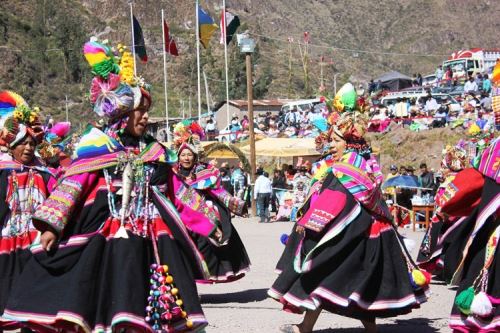
According to the 2017 National Census, the roughly 5,000 inhabitants of these areas identify as Aymara and primarily work in agriculture.
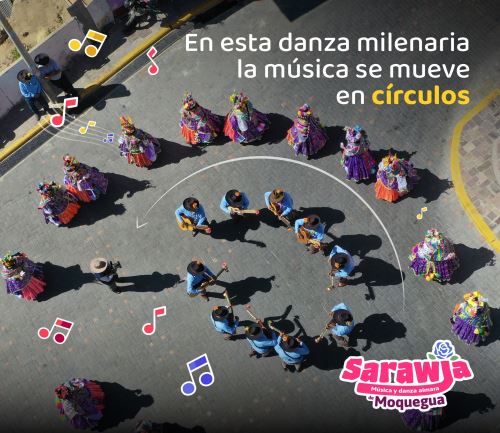
The dance is performed by circular groups called "Ruedas," named for their choreography, which features movements in parallel lines or concentric circles.
These groups consist of married couples and people connected to them through friendships and godparent bonds.
During the annual festivities, the "Ruedas" visit one another from village to village, performing the Sarawja.
Hosts welcome visitors with agricultural products and local dishes in a celebration that honors both the cycles of life and agriculture.
The music is characterized by combining singing in Aymara and Spanish, as well as the use of the charango —a stringed instrument with up to 24 strings— and the female attire called anaco, a pre-Hispanic garment made of wool.
An ancestral tradition
Sarawja —declared a National Cultural Heritage in 2010— is also notable for its originality within the Aymara musical tradition and for its antiquity, as it contributes to the affirmation of regional and national collective identity.
The name Sarawja can be translated from Aymara as "I'm leaving." Sometimes the word Sarawjatana, meaning "Let's go," is used as a synonym.
This musical genre and dance is performed the period after Holy Week, from Tuesday to Sunday.
The dance is believed to reference the kiwlas, highland birds whose courtship involves circular movements resembling a dance.
Its performance is accompanied by the sound of the charango (a small Andean stringed instrument).
The dancers' attire requires several months of preparation: it consists of garments and accessories that grant it a baroque appearance and varies depending on the day.
Female dancers wear a blouse called a qawa or ccahua, skirts, a sash, a vest, and a lliclla (a traditional Andean shoulder cloth).
Men wear a cotona or white shirt, black pants and vests, and a white hat.
(END) MAO/MVB
Published: 12/10/2025