16:40 | San Jeronimo (Cusco region), Apr. 20.
The
small Inca wall recently discovered in San Jeronimo district, on the edge of the Cusco-Arequipa highway, may have formed part of a route that entered into the great Qhapaq Ñan—the Inca Road Network—which extended from the city of Cusco toward Qollasuyo.
The discovery, made during earth-removal work on private property, surprised personnel from the South Valley Archaeological Sites Office (SAVS) of the Decentralized Directorate of Culture in Cusco (DDC Cusco), as it is located about 200 meters from the Sillkinchani Archaeological Site's boundary.
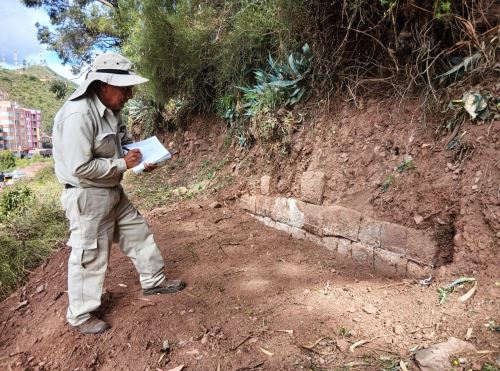
"Sillkinchani is one of the wakas of the ceque system (sacred spaces of the great Inca city of Cusco, capital of the Tahuantinsuyo) associated with the Qollasuyo road. It is clear that more evidence exists in these areas, such as in San Sebastian and San Jeronimo," SAVS Chief Juan Huaranca told Andina news agency.
According to previous research, Sillkinchani served as an administrative control point for people traveling to the high plateau.
The site includes a cancha (courtyard compound) and colcas (storehouses due to its strategic geographic location), where products such as corn were stored.
"It may have been a secondary road or branch connected to the main route (currently the paved Cusco-Arequipa highway). We have data from 2006 suggesting it may have been a pre-Hispanic road, but further research is still needed to determine whether it was truly a secondary route," Huaranca told Andina News Agency.
"We also have later evidence dating from the viceregal period and the early republic, since there was a mill in this sector and it was possibly part of a canal that carried water to operate that mill. Springs have been found in these areas, and there was a mill in that sector, so there was activity," he said.
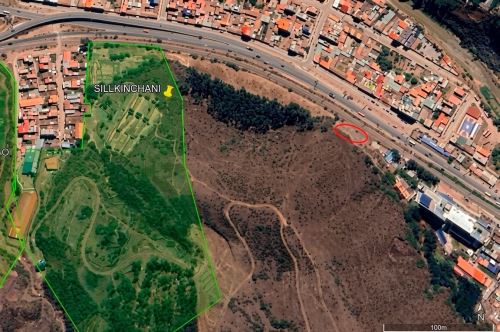
At Sillkinchani, Culture sector workers are currently clearing vegetation that invades the archaeological site during the rainy season. Conservation, maintenance, and solid-waste removal work is carried out throughout the year.
However, following this singular discovery, authorities are now preparing a technical file that would not only identify the remains as such, but declare them for conservation, even though the land belongs to private owners.
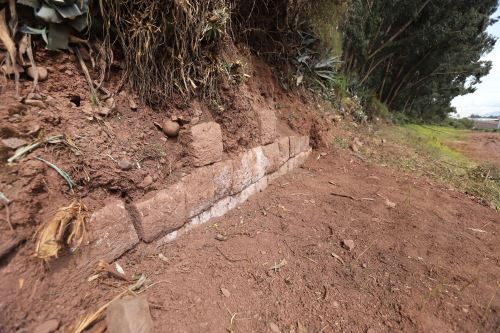
"It is the responsibility of the Culture Ministry (Mincul) to provide provisional protection. We are about to submit the archaeological cadastre. We have already generated a provisional polygon, which will pass through the relevant areas for approval and later publication," he stated.
Huaranca stated that regulations allow authorities to protect Inca remains located outside, in this case, the Sillkinchani boundary polygon.
"This has a temporary validity of one to two years, extendable; meanwhile, the cadastral work team prepares the definitive declaration and boundary file, which is sent to Mincul headquarters for approval," he explained.
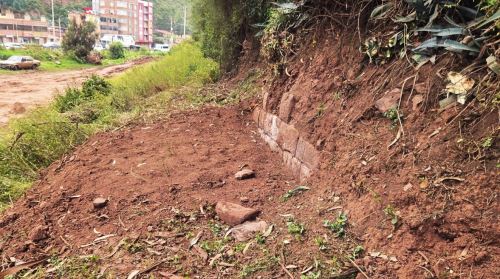
The remains would not generate a dispute with the property owners, according to the SAVS head. However, the owners will now have duties and the obligation to protect those remains as part of their heritage commitment.
In the area known as Angostura, near the Continental University buildings, earth, rubble, and stone removal can be seen. The work has authorization from the San Jeronimo Municipality, and a spring even emerged during the operations.
The area is crossed daily by interregional and interprovincial transport vehicles, as well as trains on the Cusco-Puno railway line. On the left and right banks of the Huatanay River, demographic growth is evident in what were once extensive farmlands.
(END) PHS/MAO/MVB
Published: 4/20/2026