For many, it is now just a memory, but it was once common to see public buses, trucks, and cars on the streets of Lima emitting large quantities of carbon dioxide (CO2) from their exhaust pipes, at times making the air unbreathable. Similarly, in many households, the use of kerosene stoves released toxic gases that were harmful to both human health and the environment.
What would have happened had we not possessed natural gas within our territory—and been unable to utilize it as an energy source? We would not only face higher levels of pollution, but we would also be more dependent on international oil prices for electricity generation and vehicular transport. This would have negatively impacted the budgets of Peruvian families and the competitiveness of Peruvian businesses by driving up their production costs.
It further points out that, within Peru’s hydrocarbons sector, a key priority is “maintaining energy security and expanding access to natural gas for domestic use.”
Risks
Peru’s energy security was compromised in March of this year when the supply of natural gas from the Camisea field was interrupted due to a leak at kilometer 43 of the pipeline, located in the Megantoni district of the Cusco region.
The repairs took nearly two weeks, during which time the fuel had to be rationed—most notably for vehicles—exposing weaknesses in gas storage and transport infrastructure.
Clearly, natural gas is critical and vital to the country’s energy security. The Peruvian Hydrocarbons Society (SPH) recently warned that Peru’s total natural gas reserves declined by 65% between 2013 and 2025, a trend attributed to the limited addition of new projects, as noted in the 2025 Annual Book of Hydrocarbon Resources prepared by the Ministry of Energy and Mines (Minem).
At the same time, it was noted that “this reduction does not mean that Peru’s gas potential has been exhausted,” as there are still resources yet to be explored and evaluated.
In this regard, SPH president Felipe Cantuarias emphasized that it is “essential to revive exploration, attract new investment, and develop projects that will ensure the long-term availability of this resource.” It was emphasized that “investments in hydrocarbons are long-term in nature and require clear rules, predictability, and processes that allow projects to move forward in a timely manner.”
Meanwhile, the Peruvian Liquefied Gas Society (SPGL) warned that “90.1% of the national storage capacity for liquefied petroleum gas (LPG) is concentrated in two areas of the country: Pisco (62.6%) and the Callao–Ventanilla axis (27.5%),” based on data as of the end of 2025.
“This distribution increases the risk of supply interruptions in the event of natural phenomena, operational failures, or logistical difficulties affecting these strategic hubs.” Consequently, the industry association stressed the urgent need to decentralize the supply chain.
The SPGL noted that LPG is used by 70% of Peruvian households, 20% of the vehicle fleet (approximately 700,000 vehicles), and more than 250,000 commercial establishments, as well as by industrial firms across various sectors.
In this regard, Janinne Silva, Executive Director of the SPGL, stated that the country requires ports capable of receiving LPG vessels, along with decentralized storage facilities, to ensure supply across all 25 regions in the face of technical, natural, or geopolitical risks.
During the IX National Congress of Service Stations—organized by AGESP—she underscored the need for expanded storage infrastructure and new supply routes to ensure “national energy security.”
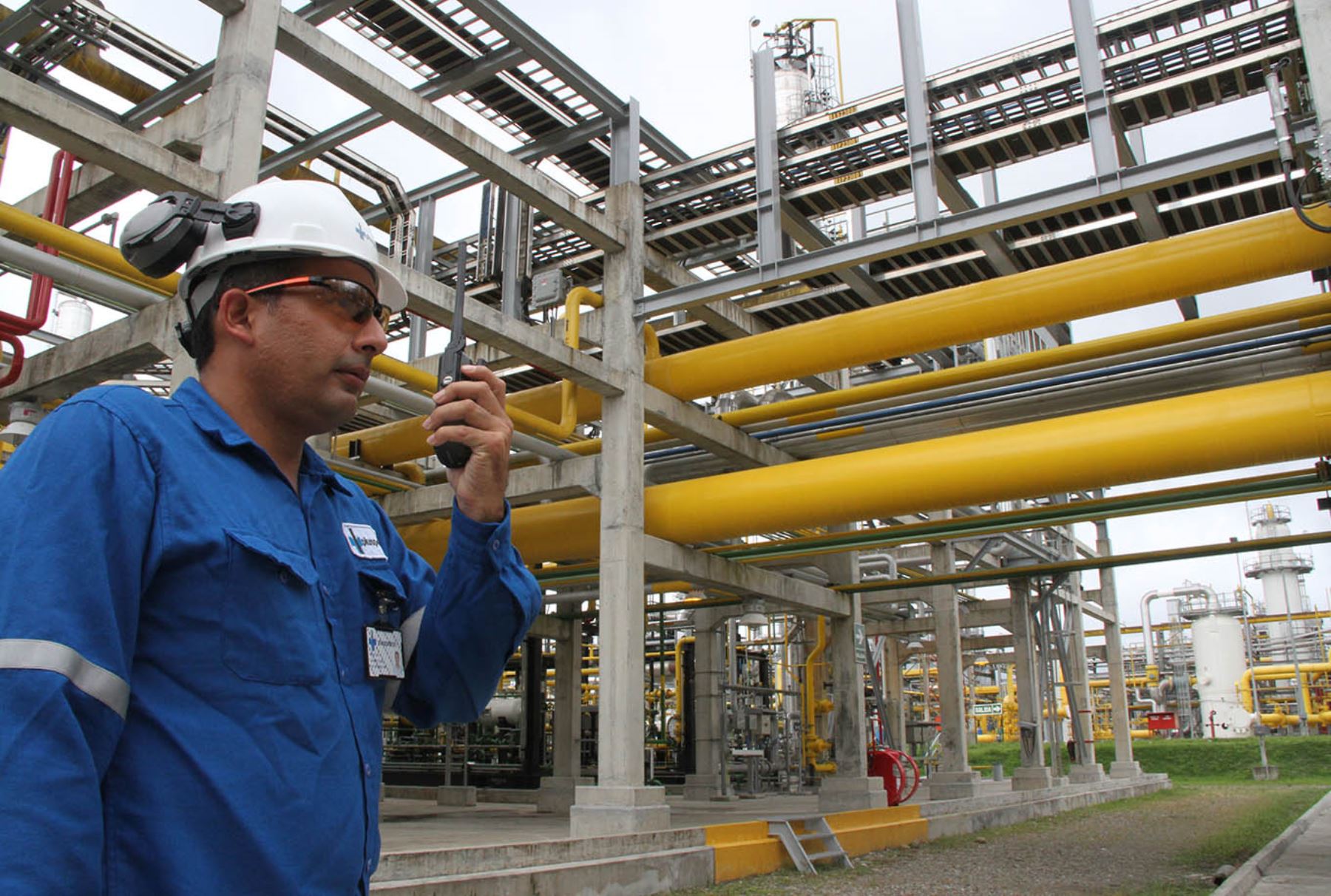
Energy and the competitiveness of the Peruvian economy
Edwin Quintanilla, Director of the Master’s Program in Energy Management at ESAN, pointed out that energy is not merely a production input; rather, it is a strategic prerequisite for Peru’s competitiveness, investment, and sustainable development.
Furthermore, he noted that while a country may possess competitive energy resources, if it fails to guarantee a continuous, diversified supply at reasonable prices, that advantage can turn into a vulnerability.
“Peru enjoys significant energy advantages compared to other countries in the region, particularly due to the availability of natural gas from the Camisea field and its renewable resources, such as hydroelectricity, solar energy, and wind power. If harnessed effectively, these resources can contribute to competitive energy costs and reduce exposure to fluctuations in international markets,” he stated to the Andina news agency.
He pointed out that the growth in Peru’s copper production—the country’s primary export—has coincided with the availability of electricity at competitive prices, a situation bolstered by the development of the Camisea natural gas project, which began in 2004.
“Electricity prices—a key explanatory variable—are, for the mining sector in Peru, roughly 50% of what they are in Chile. Peru holds a potential advantage, but it must transform this into a competitive advantage that is sustainable over time,” he remarked.
“Electricity prices—a key explanatory variable—are, for the Peruvian mining sector, roughly 50% of those seen in Chile. Peru holds a potential advantage, but it must transform this into a sustainable competitive advantage,” he noted.
To achieve this, he indicated that the country needs to diversify its energy sources—focusing primarily on natural gas and renewable energy—while also developing infrastructure and strengthening supply security.
“Energy competitiveness depends not only on price but also on the reliability of supply and the sustainability requirements of international markets, which increasingly demand products with a smaller carbon footprint,” he explained.
Quintanilla highlighted that natural gas is a cornerstone of Peru’s energy security.
“It is essential for power generation, industrial activity, and transportation—through the use of compressed natural gas (CNG) and liquefied natural gas (LNG). Precisely because of its importance, the heavy reliance on the Camisea field and a single main transport route represents a vulnerability,” he warned.
He pointed out that the disruption to the TGP pipeline in March 2026 demonstrated how an infrastructure failure can affect various productive sectors and have a ripple effect on the supply of other fuels.
“The lesson here is that having gas reserves is not enough; we must also ensure that the resource actually reaches consumers, even when unforeseen events occur,” he emphasized.
“Therefore, it is necessary to diversify supply options, evaluate storage and regasification capacity for liquefied natural gas (LNG), explore the use of small-scale LNG plants to supply different regions, and strengthen transport infrastructure. Furthermore, we must have backup power generation capacity capable of running on alternative fuels,” he explained.
“The goal is not to replace Camisea, but rather to ensure that any disruption in supply from its fields—or in the transport infrastructure—does not compromise the functioning of the economy,” he added. Challenges
Quintanilla noted that the country’s main challenge “is to shift from a policy focused on the mere availability of energy to one that guarantees a continuous, competitive, and sustainable supply.”
“This requires acting simultaneously across three dimensions. The first is physical security: having diversified sources, redundant infrastructure, storage, and emergency response capacity. The second is economic competitiveness: ensuring prices and conditions that facilitate investment, production, and job creation. The third is environmental and social sustainability: leveraging renewable resources, improving energy efficiency, and ensuring that the benefits of energy development reach the entire economy,” he explained.
He also pointed to an institutional challenge. “The country needs long-term energy planning that integrates natural gas, electricity, liquid fuels, renewable energy, and transport,” he said.
Furthermore, he noted that investment decisions should not be driven solely by short-term needs or political considerations; rather, they should account for the risks Peru will face over the coming decades and the competitiveness of various alternatives—supported by transparent price signals and the avoidance of unjustified distortions.
“Energy security comes at a cost, but it also holds economic value. An interruption can lead to production losses, drive up electricity generation costs, and hinder the operation of transport and industry,” he emphasized.
How can sustainability be achieved?
When asked what the country should invest in to ensure the sustainability of its energy supply, Quintanilla stated that investments must be guided by a comprehensive view of the entire energy chain—from production to the end consumer. In this regard, he highlighted four priorities:
1) Diversify the natural gas supply. It is advisable to evaluate alternatives such as LNG reception and regasification for emergencies, increased storage capacity, and small-scale LNG plants to reduce reliance on a single supply facility.
2) Secure the electricity supply. The development of solar and wind energy must be accompanied by storage, transmission grids, and flexibility mechanisms, always guided by criteria of efficiency and competitiveness. It is also necessary to assess thermal backup capacity capable of utilizing alternative fuels when required.
3) Strengthen fuel reserves and domestic production. Peru must evaluate the maintenance of adequate strategic inventories of diesel, gasoline, and LPG, given that the transport sector and numerous production processes depend on these fuels.
Such reserves would help in responding to disruptions in the domestic supply or difficulties in international markets. This policy should be complemented by conditions that foster the competitive development of domestic hydrocarbon production.
4) Invest in energy efficiency and access. In households, it is necessary to expand access to modern and efficient energy sources; in industry, to promote technologies that reduce energy consumption per unit produced; and in the transport sector, to boost efficiency, the appropriate use of compressed natural gas (CNG), and progressive electrification wherever it is technically and economically viable.
“All these investments require clear rules, regulatory stability, and a transparent allocation of risks between the State and the private sector. Energy security is a matter of public policy, but it can be supported by private investment and well-designed collaborative mechanisms,” noted Quintanilla.
He further pointed out that while Peru possesses a significant base of domestic energy resources, it needs to reduce its exposure to imported fuels and to disruptions in critical infrastructure.
“To achieve this, the country must make better use of natural gas, promote the competitive development of domestic hydrocarbon production, accelerate the diversification into renewables, and strengthen the infrastructure necessary to ensure supply continuity,” he emphasized.
A resurgence in exploration
Meanwhile, at the 1st International LPG Congress, themed “Accessible Energy for All” and organized by the Peruvian Liquefied Gas Society (SPGL), Perupetro General Manager Pedro Arce noted that although hydrocarbon exploration and production activities have declined in recent years, the country is now at a point where it is regaining its capacity to attract significant investment, with expectations for a substantial increase in exploration contracts.
He noted that major players in exploration—such as Anadarko, Occidental, and Chevron, among others—are already present in Peru, with additional companies expressing interest in operating within the country.
He pointed out that the northwestern region, stretching from Tumbes to Trujillo, has been proven to contain hydrocarbons, with visible natural gas seeps. In this context, he indicated that exploration activity is set to see a resurgence, supported by significant investments.
“Investments this year are expected to roughly double compared to last year—reaching approximately $800 million, up from $380 million the previous year. This figure encompasses both exploration and production,” he said.
He also mentioned that since 2023, expired contracts have been renewed with new operators, with terms that mandate both development and exploration activities.
“All contracts currently involving hydrocarbon production also carry an obligation to conduct exploration. In the northwest alone, the commitment for this year includes approximately 200 development wells. Looking ahead to next year, there is a mandatory commitment for roughly 250 to 280 development wells,” he stated.
“The challenge we are facing is a shortage of the equipment required to carry out this drilling,” he warned.
“Essentially, the sector is at a turning point—a resurgence is underway, and the effects are already becoming visible, as seen in the Talara area in the northwest,” he remarked.
Separately, he noted that there are about 3,500 wells in the Piura region that were shut down because they were no longer yielding oil.
“However, studies indicate that these wells hold potential for natural gas, with some containing significant quantities. Consequently, the Talara-Piura area could easily see a revival if these wells—given current market conditions, price levels, and existing infrastructure—are brought back into production and the entire operation is consolidated,” he said.
“What else are we doing, in addition to all this? Current contracts provide incentives for exploration at deeper horizons, or for seeking out new formations capable of producing hydrocarbons that are not currently being tapped. Furthermore, there are royalty rates—which either start at or remain stable at 5%—for such wells,” he explained.
Further discoveries
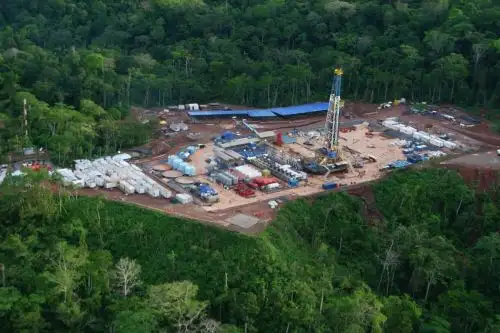
Furthermore, Arce noted that there is a strong possibility—bordering on certainty—that Peru’s energy security lies in the Madre de Dios region, following the discovery of natural gas reserves estimated at approximately 2.8 to 3 TCF (trillion cubic feet).
“The potential within other structures and prospects in the area suggests that we could be looking at 20.2 TCF—the equivalent of three Camisea-sized fields,” he explained.
“Camisea has provided Peru with a degree of competitiveness in its electricity sector for the past 30 to 35 years. However, with Camisea’s reserves projected to be depleted in another 13 years, this new discovery represents three times the capacity of the Camisea field,” he emphasized.
He pointed out that technology already proven in Peru allows for the development of projects in highly sensitive areas—specifically, an “offshore-style” approach (using infrastructure designed for marine operations) adapted for use on land.
“It is estimated that if a platform were installed in the area, the physical footprint would be no larger than 3.5 hectares to facilitate gas production. In such cases, pipelines are buried, and all logistics—such as the transport of equipment—are handled via helicopter or river transport,” he noted.
He further stated that environmental oversight would be rigorous, utilizing advanced monitoring technology and involving key stakeholders.
“It is indeed possible to carry out energy projects with minimal impact, allowing us to harness resources that the country urgently needs,” he affirmed.
In this regard, he noted that by engaging local communities and the population from the very beginning—respecting their cultures and customs while generating resources to improve their quality of life—it is possible to build support for such projects.
“Native and peasant communities in areas where we have oil operations are now asking Perúpetro, ‘When are there going to be more projects?’ This is thanks to our communication efforts and the fact that we have made them participants in the projects. Projects are not imposed; they are developed in collaboration with these communities,” he explained.
Key facts:
The project to expand natural gas access across the regions of Ayacucho, Cusco, Junín, Apurímac, Huancavelica, Puno, and Ucayali will indeed go forward; the government is currently reviewing the terms for its implementation, announced Minister of Energy and Mines Guillermo Shinno.
The expansion of natural gas access has progressed significantly over the last five years. The number of connections has doubled—rising from 1.2 million to 2.6 million—which has increased coverage from 14% to 25% of the population. In other words, one in four Peruvians now lives in a household with access to the service, according to Promigas Perú.
More from Andina:
(END) MDV / MDV