For the first time, the complete fossil of a 10-million-year-old beaked whale, considered the best preserved in the world, is on display.
In 2025, the MHN led a scientific mission to recover a paleontological specimen unique in its kind, an effort that became a challenge bringing together national and international experts, as well as the Ocucaje community in Ica region.

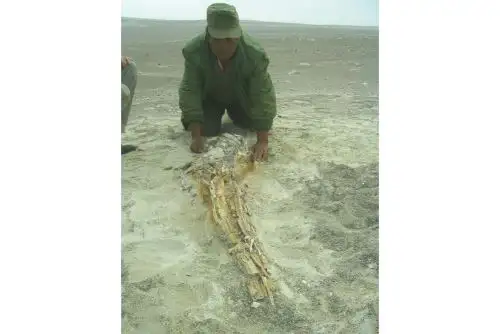
After remaining buried for millions of years in the locality of Cerro Colorado, Ocucaje district, the extraordinary specimen of Messapicetus gregarius has seen the light again and can now be viewed by the public.
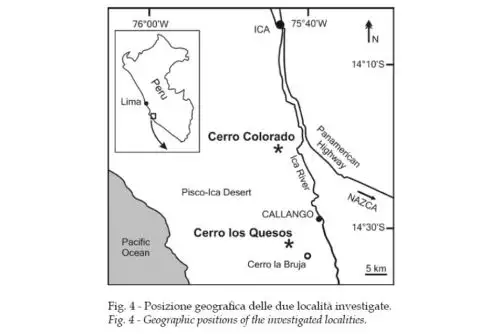
The expedition that managed to recover one of the least known cetaceans in the global fossil record was led by Mario Urbina Schmitt, a researcher at the MHN's Vertebrate Paleontology Department, known for discoveries such as Perucetus colossus in 39-million-year-old rocks.
After leaving the Ocucaje desert, the marine giant entered the laboratories of the MHN's Vertebrate Paleontology Department, where a second stage began: technical preparation and meticulous restoration to enhance its scientific and heritage value. Once the fossil had been prepared, assembly began for its presentation to the public.
More about the extinct species
The fossil corresponds to the skeleton of an extinct representative of the group known as "ziphiids" or "beaked whales" (family Ziphiidae).
Modern ziphiids are medium-sized cetaceans (4–13 meters in length) that generally inhabit the deeper parts of the water column — reaching depths of up to 1,000 meters — in search of squid and fish that live in these environments.
Comparatively, ziphiids are the second most diverse family of odontocetes, with up to 22 known species distributed across all ocean basins.
Messapicetus is a genus of extinct ziphiids that was originally described from the Late Miocene of Italy.
It was later reported in Peru with the species Messapicetus gregarius.
The species shows an abundance of fossil records in the locality of Cerro Colorado, Ica region. However, these extinct ziphiids were previously known only from cranial remains.
Unique specimen
The specimen on display is an adult individual preserved almost in its entirety, measuring around 5 meters in body length. It represents the best-preserved fossil ziphiid in the world.
Over 20 years of expeditions to the area by MHN specialists, together with European scientists from the Rotterdam Museum and the University of Pisa, as well as geologists from the Geological, Mining and Metallurgical Institute (Ingemmet), have led to the discovery of numerous Messapicetus specimens, but none as well preserved as this one.
Based on dental morphology, as well as Peruvian fossil specimens that preserved stomach contents, Messapicetus is known to have fed on sardines and similar fish.
Where to visit the exhibition
You can visit "El Zífido de Ocucaje” (The Ocucaje Ziphiid) at the temporary exhibition hall of the Natural History Museum, located at 1256 Arenales Avenue in Lima's Jesus Maria district.
Visiting hours are Tuesday to Friday, from 9:00 a.m. to 5:00 p.m., and Saturdays from 10:00 a.m. to 5:00 p.m.
The regular admission fee is S/10 (about US$2.87) for adults and S/5 (about US$1.43) for children and students. People over 60 years of age and National Council for the Inclusion of Persons with Disabilities (Conadis) cardholders enter free of charge.
Tickets are sold only at the ticket office. "The Ocucaje Ziphiid" awaits visitors at the MHN to share a new story about the marine world.
Published: 3/10/2026