In recent days, Tumbes has endured extraordinary rainfall reaching up to 110 liters per square meter. The province of Zarumilla was the most severely affected, with flooding reported in several localities, forcing the evacuation of residents.
The extraordinary rainfall recorded in the Tumbes region over the last few days—with accumulations exceeding 110 liters per square meter in some areas—highlights the intensity of the current "Coastal El Niño" phenomenon, warned Grinia Ávalos, head of the National Service of Meteorology and Hydrology (Senamhi).
The expert explained that rainfall levels recorded in October were unprecedented for this time of year—surpassing even those observed during the El Niño events of 1982–1983 and 1997–1998—and this occurred before the peak rainy season had even begun.
"We are facing an extraordinary event. Of the three such events in our historical records, this is the most intense, the strongest; and we are now entering the peak rainy season while in the midst of an extraordinary El Niño," stated the head of Senamhi.
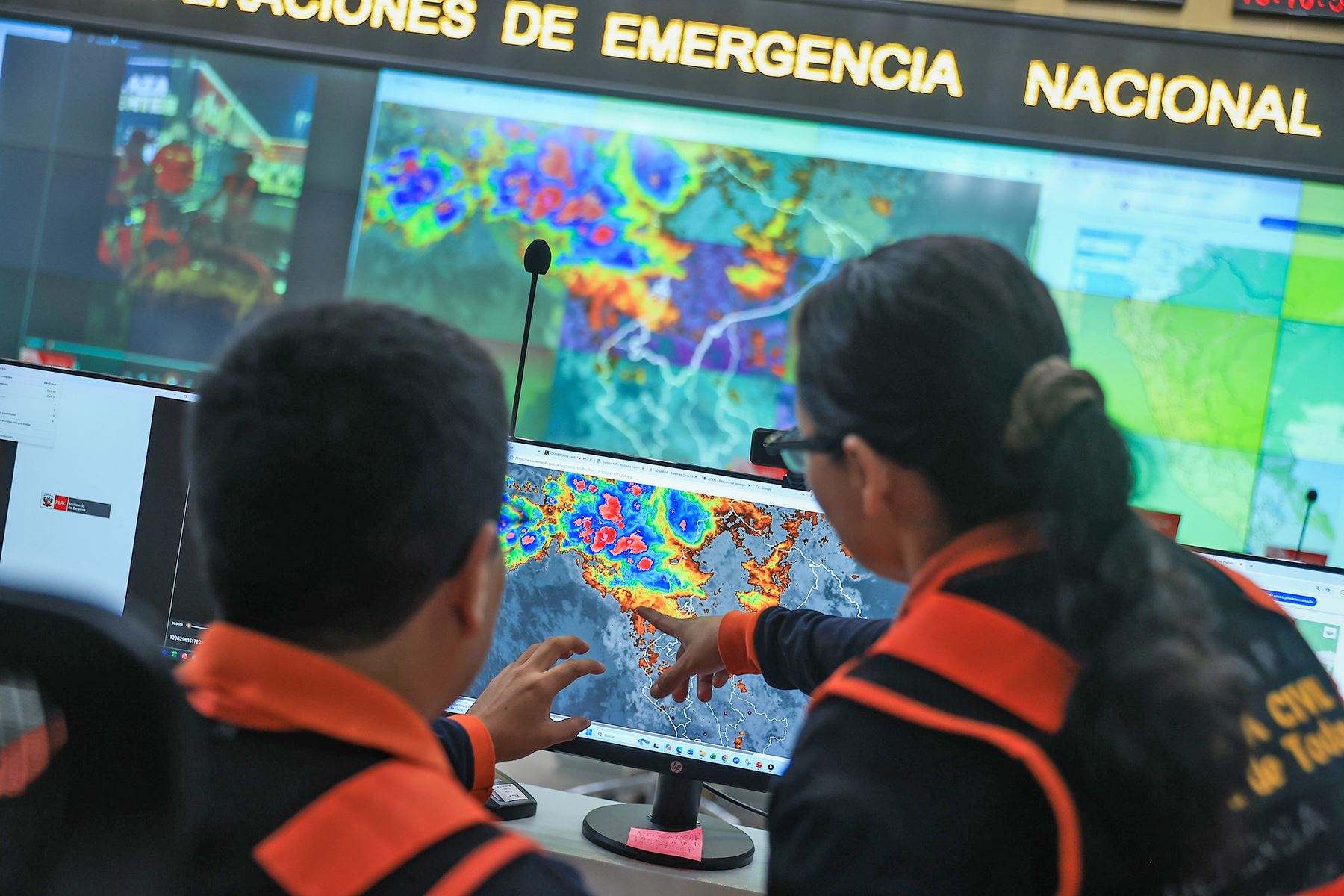
She made these remarks during a press conference led by President Keiko Fujimori at the National Emergency Operations Center (COEN) in Chorrillos.
Ávalos reported that rainfall will decrease significantly this week; However, starting Thursday, November 5, a new wave of extremely intense rain is expected, which will primarily affect the regions of Tumbes and Piura. Tumbes records rainfall exceeding typical levels
Raquel Loayza, a specialist at Senamhi (National Service of Meteorology and Hydrology), reported that the locality of El Salto, in the province of Zarumilla, recorded 110.3 millimeters of rainfall during the early hours of the day.
This figure stands in stark contrast to the approximately 9 millimeters typically recorded in November, highlighting the significant scale of the precipitation.
Furthermore, she noted that this same area recorded 102 millimeters of rain on October 27, warning that the region remains vulnerable as the rain continues, posing a risk of flooding.
Loayza indicated that Senamhi would issue "red-level" meteorological alerts for parts of Zarumilla, Sullana, and a portion of Ayabaca. Additionally, an extended alert is being prepared for November 4, 5, and 6, covering Tumbes and parts of the Piura region.
Tumbes River surpasses red alert threshold
The intense rainfall also caused a sudden surge in the flow of the Tumbes River; During the early morning hours, it exceeded the red alert threshold, which is set at 1,000 cubic meters per second.
Loayza explained that the river's flow peaked above this level before beginning to recede, subsequently dropping into the yellow alert range.
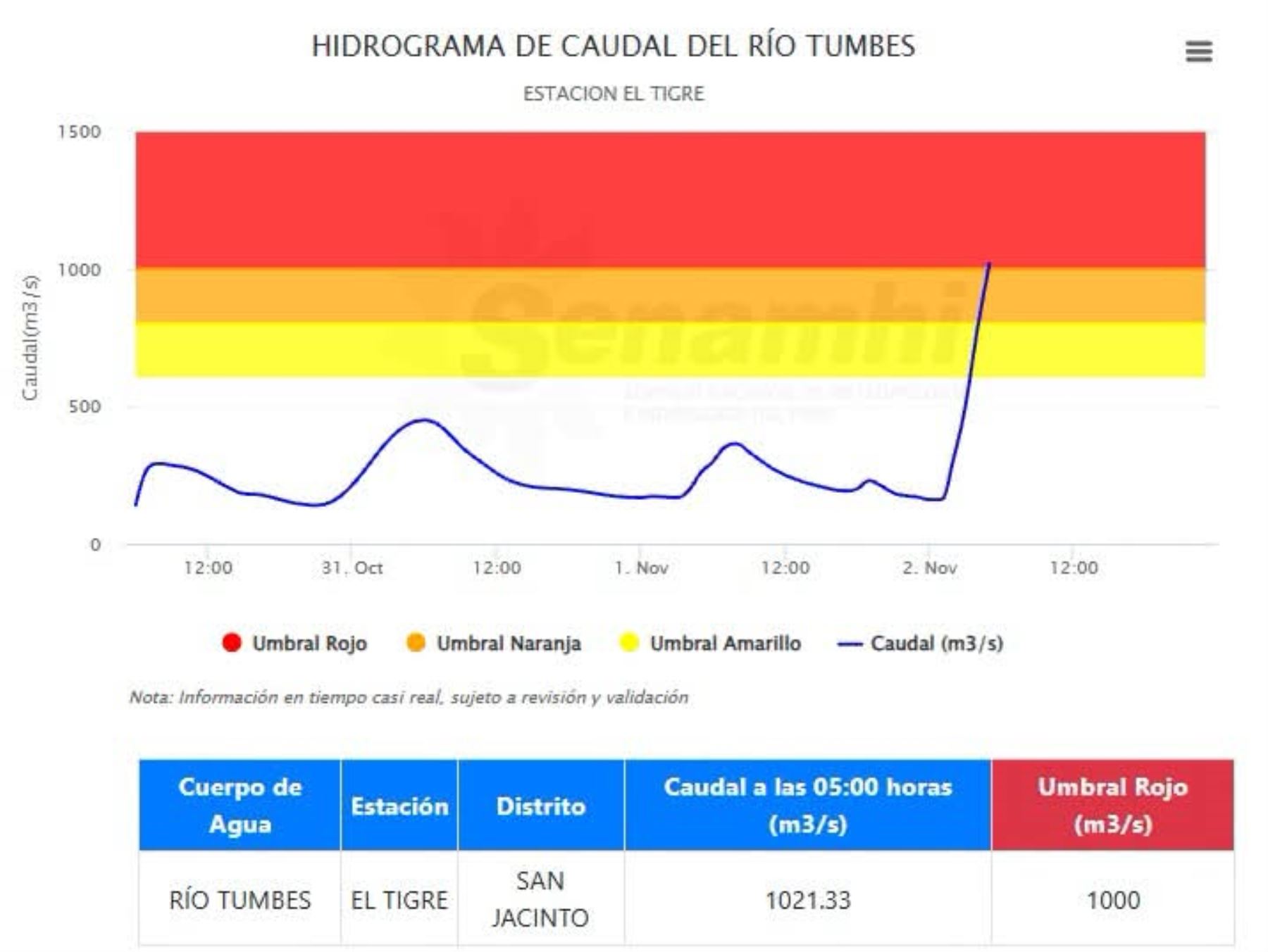
She warned that another surge of similar magnitude could potentially occur in the coming days.
She noted that the Tumbes River is part of a binational basin shared by Peru and Ecuador; Therefore, rainfall occurring within Ecuadorian territory also contributed to the increased volume of water.
This was compounded by rainfall in various locations across the Tumbes region, which further swelled the river's flow.
More from Andina:
(END) MAO / MDV
Published: 11/2/2026