Asian investment in Latin America has become a major driver of regional economic development, particularly in markets such as Peru, Brazil, and Chile.
Companies from Japan, Thailand, and Indonesia, but especially China, contribute significantly to industrial growth, as they not only boost employment but also drive technological progress in the region.
Thus, with more than US$94 billion in announced direct investment between 2020 and 2025, along with projected growth of between 35% and 40% in 2025–2026, Asian corporations are transforming Latin America's energy, mining, manufacturing, and infrastructure sectors.
According to a study by consulting firm Marsh, published in an article in the Económika Supplement of El Peruano Official Gazette, this growth creates unprecedented opportunities, as well as regulatory, operational, and commercial complexities.
Capital
Foreign direct investment (FDI) from Asia in Latin America has reached historic levels.
"The figure involved not only more than US$94 billion in announced FDI between 2020 and 2025, but also US$62 billion in engineering, procurement, and construction (EPC) contracts," the analysis states.
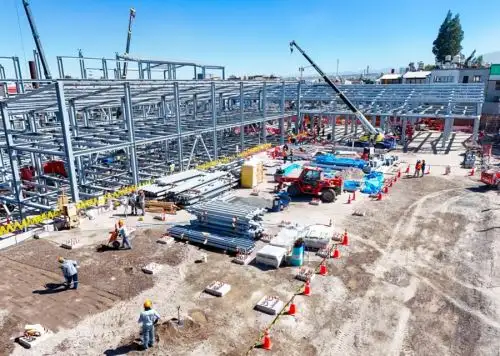
Asian investment flows into Latin America are concentrated in transportation infrastructure, such as Peru's Chancay Port, as well as energy, copper and iron mining, lithium extraction, electricity distribution networks, and automotive manufacturing.
Likewise, these capital flows have driven a global energy transition, along with growing demand for renewable resources and an increasing volume of critical minerals, such as lithium and copper, required to boost the green economy.
"The process also generated increased investment in electric vehicle supply chains, as well as a redefinition of logistics and trade routes following the COVID-19 pandemic," the analysis notes.
Moreover, the signing of free trade agreements (FTAs) with various Asian economies has been a key factor in the expansion of FDI across the region.
According to Marsh, this context defines the current operational landscape.
"Global-scale Asian companies, many of them Chinese state-owned entities with complex governance structures, are expanding into markets whose regulatory frameworks, insurance systems, and business practices differ fundamentally from those in their countries of origin," the multinational consulting firm's assessment explains.
Challenges
Despite the significant increase in Asian investment in the area, Chinese business groups face various challenges in achieving their full establishment.
The first challenge is regulatory fragmentation and compliance (the set of rules, procedures, and best practices adopted by a business to ensure that its activities comply with laws and ethical principles), as each jurisdiction operates under different legal frameworks.
Another challenge to consider is the disconnect between corporate governance and local risks, as a lack of coordination may arise between the parent company, the regional subsidiary, and the requirements of each jurisdiction.
A third obstacle is the complexity of the global supply chain, as a disruption to this flow would have an immediate impact on projects in Latin America and international commitments, while also creating risks related to specialized transportation, reverse logistics, and critical dependence on specific ports.
An additional factor highlighted by consulting firm Marsh is the cultural and communication barrier, as differences in corporate decision-making approaches must be taken into account, such as consensus versus hierarchy and short-term versus long-term time frames.
Data
- Between 1992 and 2022, 208 Chinese companies were registered in Peru, of which 186 did so using a Unique Taxpayer Registry (RUC) number and 22 using a foreign resident card.
- Between 2018 and 2022, 25 Chinese companies were identified as having been awarded 201 public works contracts, with an estimated total value of US$6.467 billion.
- These projects are distributed across nearly the entire Peruvian territory, spanning 23 of the country's 24 regions.
(END) DOP/SDD/MVB
Published: 8/24/2026