The government, through the
Ministry of Foreign Trade and Tourism (Mincetur), presented the National Multisectoral Foreign Trade Policy (PNMCE) through 2040. It is a strategic instrument that will guide State actions to strengthen the development of Peru's foreign trade under a comprehensive, sustainable, and long-term vision.
The objective is to prepare the South American country to face new challenges and opportunities in international trade.
"The PNMCE is the legacy of the President of the Republic, Jose Jeri's government, as it institutionalizes and sets the course for a sector that dynamizes the country's economy," the Mincetur head said.
During the official ceremony, Minister Teresa Mera explained that the PNMCE sets out five priority objectives, 22 guidelines, and 40 services aimed at improving the use of trade agreements and streamlining logistics and trade facilitation.
She added that the policy also aims to strengthen the export supply with greater value added and to position Peru internationally as a competitive supplier of sustainable and high-quality products.
"We are placing a very strong focus on the export of goods and services with higher value added in (international) markets, including manufacturing, fisheries, aquaculture, and knowledge-based services," Minister Mera said.
"With this (approach), we expect to increase our exports of value-added goods to more than $44 billion and non-traditional services to over $3.3 billion," she added.
The PNMCE promotes the strengthening of sector capabilities, with the aim of surpassing 4,000 consolidated companies, which means, firms able to sustain their exports for at least five consecutive years.
Similarly, it aims to increase exports by Peruvian micro, small, and medium-sized enterprises (MSMEs) from $3.2 billion to US$6.2 billion.
Thus, the policy will contribute to consolidating export activity as a driving force for regional economies and for business formalization.
In turn, Peruvian Exporters Association (ADEX) Chairman Cesar Tello underscored the importance of approving this new policy, as well as the participation and contribution of the private sector in its formulation.
Likewise, Tello highlighted the progress achieved by the sector under the National Export Strategic Plan (PENX). It has enabled the country to build a network of 23 trade agreements with major markets and to diversify Peru's export product offering.
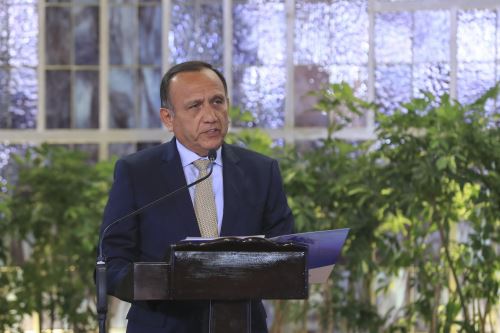
President Jeri emphasized that the national policy presented is a legacy aimed at consolidating the country's foreign trade.
He also added that this strategic instrument seeks to responsibly harness the potential of all regions, boost the visibility of local producers, strengthen the private sector's presence in international markets, and plan Peru's economic development.
The PNMCE was developed through a participatory and multisectoral process, with technical support from the National Center for Strategic Planning (Ceplan) and backing from the Inter-American Development Bank (IDB).
With this initiative, the government reaffirms its commitment to economic stability, investment promotion, and the strengthening of foreign trade as a driver of development and well-being for all Peruvians.
Data
To date, Peru has 23 trade agreements in force, providing preferential access for its products to 58 of the world's leading economies.
According to Mincetur figures, Peruvian exports have increased tenfold since the beginning of this century.
In November 2025, goods exports had reached nearly $80 billion, putting the country on track to achieve a new record for the fifth consecutive year.
(END) NDP/MDV/MVB
Published: 1/14/2026