14:18 | Espinar (Cusco region), May. 21.
Decentralized Directorate of Culture (DDC) in Cusco Chief Maritza Rosa Candia invited domestic and foreign tourists to visit the T'aqrachullo archaeological site, also known as Maria Fortaleza, located in Cusco region's Espinar province, in order to learn about its structure and historical importance.
In an interview with the Andina News Agency, the official noted that the site can be visited between 7:00 a.m. and 4:00 p.m. (local time).
In that context, Rosa recommended not arriving before or leaving after the aforementioned hours, since weather conditions are extreme and the hiking route to the site is somewhat rugged.
How to get to T'aqrachullo?
Regarding access to the site, the official explained that traveling by vehicle from the city of Cusco takes between four and five hours.
Likewise, from the city of Espinar, it takes between 15 and 20 minutes to reach the Suyckutambo district, where Maria Fortaleza T'aqrachullo is located.
Once there, visitors can hike to the archaeological site's center in a walk lasting between 15 and 20 minutes, she said.
Rosa Candia also noted that the site has signage to help tourists navigate the area.
The official indicated that visitor numbers are currently low because this historical attraction still needs greater promotion.
In that regard, she welcomed the fact that T'aqrachullo has drawn the attention of a publication such as National Geographic, which recently highlighted the site's existence.
"It has all the conditions for visitors to enjoy the site once they are there," Rosa said. At the same time, a reserved area remains available for research purposes.
However, she acknowledged that it is necessary to develop sanitation infrastructure, healthcare services, and restaurants, as well as train local residents to receive visitors.
A place with deep historical significance
The official explained that T'aqrachullo was gradually adapted according to the terrain's characteristics and the needs of the area's inhabitants.
Rosa noted that inhabitants remained there over time, from 750 B.C. to 1535, encompassing pre-Inca cultures, the Inca civilization, and the Spanish colonial period.
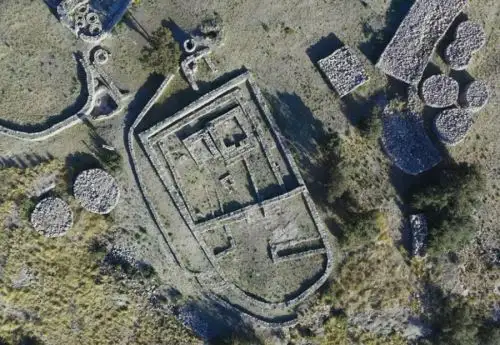
She noted that T'aqrachullo currently features both rustic and more elaborate structures reflecting different social hierarchies. This can be seen in the dwellings and funerary enclosures, she explained.
The official explained that these structures feature rectangular and quadrangular shapes, some associated with tombs and funeral rituals, while others were used as dwellings.
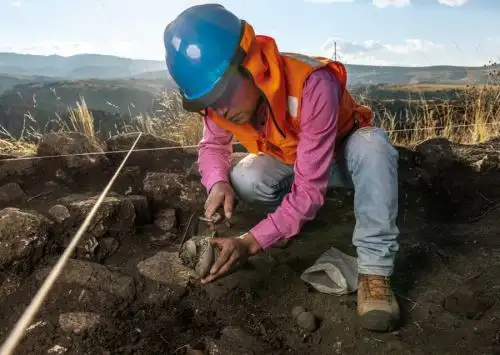
Rosa indicated that research conducted between 2019 and 2024 led to the discovery of ceramic and metal objects that help provide a better understanding of the site's inhabitants during the pre-Inca and Inca periods.
(END) FGM/MVB
Published: 5/21/2026