The Peruvian economy would grow at an average rate of 3.2% in the 2027–2029 period, supported by higher investment, more dynamic exports, and improvements in productivity, all within an environment of macroeconomic stability and greater competitiveness, according to projections from the Macroeconomic Projections Update Report (IAPM) 2026–2029, published by the
Ministry of Economy and Finance (MEF).
According to the document, to improve the economy's competitiveness and productivity, it is important to continue fostering the development of established sectors and those in the process of consolidation, such as mining, agro-export activity, logistics and industrial projects, the development of the port hub, renewable energy, and productive activity in the Amazon.
These efforts would enable the decentralization of growth and expand employment opportunities in various regions of the country.
While Peru would continue to benefit from still favorable commodity prices over the projection horizon, the report considers an uncertain international environment due to geopolitical tensions, the persistence of climate risks, and still restrictive global financial conditions that could moderate economic growth.
In fiscal matters, the Macroeconomic Projections Update Report foresees a gradual reduction of the fiscal deficit, which would decline from 2.2% of GDP in 2025 to 1.8% in 2026, to converge to 1% of GDP in 2028. Similarly, public debt would stand at 29.4% of GDP by the end of 2029, remaining among the lowest levels in emerging economies.
The Macroeconomic Projections Update Report preserves macro-fiscal strengths that distinguish the country favorably in the region, including relatively low deficit and debt levels, with investment-grade status.
However, it indicates that the current scenario presents a more demanding environment than in previous years. Therefore, the report reaffirms that fiscal sustainability is an essential condition for macroeconomic balance and the basis for boosting growth, investment, employment, and well-being.
"Preserving fiscal space will be key to sustaining public investment, financing essential services, and maintaining the capacity to respond to external or climate shocks. Therefore, there is no margin to weaken the Peruvian State's fiscal capacity through measures that erode permanent revenues," the document states.
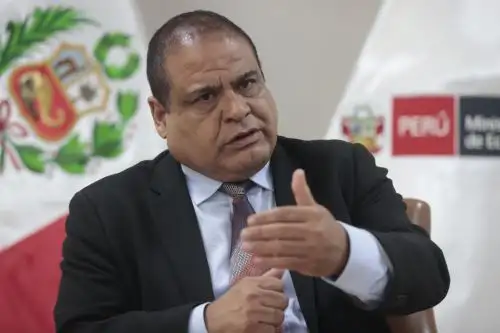
Economy and Finance Minister Rodolfo Acuña indicated that fiscal sustainability is not an isolated objective, but rather the basis that makes it possible to sustain growth, finance public services, and protect the country against external shocks.
"With determination, we are working so that responsible fiscal management translates into greater well-being and opportunities for families," he said.
Minister Acuña added that the MEF reaffirms its commitment to responsible management of public finances, based on a balance among revenue, expenditure, and indebtedness, ensuring that current decisions do not compromise future generations.
2026 projection
The Macroeconomic Projections Update Report reaffirmed the 3.2% economic growth projection for 2026, reflecting the strength and resilience of the Peruvian economy.
This favorable performance is explained by the strengthening of domestic demand, mainly due to the greater dynamism of private spending, which will allow offsetting the adverse effects of supply shocks.
It is important to highlight that a key factor driving domestic demand is private investment, which would grow by 5.5%, accumulating three consecutive years of expansion.
This increase would be supported by higher mining investments, which would exceed US$6.8 billion, as well as by new projects in infrastructure, housing, telecommunications, hydrocarbons, and renewable energy.
The document estimates that the external environment would have a mixed effect on the local economy, since Peru would continue benefiting from still elevated levels of commodity prices, being favored by high levels of terms of trade, fiscal revenue, and generation of resources linked to export activity.
However, there are latent risks that could affect economic activity, linked to a possible prolongation of the conflict in the Middle East and a greater intensification of El Niño phenomenon.
Within this framework, the MEF indicated that preserving prudent macroeconomic management will continue to be essential to sustain confidence and reduce the country's exposure to adverse shocks.
In this regard, the MEF will continue promoting policies aimed at raising productivity, unlocking investment, as well as consolidating sustainable and inclusive growth, which translates into more formal employment, higher income, and greater well-being for Peruvian families.
(END) NDP/CNA/MVB
Published: 4/30/2026