Her love for the Peruvian Andes’ culture and people led U.S. citizen Kennedy Leavens to make Cusco her home and found an initiative that now includes more than 200 women textile artisans, whose work she has helped bring to markets across the Americas, Europe, Asia, and Oceania.
"Twenty-five years ago, I could never have imagined that I would be living in Peru, and I am very grateful," she said in a Spanish-language interview with Andina News Agency.
Leavens first came into contact with Peru when she was 17.
She had traveled to the South American country with a group of students from her school and a teacher whose sister lived here.
"From that moment on, I could not forget my experience, nor the people, culture, and landscape," Leavens indicated.
After overcoming altitude sickness, the American was captivated by the charm of the Incas’ Sacred Valley in Cusco and by the warmth of the Andean people.
"People here are so kind and open, and they taught me all about Peruvian culture," she noted.
Community work
The next step was to launch an initiative to benefit local women engaged in handicrafts, as well as their families and communities.
It was at this point that the initiative emerged that would give Leavens deep roots in the community and bring her recognition.
Awamaki is the organization she founded and that currently brings together approximately 200 women from Quechua communities around Ollantaytambo, including those in places such as Cusco and Machu Picchu.
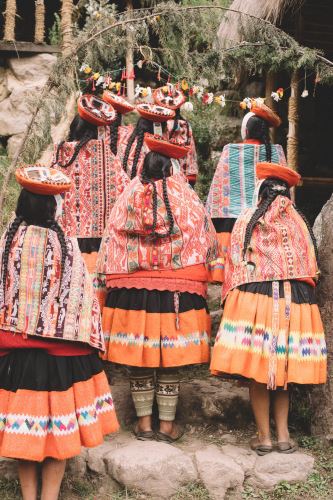
They practice traditional techniques.
"The artisans know how to weave very well, but most of them have not attended school or have only had a few years of schooling. So, we work with them to teach them how to weave to specific measurements or how to make the colors consistent," Kennedy explained.
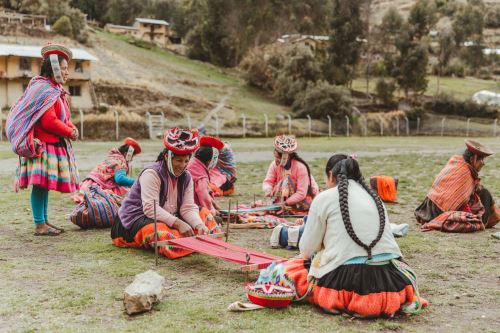
What does Awamaki's work with these women involve?
"We work with them to open up markets, facilitate their businesses, and provide training on business in international markets and in tourism as well," the American responded.
"These women are very capable and have incredible skills that their grandmothers also had," Leavens indicated.
The textile pieces and designs are created in full collaboration with the participating women.
"We are not taking trends from elsewhere and asking the artisans to make them," she clarified.
The organization's name comes from the Quechua words for loom (awa) and hand (maki). It was chosen by the U.S. citizen and the artisans with whom she collaborates.
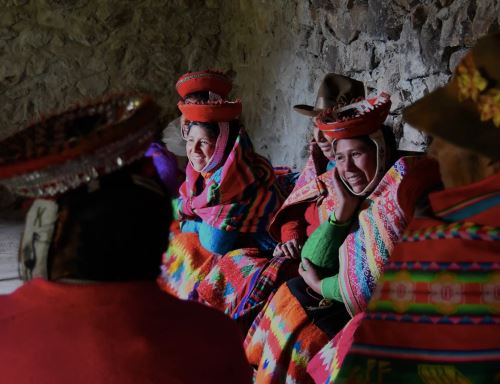
"We generate income for them, but we also elevate their art so that it can gain recognition and find its way into homes around the world," Leavens indicated.
Examples of this work can be found at an Awamaki store in Ollantaytambo, as well as at shops in the United States, Japan, Australia, France, and the United Kingdom.
This international reach for the work of these women from Cusco is achieved without requiring them to leave their communities or Quechua traditions, Leavens emphasized.
"If they want to stay and maintain a traditional way of life, this gives them the option to do so and earn income based on their traditions and the traditional Quechua economy," she added.
Published: 9/16/2026