Peru is currently home to a population of 364,467 vicuñas distributed across 16 regions of the country—a figure that reflects "the recovery of this iconic Andean species."
This was reported by the Ministry of Agrarian Development and Irrigation (Midagri), through the National Forest and Wildlife Service (Serfor), during the presentation of the results of the 5th National Vicuña Census (2025).
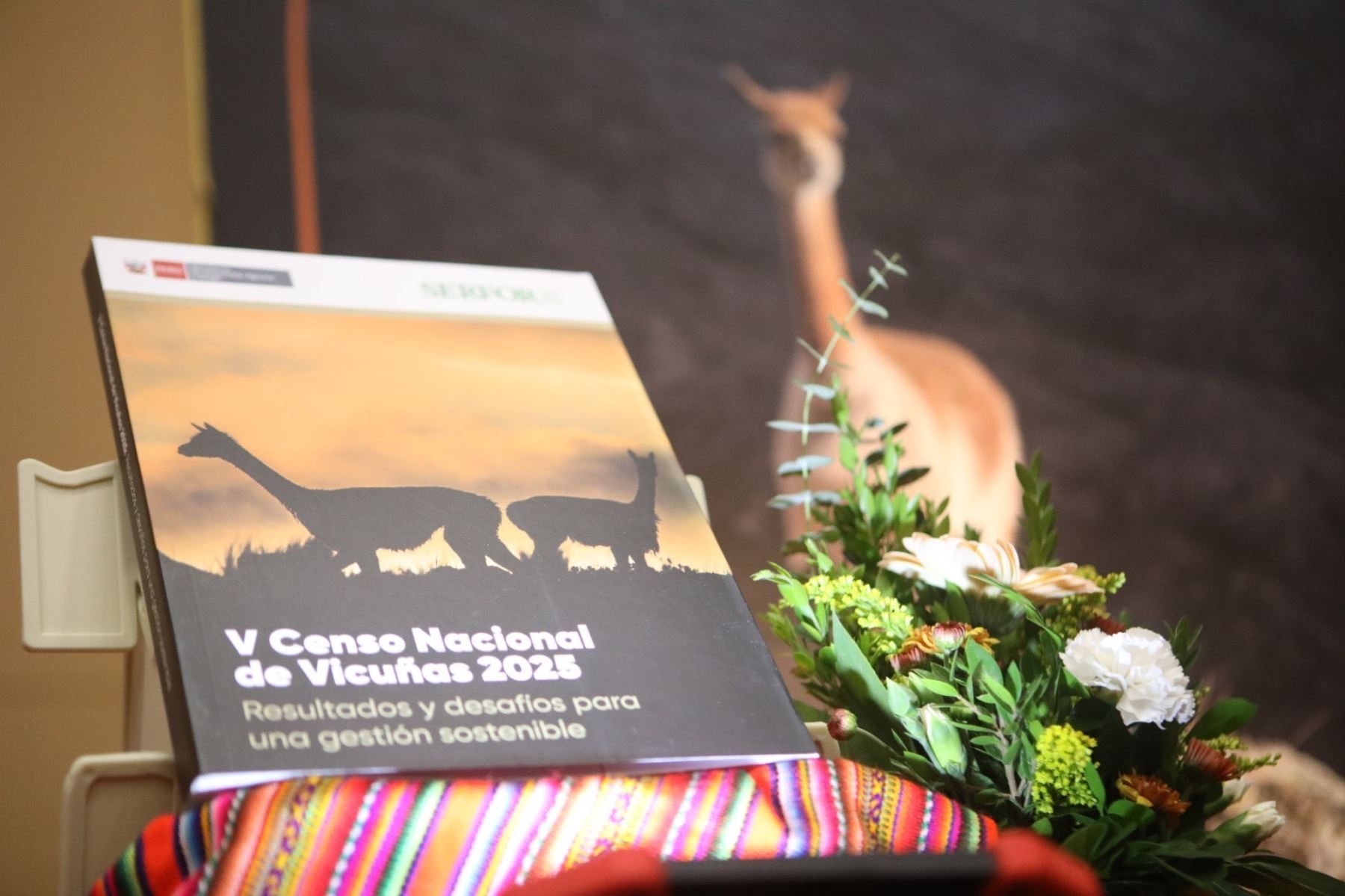
According to the study, the vicuña population recorded a 448% growth rate in 2025 compared to 1994, highlighting the importance of conservation efforts and the sustainable management of the species.
The census was conducted in September and October 2025 using a direct-counting method, with the participation of Serfor, regional governments, and high-Andean rural communities—all of which are key stakeholders in the conservation of the vicuña.
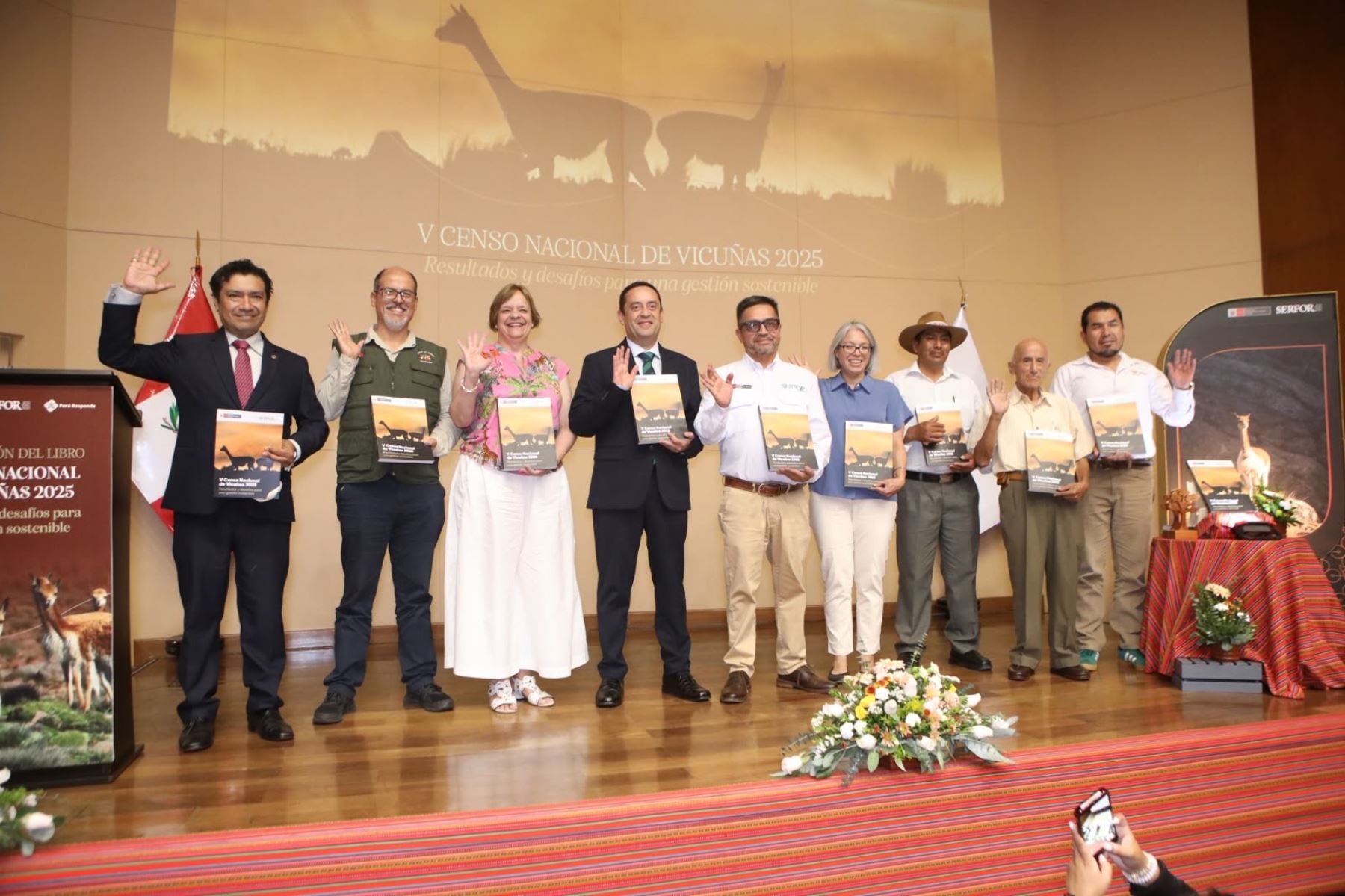
The presentation of the book "5th National Vicuña Census 2025: Results and Challenges for Sustainable Management"—published with the support of the German Corporation for International Cooperation (GIZ)—took place in the context of National Vicuña Day (November 15) and coincided with the conclusion of the chaccu (vicuña roundup and shearing) season in the country.
This ancestral practice allows for the collection of vicuña fiber through the capture and shearing of live animals, ensuring their well-being and conservation. The event was attended by the Vice Minister of Policies and Supervision of Agrarian Development, Manuel Layseca Ortigas, and the Director of SERFOR, Erasmo Otárola Acevedo.
Also present were the Ambassador of the Federal Republic of Germany, Sabine Bloch, and the President of the National Association of Communities for the Conservation of Vicuñas and Guanacos of Peru, Fredy Meza, among other representatives.
Sustainable use
In his remarks, Vice Minister Layseca highlighted that the conservation of the vicuña also presents an opportunity to improve the income of thousands of high-Andean families.
In this regard, he noted that the census results will enable better decision-making concerning the management of this species and promote the commercialization of products with higher added value.
“It is necessary to provide technical assistance to those who organize the chaccus (traditional communal roundups) and participate in harvesting the fiber. Improving practices related to shearing, sorting, cleaning, storage, and preparation helps reduce losses and results in a higher-quality product,” he added.
Peruvian vicuña fiber for the world
The conservation of this species also has a direct impact on the economy of high-Andean communities.
Currently, 400 rural communities and 300 associations are authorized by Serfor to manage vicuñas—an activity that directly benefits more than 70,000 families.
In 2025, Peru exported vicuña fiber valued at $ 6.02 million, while products manufactured from this resource—renowned for their extraordinary fineness and quality—reached 20 countries.
These figures “reflect its potential to generate commercial opportunities and strengthen the economy of the communities dedicated to its sustainable use,” emphasized the Ministry of Agrarian Development and Irrigation (Midagri) in a press release.
Arequipa holds the largest share of the national vicuña population, with 81,575 individuals. Likewise, significant increases are reported in Huancavelica, Puno, Ayacucho, Junín, and Apurímac.
Collaborative effort
For his part, the executive director of Serfor highlighted that the commitment of high-Andean rural communities is fundamental to the conservation of the vicuña.
“The census results will allow us to better guide our actions in the face of threats such as climate change, forest fires, poaching, and the illegal trade of fiber, as well as to promote sustainable use that contributes to the well-being of these communities,” concluded Otárola.
The census results will be disseminated through the National Forest and Wildlife Information System (SNIFFS), facilitating access to official data for research, planning, and decision-making.
More from Andina:
(END) NDP/CCH / MDV
Published: 11/15/2026