13:31 | Cusco (Cusco region), Feb. 9.
Peru's Cusco region now counts five Hierarchy 4 tourism resources—Machu Picchu, Ollantaytambo, Historic Center of its city, the Temple of St. Peter the Apostle of Andahuaylillas, and the Saqsaywaman National Archaeological Park—placing it on par with global icons such as the Nasca Lines and the Amazon River.
In a historic milestone for regional and national tourism, the Ministry of Foreign Trade and Tourism (Mincetur), together with Cusco Region Government and local authorities, recently awarded Hierarchy 4—the country's highest tourism distinction.
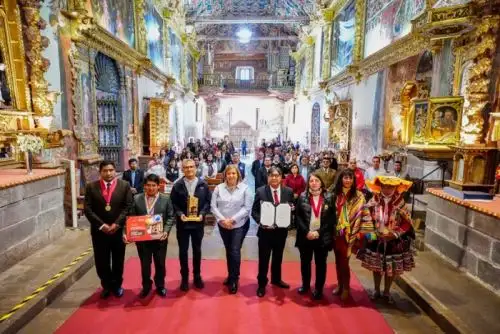
Hierarchy 4 is the highest recognition granted by Mincetur to a tourism resource in Peru. It is awarded following a rigorous technical evaluation process that assesses authenticity, conservation status, visitor flow, tourism facilities, territorial representativeness, and symbolic value.
The objective is to foster a sustainable tourism development model that encourages heritage conservation, as well as generates economic and social development in surrounding communities.
For many years, Machu Picchu was the only site in the Cusco region to hold this top-tier classification.
However, through coordinated efforts by Cusco Region Government—via Gercetur—local authorities, and Mincetur, the recognition was gradually extended to Ollantaytambo and the Historic Center of Cusco, with the Temple of St. Peter the Apostle of Andahuaylillas and the Saqsaywaman National Archaeological Park now joining the list.
The Temple of St. Peter the Apostle of Andahuaylillas, known as the "Sistine Chapel of the Americas," is one of the finest expressions of Andean Baroque in Latin America. Its richly decorated interior—featuring murals, canvases, altarpieces, and coffered ceilings—bears witness to the cultural fusion between European artistic traditions and the Andean world.
The Temple of St. Peter the Apostle of Andahuaylillas houses the oldest pipe organs in Latin America, where Hanaq Pachap Kusikuynin was first performed.
The temple is part of the Andean Baroque Circuit, offering strong potential for cultural, religious, and experiential tourism along the Cusco–Puno corridor.
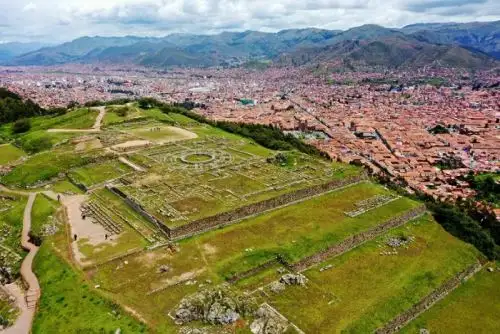
For its part, the Saqsaywaman National Archaeological Park represents the pinnacle of Inca architecture and engineering, featuring colossal megalithic walls assembled without mortar, its symbolic puma-shaped design, as well as its role as a ceremonial, political, and military center of Tahuantinsuyo.
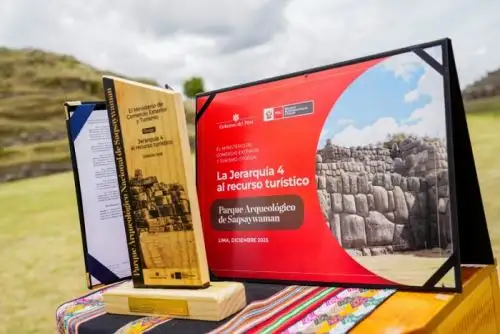
It is also the main venue for the Inti Raymi and encompasses 96 archaeological sites, making it a key platform for strengthening cultural and sustainable tourism while energizing the local economy through employment, commerce, and tourism services.
This recognition comes amid a clear tourism recovery, with more than 3.4 million international visitors recorded in 2025 nationwide.
Visitor numbers have even surpassed pre-pandemic levels, underscoring the strong potential of its prioritized promotion under Hierarchy 4.
Andahuaylillas and Saqsaywaman National Archaeological Park thus join the group of the most important tourism resources in Peru and worldwide, strengthening cultural identity, boosting regional economic development, and consolidating Cusco as the country's leading tourist destination.
(END) NDP/TMC/MVB
Published: 2/9/2026