10:38 | Cusco (Cusco region), Jan. 8.
The
Historic Sanctuary of Machu Picchu, designated a Mixed World Heritage Site by UNESCO and
home to the formidable Inca citadel—
one of the New Seven Wonders of the World—marks its 45th anniversary today as a State-protected natural area, reaffirming its commitment to the conservation and protection of an extraordinary and unique biodiversity.
Designated as a protected natural area on January 8, 1981, the Historic Sanctuary of Machu Picchu preserves a unique blend of Andean and Amazonian biodiversity, as well as striking archaeological monuments of outstanding historical and cultural value.
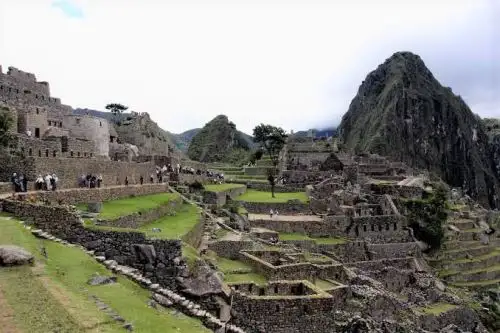
Foremost among them is the imposing Machu Picchu citadel, built entirely of stone atop a mountain summit and drawing visitors from across the globe.
Covering an area of 32,592 hectares, the Historic Sanctuary of Machu Picchu is crossed by two major mountain ranges of southern Peru: the Urubamba Range and the Vilcabamba Range.
Both feature prominent snow-capped peaks that have been regarded since ancestral times as "Apus" (protective deities).
The sanctuary also holds significant environmental value, featuring forested areas, rugged mountains, and snowcapped peaks.
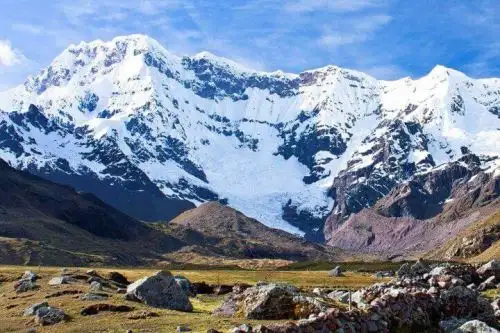
It is an area of interaction between the Andean and Amazonian domains and forms part of a narrow transition belt between the two ecosystems. The landscape is predominantly marked by rugged terrain and steep slopes.
It is located in an area of exceptional geographical characteristics.
Within it, landscapes range from snow-capped summits rising above 6,000 meters above sea level (m.a.s.l.) to the warmest and most humid zone of the Urubamba River—which divides the sanctuary in two and forms the Torontoy Canyon—at elevations below 2,000 m.a.s.l.
Its steep gradient, enhanced by the complex wind systems it generates, creates microclimates that give rise to remarkable biological diversity.
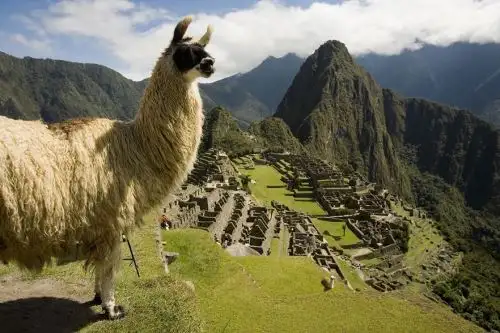
Mixed Heritage
Added to this exceptional natural wealth is the incomparable archaeological jewel of Machu Picchu.
Machu Picchu is undoubtedly one of the most powerful magnetic attractions in South America and the country as a whole.
The sanctuary features tropical vegetation in the lower part of the western sector, within the Acobamba River Basin.
It is a typical ecosystem of the so-called "ceja de selva" (montane forest), so named because it represents the last remnant of native vegetation in this mountainous area and marks the upper limit reached by tropical vegetation in this part of the Andes.
The "ceja de selva" harbors a rich diversity of plant and animal species which, together with the mountain ecosystems, make Machu Picchu a truly special place.
Exceptional flora and fauna
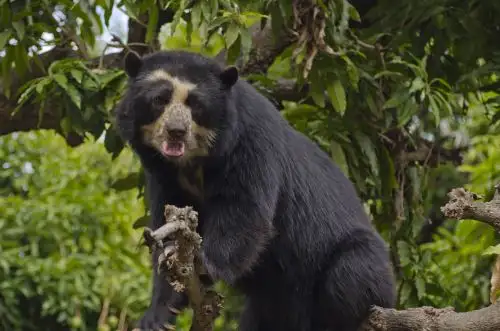
The area’s most representative wildlife includes the torrent duck, agouti, vizcacha, coati, white-tailed deer, dwarf deer, Andean fox, puma, woodpecker, Andean cock-of-the-rock, spectacled bear, Andean condor, and neotropical river otter.
In the Warmihuañusca sector, vizcachas and deer can be observed, and on some occasions even spectacled bears.
The flora is mainly represented by alder, toroc or cetico, white cedar, cascarilla, white pacay, basul, pisonay, chachacomo, yanay, and laurel.
At the Warmihuañusca Pass, relict forests of unca, queñual, and t'asta can be observed.
Orchids also reach exceptional levels within the sanctuary: 340 species have been recorded, representing around 20% of the roughly 1,700 species identified in Peru.
Archaeological sites
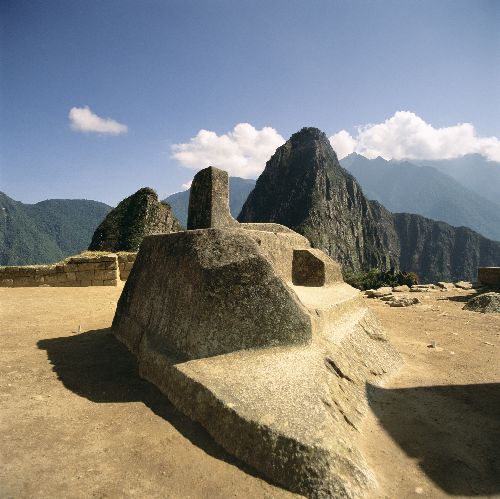
Within the Historic Sanctuary of Machu Picchu, in addition to the Inca citadel, there are numerous world-renowned archaeological sites and monuments of outstanding historical and cultural value. These include Inca Raq'ay, Intiwatana, Intipata, Choquesuysuy, Chachabamba, Wiñay Wayna, Phuyupatamarca, Sayacmarka, Runkuraqay, Wayllabamba, Torontoy, Waynaq'ente, Machuq'ente, Q'ente, Qoriwayrachiwa, Pulpituyoc, Patallacta, and Palccay.
These sites and monuments are associated with complex and remarkable systems of irrigation and agricultural terraces, as well as with roads that interconnect them all—together reflecting the high level of development achieved by ancient Peruvians.
(END) LZD/MVB
Published: 1/8/2026